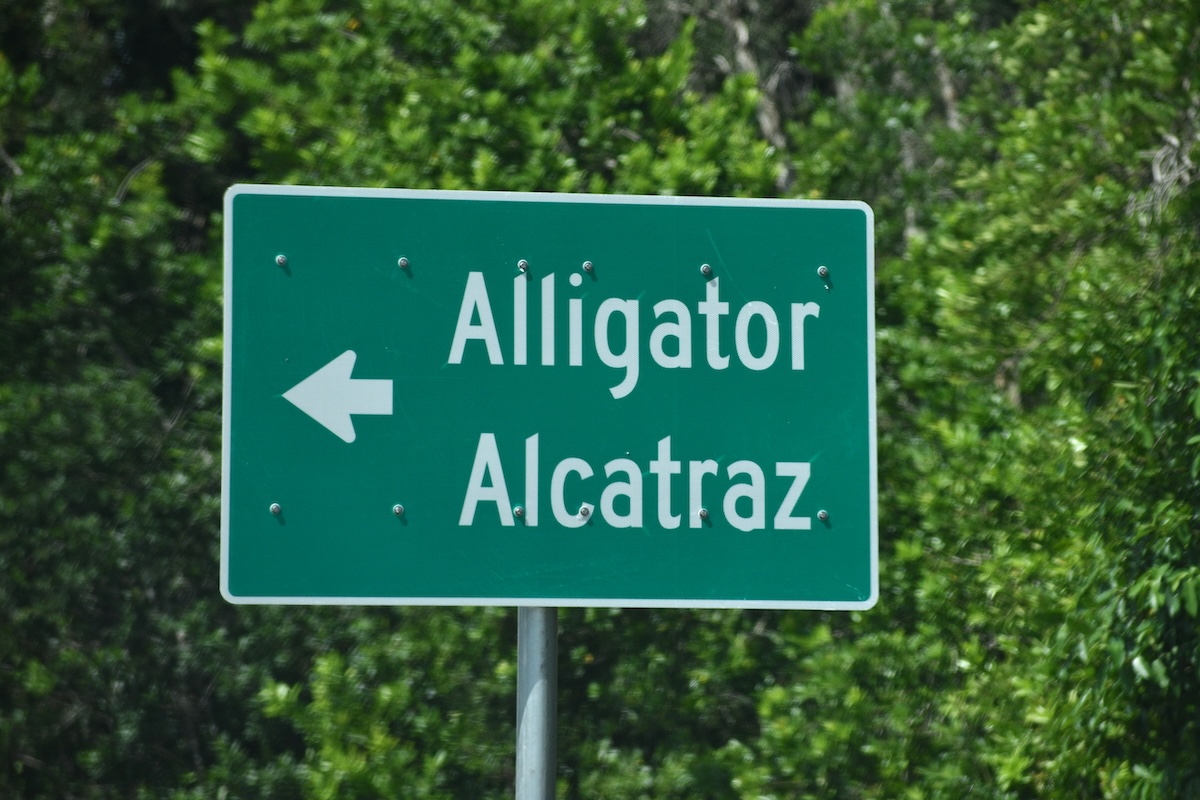
A new bill in Florida has passed its first House committee hearing, aiming to prevent state emergency funds from being allocated for immigration enforcement. The legislation, introduced by Republican Rep. Griff Griffits, received unanimous support from the House Transportation and Economic Development subcommittee on Monday. The bill specifically targets funding intended for the controversial migrant detention centers, known as “Alligator Alcatraz” and “Deportation Depot.”
The proposed measure, identified as PCB TED 26-02, represents a significant shift for legislative Republicans, moving away from the stringent anti-illegal immigration policies that were emphasized just a year ago. “This bill would prohibit funding for ‘Alligator Alcatraz.’ It is for natural disasters only,” Griffits stated to reporters after the hearing. He underscored that if immigration issues arise, Governor Ron DeSantis could call for a special session to address those matters separately.
The bill, which aligns House Republicans with the Democratic Party against DeSantis, marks an unusual political collaboration. This comes amid ongoing tensions between the legislature and the governor’s office regarding control over state policies. The DeSantis administration has vocally opposed the bill on social media, with Attorney General James Uthmeier criticizing the move as “moronic” and questioning the motivations behind it. “Florida House ‘Republicans’ are trying to defund Alligator Alcatraz and other detainment centers across the state. Floridians did not vote for this,” added Alex Lanfranconi, press secretary to the governor.
Bill Details and Financial Implications
The legislation aims to redefine the functions of the state’s Emergency Preparedness and Response Fund, allowing funds to be spent only on natural disasters such as hurricanes, tornadoes, and floods. The governor’s office will be tasked with providing quarterly reports on the fund’s financial health, and any federal reimbursements must be directed to the Legislature’s General Revenue Fund. Importantly, the bill prohibits the purchase of aircraft or boats from the trust, with an expiration date set for July 1, 2030.
As it stands, the existing version of the fund is set to expire at midnight on Tuesday. The Senate recently voted to maintain the fund in its current form, which raises concerns about whether both chambers can reach an agreement in time. The fund was initially established in 2022 to enable the governor to respond swiftly to emergencies without legislative approval. Following a declared state of emergency for immigration in January 2023, the Florida Division of Emergency Management has already expended more than $573 million on immigration enforcement, with approximately $406 million spent within the first six months.
Democrats have criticized these expenditures as a misuse of public funds, drawing parallels to a “slush fund.” Griffits contested this characterization, arguing that the fund’s primary focus should remain on natural disaster response. “That [immigration] problem is going away with President Trump. He has shut the flow down. There’s no point in slowing this fund down just to fight about those issues that come and go,” he remarked.
The ongoing debate illustrates a growing divide within Florida politics, as lawmakers grapple with the implications of immigration policies and the appropriate use of emergency funds. As discussions unfold, the political landscape may continue to shift, shaping the future of both state governance and immigration enforcement strategies.
This development underscores the complexities of managing state resources in response to evolving challenges, leaving many observers keenly watching how these legislative efforts will unfold.