Crow Wing County commissioners approved funding for four key projects aimed at addressing the ongoing opioid crisis during a recent board meeting in Brainerd. The allocations, totaling over $104,000, were recommended by the Brainerd Lakes Area Drug Education/Opioid Steering Committee and are intended to enhance mental health support and community resources.
The largest allocation involves $52,000 for the Culture of Wellness program, a mental health initiative designed for community services staff. This program will allow employees to meet with a mental health professional throughout the year at no cost, similar to a program already in place for the sheriff’s office. Another $46,000 will go to the Sheriff’s Office Mental Health Program, which aims to support officers dealing with the mental health impacts of opioid-related emergencies.
In addition, the board approved a $1,000 youth scholarship for a high school student to engage in the Drug Free Communities Grant work, representing the youth sector in the community. A $5,000 grant was also allocated to a Community Corrections Bike Program, which provides bicycles to residents needing transportation for essential appointments or work.
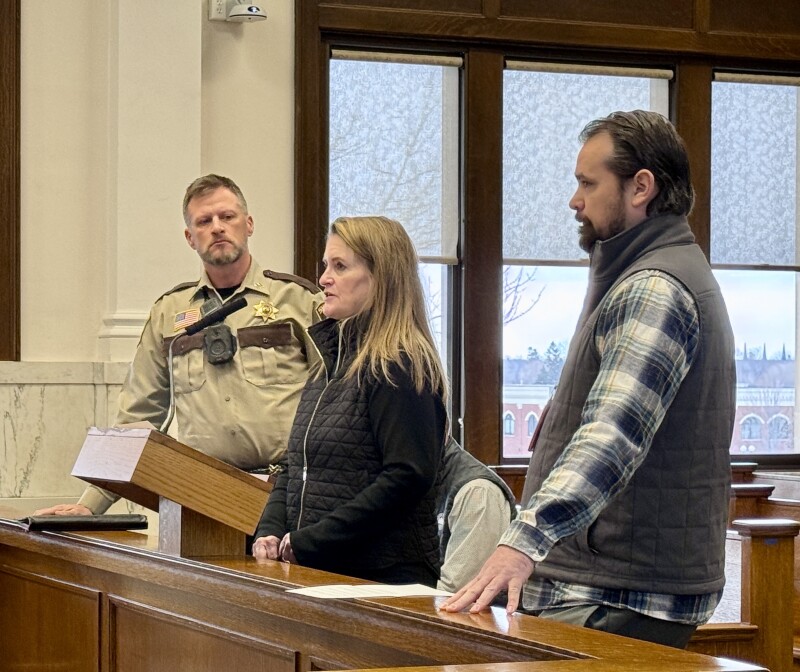
Kara Terry, director of Community Services, highlighted the importance of mental health support for staff managing complex cases. Capt. Adam Kronstedt of the sheriff’s office noted that the funding will also address wellness services for first responders who frequently experience secondary trauma from their work, especially in opioid-related incidents.
Commissioner Steve Barrows inquired about the specifics of the funding, confirming that the resources would indeed support sheriff’s department officers. The program initiated by probation agent Louis Madryga serves a dual purpose: it assists individuals on probation—many of whom face transportation challenges due to revoked licenses—while also extending support to the wider community.
Madryga shared that he has successfully sourced bicycles from local contributions and police departments for refurbishing. In the previous year, he facilitated the distribution of 50 bikes to clients and another 50 to community residents, including those in sober homes and homeless individuals. He expressed hope that this new grant would help him acquire quality bicycles at discounted rates, enhancing the program’s effectiveness and reach.
During the discussion, Commissioner Paul Koering voiced his support for the funding requests but emphasized the need for opioid settlement dollars to focus more on prevention rather than remediation. He asserted that early education is crucial to preventing drug use altogether.
In addition to the opioid funding discussions, the board addressed several other matters, including personnel changes within the county. New hires include Levi Worley as a maintenance specialist in the Highway Department, and Jeffrey Beseman as a property assessor in training.
The board also moved forward with various construction contracts, awarding the reconstruction of County Road 170 to Marvin Tretter Inc. for $2,330,735.12, significantly below the engineer’s estimate of $3,007,854.43. Work is set to commence around May 1 and be completed by September 30. Similarly, Anderson Brothers Construction Co. was awarded the 2026 pavement reconditioning contract at a bid of $7,573,383.01, which was also lower than the engineer’s estimate.
The meeting concluded with several additional contracts being awarded for pavement crack sealing and street sweeping, highlighting the board’s commitment to maintaining public infrastructure efficiently.
As Crow Wing County continues to address the multifaceted challenges of opioid addiction and community support, these funding initiatives represent a critical step toward fostering well-being among both residents and first responders.