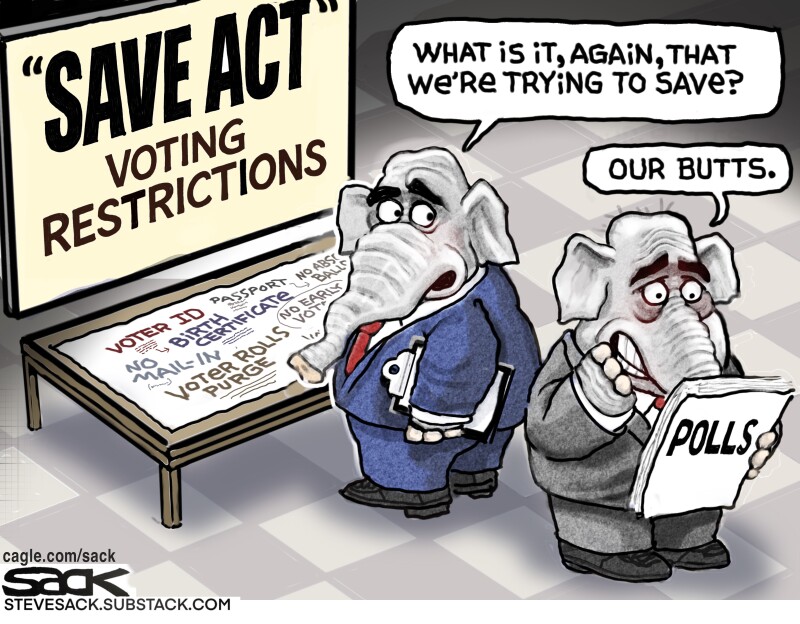
The ongoing debate over the Safeguard American Voter Eligibility, or SAVE, Act has intensified in the United States Congress, as lawmakers weigh the implications of this proposed legislation. Backed by former President Donald Trump, the bill recently passed in the House and is currently awaiting a vote in the Senate, where reports indicate that approximately 50 senators support it. Critics argue that the SAVE Act amounts to unconstitutional voter suppression.
Supporters of the SAVE Act claim it aims to address widespread issues of electoral fraud, particularly citing instances of noncitizen voting. However, research from various election directors across the nation, including a study by the Heritage Foundation, contradicts this notion. These studies have consistently shown that such claims lack substantial evidence, with Julie Wise, King County Elections Director, noting that in the 2024 presidential election, none of the 12 cases of potential voter fraud referred to her office involved noncitizens casting votes.
Concerns Over Voter Access and Documentation Costs
The SAVE Act mandates that individuals registering to vote must provide proof of citizenship, such as a birth certificate or a U.S. passport. This requirement raises significant concerns regarding voter accessibility. Many citizens may struggle to obtain these documents, with estimates suggesting that nearly 49% of Americans do not possess a passport. The costs associated with acquiring these documents further complicate the situation, as they contradict the principle of free and fair elections.
The legislation could disproportionately impact marginalized groups, particularly those without the means to access required documentation. Additionally, military families may face challenges, as the bill would necessitate providing citizenship documentation every time they re-register after a move, potentially complicating their voting process.
In Washington State, where voting is primarily conducted by mail, the implications of the SAVE Act could still be significant. Approximately 2.8 million residents lack passports, and many women may face difficulties if their identification does not match their birth certificates due to name changes. These barriers could disenfranchise voters, undermining the democratic process.
Financial Implications and Legislative Challenges
Implementing the SAVE Act would also require significant changes to existing voting systems. Julie Wise highlighted the financial constraints, stating, “There’s zero funding to do this,” particularly following budget cuts to her office and other county departments. The logistical challenges of enacting these changes in time for the upcoming primaries in August further complicate the situation.
As members of Congress consider their votes on the SAVE Act, they face a critical decision. Those who believe they were fairly elected in 2024 should reflect on the impact of such legislation on the voting system that brought them to office. The ongoing discourse around the SAVE Act underscores the importance of safeguarding voting rights and ensuring that all eligible citizens have the opportunity to participate in the electoral process.
The perspective shared here reflects the views of the Seattle Times Editorial Board, emphasizing the necessity of maintaining an inclusive and accessible voting system for all citizens. Readers can provide feedback at [email protected].