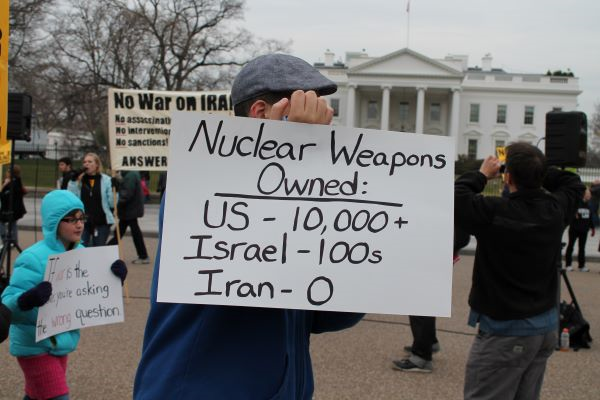
Growing concerns about military conflict in the Middle East have intensified following a series of aggressive actions by the United States and its allies. In particular, President Donald Trump has been accused of permitting Israeli military operations against Iran, leading to hundreds of civilian casualties, including many children. This escalation has significant implications, particularly as the U.S. dispatched its largest naval fleet to the Persian Gulf since the 2003 invasion of Iraq.
Escalation in Military Actions
On February 28, 2026, the U.S. military presence in the Persian Gulf was heightened, prompting fears of a larger conflict with Iran. Critics argue that Trump’s rhetoric on negotiations is undermined by actions from Israeli Prime Minister Benjamin Netanyahu and U.S. threats towards Iran. In response, Iranian officials have declared their readiness for retaliation against both Israeli and U.S. military installations in the region.
The potential closure of the Strait of Hormuz, a strategic waterway through which approximately 20% of the world’s oil supply is transported, raises alarm for global energy markets. As tensions mount, Iran’s leaders have vowed to respond decisively to any military actions, further complicating an already volatile situation.
Opponents of U.S. intervention argue that the Iranian public is united in their resistance to what they perceive as imperial aggression, despite the internal challenges they face. While acknowledging the oppressive nature of the Islamic Revolutionary Guard Corps (IRGC), critics maintain that foreign intervention is not the solution to the Iranian people’s struggles.
Calls for peace have emerged from various quarters, urging the U.S. to shift its focus towards fostering coexistence rather than conflict. Many see the potential for war not only as a humanitarian crisis but also as a catalyst for economic and political fallout that could deeply affect American society.
Local Issues and Community Responses
In a separate commentary, Robert Barr drew parallels between current political figures and historical authoritarian leaders, expressing outrage over the perceived manipulation of public sentiment. His remarks reflect a broader frustration with political leadership and the impact of media narratives in shaping public perception.
As discussions continue about foreign wars and local governance, the intersection of international conflicts and community issues underscores the complexity of contemporary political discourse. The evolving situation in Iran remains a focal point of concern for many, as advocates for peace call for a reassessment of U.S. military strategies and their implications for civilian lives.