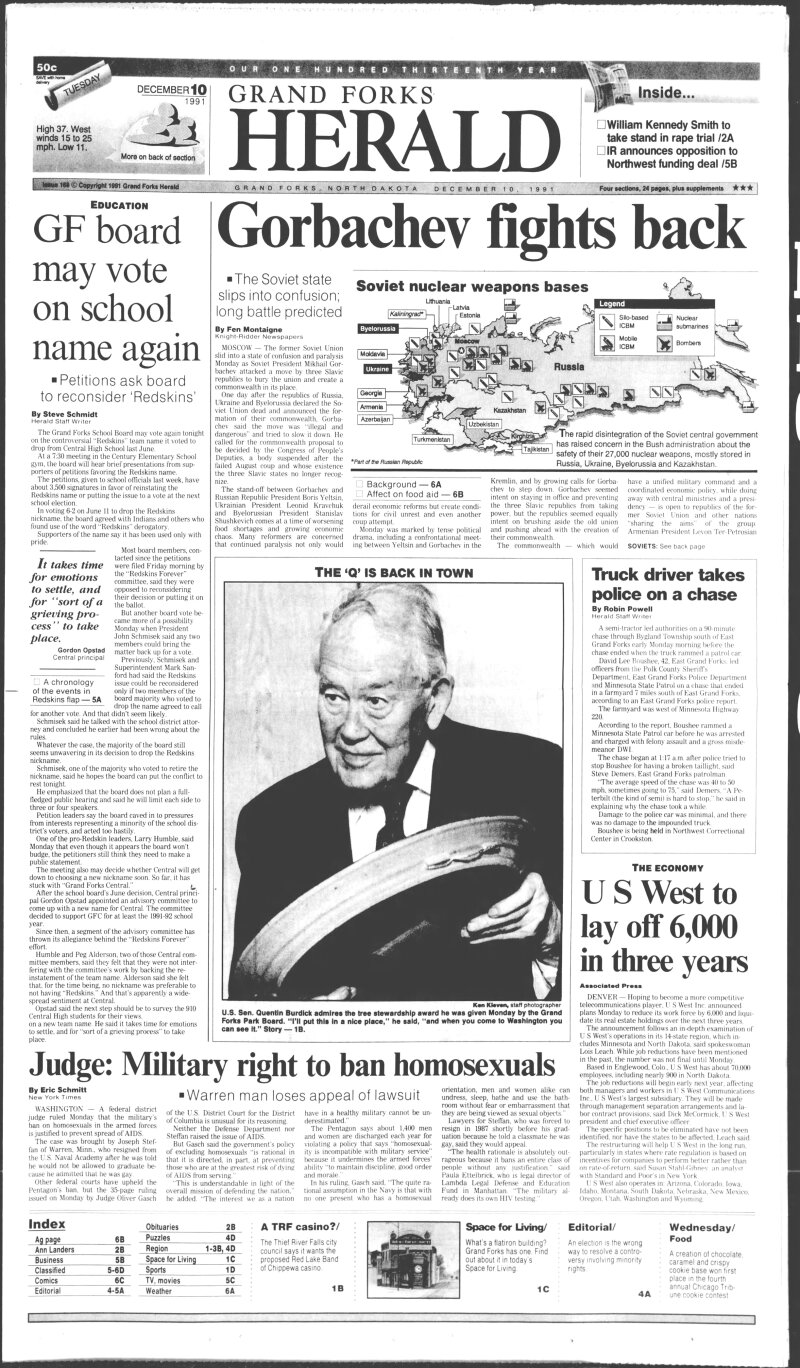
On December 10, 1991, John White, the leader of the Illinois Farm Bureau, called on President George H.W. Bush to increase aid to the faltering Soviet Union. This appeal was made against a backdrop of significant economic turmoil in the region, with the Soviet Union facing potential collapse. White emphasized the importance of the Soviet market, which had previously accounted for nearly $17 billion in U.S. corn exports during the 1970s and 1980s.
During his address to approximately 3,000 attendees at the Illinois Farm Bureau’s 77th annual meeting, White highlighted the critical nature of supporting Soviet farmers. He had recently returned from a visit to Moscow and surrounding rural areas, where he observed the dire need for economic assistance. “The Soviets were a cash-and-carry customer for $17 billion worth of corn,” White stated. “In some years, nearly 30 percent of corn exports went into this market.”
The International Wheat Council also weighed in, warning that failing to provide $19.4 billion in credit assistance could jeopardize a vital export outlet for U.S. farmers. The Council noted that the Soviet Union had been offered credit assistance and barter deals to secure essential food imports. Their statement underscored that refusal to extend help could lead to “even graver financial problems” for exporting nations.
White advocated for a long-term strategy aimed at facilitating a transition to market systems in the Soviet Union. He argued that immediate aid would allow for a more sustainable agricultural framework, enabling a shift towards unsubsidized credit and commercial sales.
Despite these calls for action, some critics expressed their discontent with the Bush administration’s priorities. David Senter, director of the American Agriculture Movement, criticized President Bush for favoring foreign aid while neglecting domestic agricultural issues. “He has not put one plan forward to deal with domestic problems in America,” Senter remarked, noting that Bush had threatened to veto even a modest increase in dairy supports for U.S. farmers. “He is disengaged. He doesn’t care about domestic programs, particularly in rural America.”
As the situation in the Soviet Union evolved, the debate surrounding foreign aid versus domestic support in the United States intensified. The tensions between those advocating for international assistance and those prioritizing local agricultural needs highlighted a growing divide in U.S. policy at the time.
The events of December 10, 1991, reflect a pivotal moment in U.S.-Soviet relations during a time of significant global change. As the Soviet Union faced unprecedented challenges, the decisions made by leaders like President Bush would have lasting implications for both international relations and domestic agricultural policy.