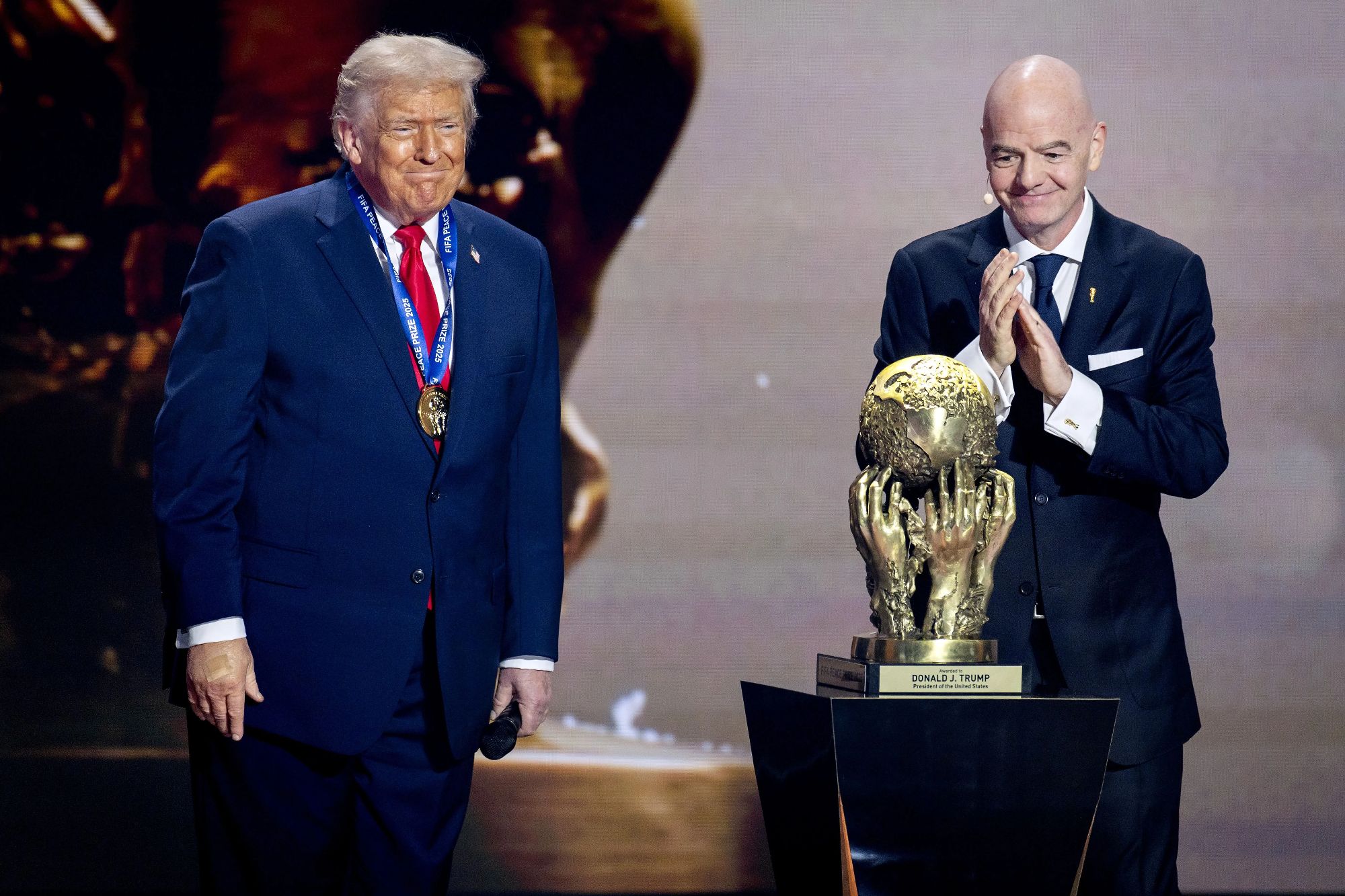
President Donald Trump has described himself as the “president of peace,” claiming to have “ended eight wars,” yet the American public appears largely indifferent to issues of foreign policy. According to a recent Gallup poll, only 1% of respondents identified foreign policy as a top concern. Byron York of the *Washington Examiner* highlights this disconnect, noting that without a direct military conflict involving the United States, many citizens do not engage with international affairs.
Trump’s assertions include resolving long-standing disputes between nations such as Israel and Hamas, Pakistan and India, and Egypt and Ethiopia. However, York questions the public’s awareness of these conflicts, suggesting that many Americans may not even recognize the significance of these claims.
Redefining the Role of Liberal Arts in Education
In a separate discussion on education, Samuel J. Abrams reflects on the state of liberal arts institutions in the United States. Writing for *Real Clear Education*, Abrams posits that while the liberal arts are intended to foster wisdom, they no longer align with the economic realities faced by students. He cites a recent essay by Kevin Carey in the *New York Times*, which highlights the troubling trend of small colleges closing their doors.
Abrams argues that the mission of liberal arts colleges must evolve to better serve students in an age where artificial intelligence is transforming knowledge work. He advocates for an educational approach that merges theoretical reflection with practical application, creating a bridge between tradition and innovation.
Fraud Concerns and Cultural Criticism in Political Discourse
The ongoing investigation into fraudulent activities in Minnesota has stirred political debate, with the editorial board of *The Wall Street Journal* asserting that the situation validates Republican calls for reforms. Allegations suggest that officials ignored warning signs, allowing scammers to exploit welfare programs. One defendant’s attorney likened the situation to “someone stealing money from the cookie jar and they kept refilling it.”
While President Trump has pointed to the involvement of ethnic Somalis, the editorial board contends that the core issue lies in the flawed incentives within the welfare system, which they argue fosters a culture of fraud.
In cultural commentary, Seth Mandel of *Commentary* criticizes celebrities such as Brian Eno and Margaret Atwood for their support of a campaign to release Marwan Barghouti, a convicted terrorist. Mandel asserts that equating Barghouti’s legacy with that of Nelson Mandela is an insult to Mandela’s memory and raises questions about the true intentions behind such advocacy.
Lastly, in another cultural critique, Brendan O’Neill from *Spiked* questions the motivations behind the recent boycott of the Eurovision Song Contest due to Israel’s participation. O’Neill argues that this double standard reflects a deep-rooted bias against Israel, suggesting that the nation is held to a different standard than others regarding international conflicts.
This multifaceted discussion highlights the varied ways in which foreign policy, education, and cultural perspectives intersect in contemporary American discourse, revealing a complex landscape of public interest and concern.