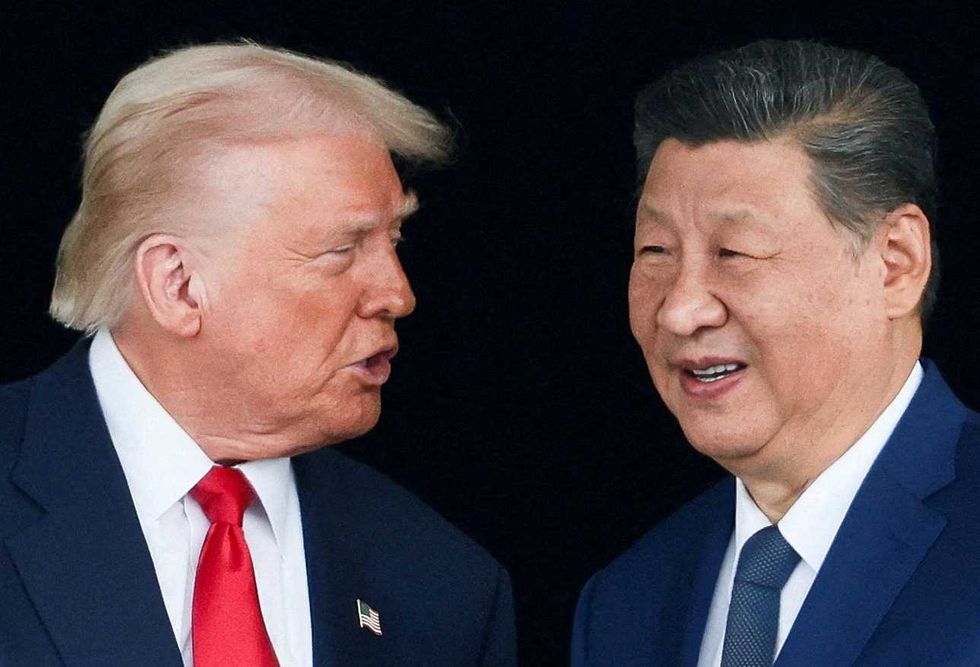
President Donald Trump‘s tenure has inadvertently aided China’s rise as a global superpower while distancing the United States from its European allies, according to a recent survey by the European Council of Foreign Relations. The survey, reported by The Guardian, highlights a notable shift in perceptions of the U.S. and China among 21 countries surveyed, with nearly all respondents anticipating an increase in China’s influence over the next decade.
The survey reveals that favorable views of China are on the rise, while perceptions of the U.S. as an ally have declined significantly across most nations. Notably, only in India did a majority of respondents express confidence in the U.S. as a partner aligned with their values and interests. The findings reflect a growing sentiment that the traditional geopolitical order is undergoing profound changes.
Impact on Global Alliances
As the world grapples with significant geopolitical instability, highlighted by the ongoing conflict between Ukraine and Russia, the survey’s authors emphasize the need for European leaders to recognize this shift. They assert that “political leaders in Europe should no longer ask themselves whether their own citizens grasp the radical nature of the current geopolitical changes. They do.” This commentary underscores a broader understanding in Europe that the previous norms of international relations may no longer apply.
The report also coincides with a period of escalating tensions, including ongoing conflicts in the Middle East and recent developments concerning Nicolás Maduro, the Venezuelan dictator. Trump recently approved a military operation aimed at arresting Maduro on charges related to narco-terrorism and weapons trafficking, adding another layer of complexity to the geopolitical landscape.
Declining U.S. Influence
The survey’s findings suggest a continuing trend of declining U.S. influence among its traditional allies. As China’s global stature rises, the perception of the U.S. as a reliable partner is increasingly questioned in many countries. This shift is particularly evident in nations that once viewed the U.S. as a leading force in promoting democratic values and international stability.
The authors of the survey warn that the implications of these findings could be significant for U.S. foreign policy. They call for a re-evaluation of strategies to engage with allies and to address the growing influence of China on the world stage. With the geopolitical landscape in flux, the U.S. faces the challenge of redefining its role and relationships in a changing world.
The full report offers a detailed analysis of these trends and provides insights into how countries perceive the evolving international order. As global dynamics shift, understanding the implications of these changes will be crucial for policymakers and leaders worldwide.