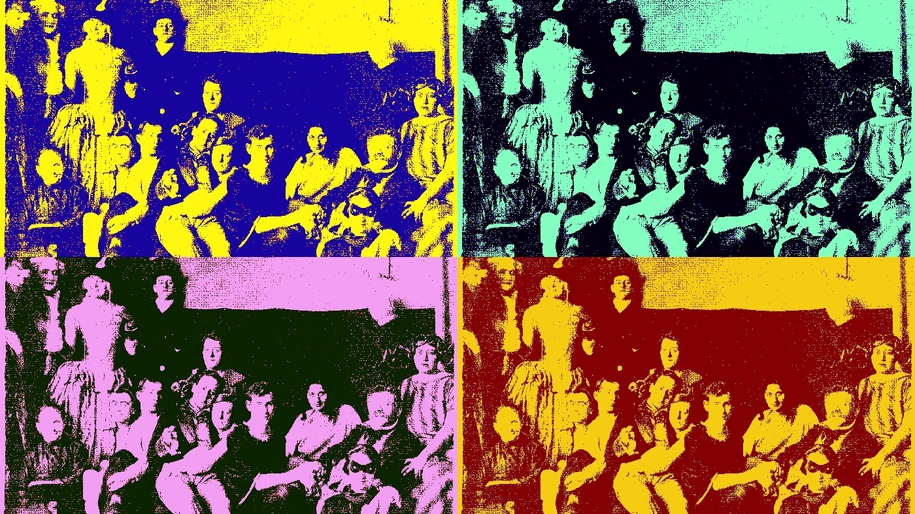
Dr. Brandy Schillace’s new book, The Intermediaries: A Weimar Story, offers a compelling exploration of LGBTQIA+ history through the lens of personal narratives and scientific advancements. The book highlights the pivotal role of Dr. Magnus Hirschfeld, a pioneering sexologist whose work in the early 20th century laid the groundwork for modern understandings of gender and sexuality.
Hirschfeld, who founded the Institute for Sexual Science in Berlin, advocated for the legal recognition of diverse sexual and gender identities. His institute, established in 1919, became a hub for research and advocacy but faced tragic destruction during the rise of the Nazi regime. In a poignant reminder of this dark chapter, Nazi soldiers famously burned the institute’s extensive library, which contained over 100,000 volumes of research.
Schillace’s narrative begins with the story of Dora Rudolfine Richter, a trans woman who underwent one of the first gender-affirming surgeries at Hirschfeld’s institute. Born Rudolf Richter in 1892, she faced immense societal challenges, including blackmail and sexual assault, before finding refuge in the progressive environment created by Hirschfeld. Her journey illuminates the personal battles faced by many during a time when acceptance was rare.
The book delves into Hirschfeld’s life and work, revealing his evolution from a quiet medical practitioner to a vocal advocate for LGBTQIA+ rights. His early experiences, including the suicide of a gay patient, propelled him to challenge societal norms and advocate for the abolition of Paragraph 175, a law criminalizing homosexual behavior in Germany. In 1897, he established the Scientific Humanitarian Committee to rally support against this legislation, marking a significant step in the fight for gay rights.
Schillace’s writing is both accessible and scholarly, presenting a rich tapestry of interconnected stories, scientific inquiries, and political struggles. The term “intermediaries” in the title encapsulates the dual role of Hirschfeld and his contemporaries: they acted as both advocates and subjects in a complex web of societal dynamics.
The book also explores the impact of World War I, which led to a brief period of liberation for sexual minorities in Germany. Following the war, the political landscape shifted dramatically, influencing public opinion and paving the way for new ideas about sexuality and gender. Schillace notes that during this era, the institute became a beacon of hope, providing medical services and support for those marginalized by society.
In addition to personal narratives, The Intermediaries addresses the broader implications of Hirschfeld’s work, including the establishment of international conferences that sought to advance sexual reform. These gatherings brought together activists and scholars from around the world, highlighting the global nature of the struggle for LGBTQIA+ rights.
The legacy of Hirschfeld and his institute did not end with their destruction. Schillace connects their work to the emergence of the Kinsey Institute for Sex Research in the United States, founded by Dr. Alfred Kinsey. Kinsey’s research in the mid-20th century would further illuminate the complexities of human sexuality, building on the foundations laid by Hirschfeld.
As the book unfolds, Schillace intertwines historical context with personal stories, creating a narrative that resonates with contemporary struggles for LGBTQIA+ rights. The exploration of these often-overlooked histories serves as a reminder of the resilience and courage of those who have fought for recognition and acceptance.
In summary, The Intermediaries: A Weimar Story is not merely a historical account; it is a call to reflect on the progress made and the challenges that remain in the quest for equality. Schillace’s insightful analysis encourages readers to engage with the past while considering its relevance to the present day. The book not only honors the memory of figures like Hirschfeld and Richter but also inspires a renewed commitment to advocating for LGBTQIA+ rights worldwide.