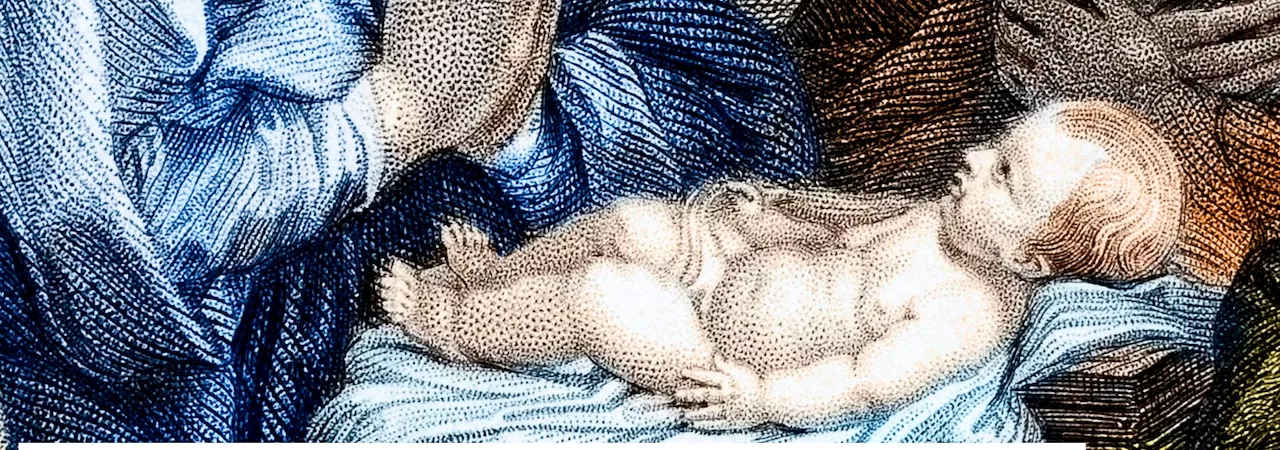
The birth of Jesus is often depicted as a serene moment of peace, yet historical research reveals a far more tumultuous backdrop. Historian and author explores the socio-political landscape of Judaea during the time of Jesus’ birth, highlighting conflicts and instability that challenge the traditional narrative of tranquility associated with the Nativity.
The familiar carol “Silent Night,” with its refrain of “all is calm, all is bright,” starkly contrasts with the realities faced by Jesus’ family. Far from the idyllic scenes often portrayed on Christmas cards, the Gospel accounts describe a world filled with dislocation, danger, and oppression. For instance, the “manger,” traditionally viewed as a cradle, was actually a feeding trough for animals, symbolizing the stark conditions surrounding Jesus’ entry into the world.
A significant figure influencing this environment was King Herod, the appointed ruler of Judaea, whose reign was marked by brutality and fear. Herod’s governance was supported by the Roman Empire, which viewed him as a reliable client king. His legacy was tainted by actions such as the violation of the tomb of David, an act that would have resonated deeply within a family claiming descent from this revered lineage. The Gospel of Matthew underscores the importance of this genealogy in establishing Jesus’ identity and the expectations placed upon him.
Herod’s relationship with Bethlehem, the birthplace of Jesus and a city tied to David, was fraught with tension. After his initial appointment, Herod faced a challenge from a rival supported by the Parthians, leading to violent confrontations in the region. When Herod regained control, he commemorated his victory with a memorial overlooking Bethlehem, a testament to his ruthlessness. This historical context raises questions about how such violence shaped the early narratives and experiences of Jesus’ family.
The broader backdrop of rebellion against Roman rule also complicates the Nativity story. According to the first-century historian Josephus, Judaea was in open revolt shortly after Jesus’ birth. Following Herod’s death, violent uprisings erupted, leading to further massacres under his son, Archelaus. Families, including Jesus’, were caught in a cycle of fear and displacement. After seeking refuge in Egypt, Joseph brought his family back to Nazareth in Galilee, a region that soon faced its own turmoil as Roman forces quelled further insurrections.
The historian’s insights highlight a stark contrast between the traditional Nativity narrative and the actual conditions of Jesus’ early life. He suggests that a modern adaptation could reflect this chaotic and traumatic social environment. A film capturing these struggles might resemble a dramatic interpretation of a young Jesus navigating a world fraught with danger rather than the serene portrayal typically seen in holiday celebrations.
In examining the narratives surrounding Jesus’ childhood, it is essential to acknowledge the darker elements interwoven with the accounts. Some apocryphal texts portray a young Jesus exhibiting supernatural powers in ways that echo the violence of his surroundings. These stories, although popular in their time, reflect a troubling understanding of morality and retribution that diverges from the broader themes of compassion and forgiveness found in the canonical Gospels.
Ultimately, the historical context of Jesus’ nativity offers a profound perspective on the complexities of his early life and the struggles faced by his family. This exploration serves as a reminder that the true essence of the Nativity is not solely one of peace and joy but is also characterized by struggle and resilience in the face of overwhelming odds. Such narratives resonate today, reflecting ongoing themes of conflict and hope in a world that often feels divided and oppressive.