Earth achieved perihelion on January 3, 2024, reaching a distance of approximately 91.5 million miles from the sun. This moment marks the point in the planet’s elliptical orbit when it is closest to the sun. In contrast, the farthest point, known as aphelion, will occur in July, when Earth will be about 94.5 million miles away.
Understanding this phenomenon provides insight into seasonal changes and gravitational influences affecting our planet. The term “perihelion” is derived from the Greek word for sun, Helios, and signifies the importance of the sun’s position in our solar system. The average distance from Earth to the sun is typically cited as 93 million miles, but this varies throughout the year due to the elliptical shape of Earth’s orbit.
The speed of Earth’s orbit changes with its proximity to the sun. During the winter half of the year, when Earth is closer, it travels faster. This accelerated movement means that the duration of winter is slightly shorter compared to summer. A simple way to observe this phenomenon is by counting the days from the spring equinox to the fall equinox and comparing it to the days from the fall equinox back to spring. Observers may find the journey from fall to spring appears to pass more swiftly.
Despite being closest to the sun in January, this does not result in warmer winter temperatures in the northern hemisphere. Interestingly, this proximity does contribute to milder winter conditions compared to what they might be if Earth were farther away.
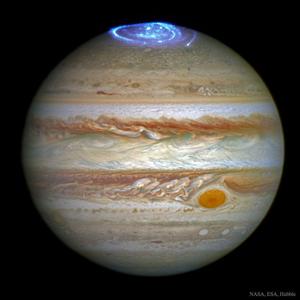
As January progresses, the evening skies are dominated by the planet Jupiter, currently at opposition on January 10, 2024. This positioning means that Earth is directly between Jupiter and the sun. Consequently, Jupiter appears exceptionally bright in the night sky due to its size, being over 11 times the diameter of Earth and possessing more than 300 times its mass. This immense gravitational force affects not only its own characteristics but also subtly influences Earth’s orbit.
The gravitational interactions with Jupiter, Venus, and Earth’s moon play significant roles in the variations of Earth’s orbit. These forces can even contribute to the onset of ice ages over extended periods.
In contrast, Venus, previously visible as the “morning star,” is now hidden behind the sun’s glare. Positioned directly on the opposite side of the sun from Earth, Venus will remain out of sight for several weeks before reappearing in the western sky as the “evening star.”
Since the winter solstice in December, daylight hours have gradually increased, but this is not due to earlier sunrises. Instead, the extension of daylight has come from later sunsets. Fortunately, early January marks the beginning of earlier sunrises, further enhancing our experience of daylight.
As the new year unfolds, Al Stahler extends his wishes for a positive year ahead to all his neighbors and readers, encouraging everyone to appreciate the beauty and dynamics of our celestial surroundings.