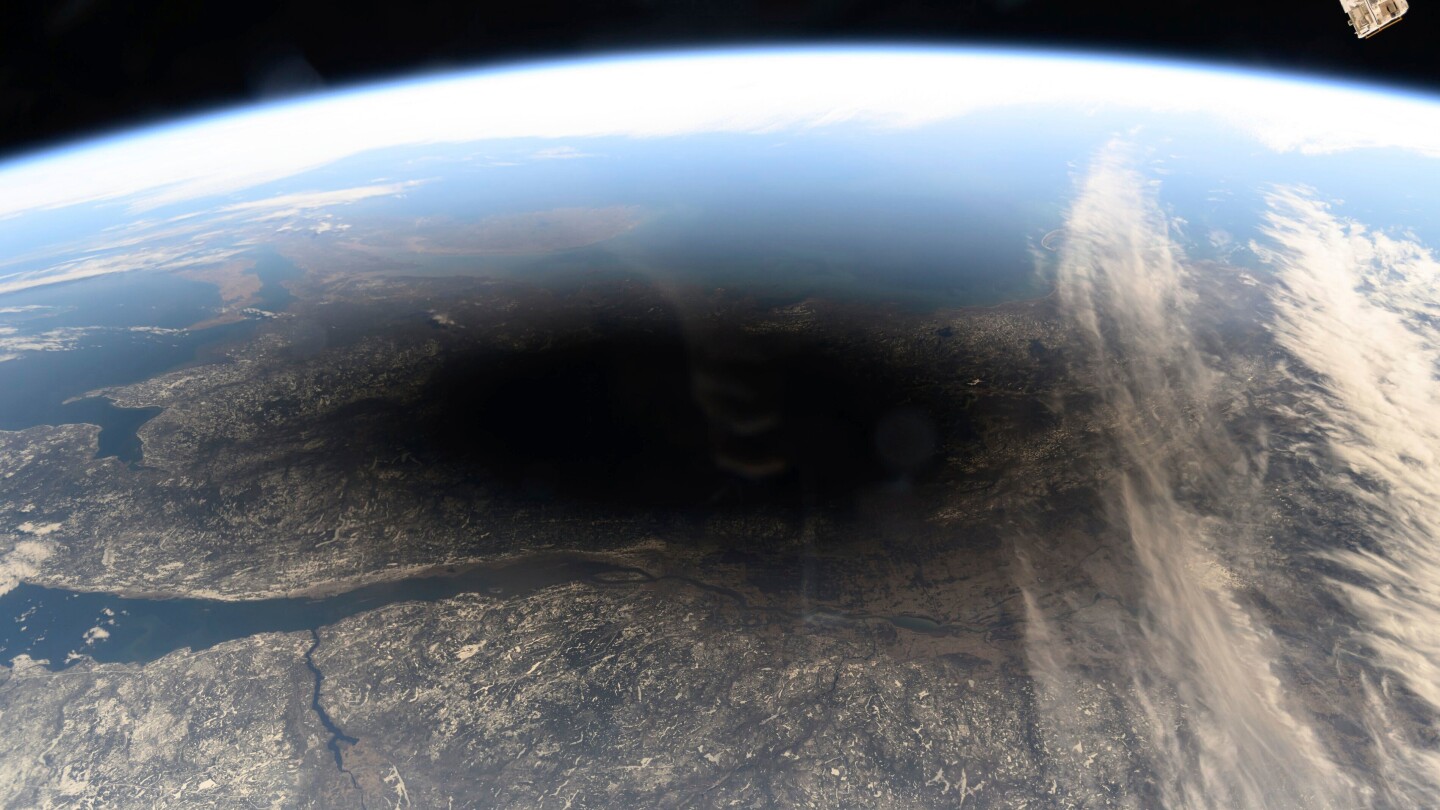
CAPE CANAVERAL, Fla. — The year 2026 promises a spectacular lineup of celestial events, featuring significant lunar and solar phenomena. A highlight will be the return of astronauts to the moon, the first visit in over 50 years, alongside various robotic missions. This year will also showcase multiple supermoons and two notable solar eclipses, captivating skywatchers around the globe.
Astronauts and Robotic Missions to the Moon
In early 2026, NASA’s lunar mission will see Commander Reid Wiseman and his crew embark on a ten-day journey. They will conduct a flyby of the moon, gathering data from areas unexplored by the Apollo missions. This endeavor aims to enhance geological understanding and assist in the selection of future landing sites. The mission, while not involving a moonwalk, sets the stage for subsequent crews under NASA’s Artemis program.
Robotic landers are also set to make significant contributions. Blue Origin, founded by Jeff Bezos, plans to launch a prototype of its lunar lander, Blue Moon, standing at 26 feet (8 meters). This prototype aims to demonstrate capabilities for future crewed missions. Additionally, companies like Astrobotic Technology and Intuitive Machines are preparing for their own lunar landings in 2026, with China targeting the moon’s south polar region for exploration.
Stunning Eclipses and Supermoons Await
2026 will feature a series of eclipses, starting with a ring-of-fire solar eclipse on February 17. This event will be visible in Antarctica, with partial views available in southern regions of Chile and Argentina. Later in the year, a total solar eclipse will occur on August 12, crossing the Arctic and parts of Greenland, Iceland, and Spain. This eclipse will last for two minutes and 18 seconds, offering a stunning sight as the moon completely obscures the sun.
In addition to the solar phenomena, three supermoons will illuminate the night sky. The first will appear on January 1, followed by another on November 24 and the final supermoon on the night of December 23 into December 24. The December supermoon will be particularly close to Earth, at just 221,668 miles (356,740 kilometers), making it an impressive sight for observers.
Planetary Alignments and Astronomical Discoveries
February will also bring an extraordinary sight as six of the eight planets align in the evening sky. Mercury, Venus, Jupiter, and Saturn will be visible to the naked eye, while Uranus and Neptune will require binoculars or telescopes. Later in the year, a similar planetary parade will occur in August, featuring Mars, which will join the lineup.
The year will also see the tail end of the interstellar comet 3I/Atlas, which recently swung past Earth. While it remains visible through powerful telescopes, its brightness is expected to fade. Scientists, including NASA’s Paul Chodas, express excitement for future interstellar discoveries, with advanced technology enhancing the chances of identifying more such visitors.
Auroras and Solar Activity
2026 is anticipated to deliver an increase in auroras due to heightened solar activity, although experts predict a gradual decline in solar eruptions as the solar cycle progresses. Rob Steenburgh from the National Oceanic and Atmospheric Administration noted that upcoming observations from new spacecraft will improve understanding of solar influences on Earth, making this year significant for space weather enthusiasts.
As 2026 unfolds, the convergence of lunar exploration, breathtaking eclipses, and celestial alignments promises to captivate audiences worldwide, reaffirming humanity’s enduring fascination with the cosmos.