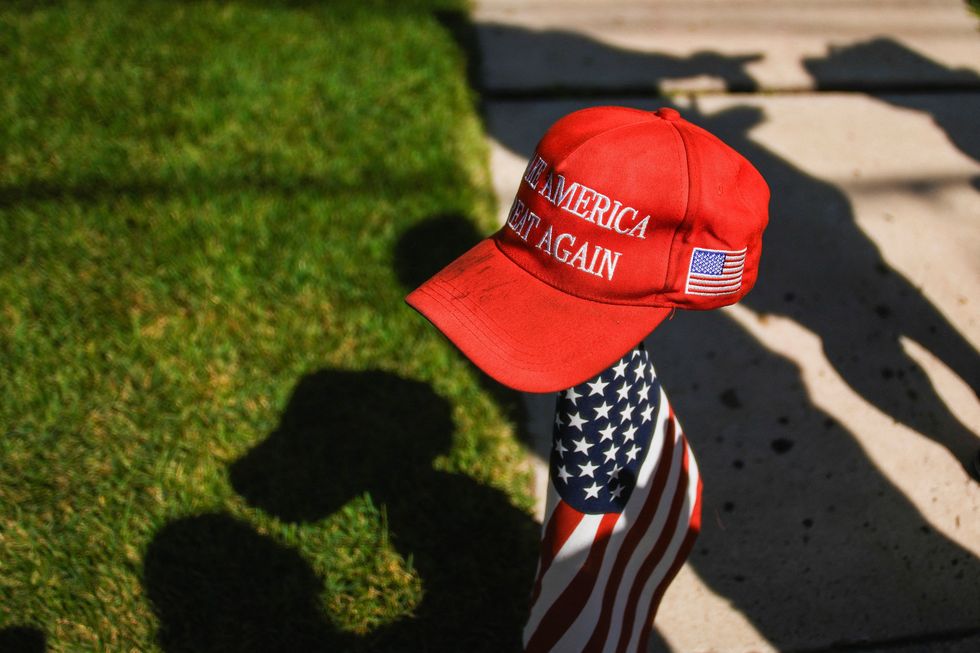
The MAGA movement, once a dominant force in American politics, is reportedly experiencing significant internal turmoil as economic conditions worsen. Supporters are increasingly fracturing, revealing deep divisions within the group that could threaten its future. This unraveling appears linked to a combination of economic instability and the controversial actions of its leader, Donald Trump.
Over the past decade, various commentators have speculated about the decline of MAGA, often predicting its imminent collapse. Although these predictions have not materialized until now, signs indicate that the movement is indeed faltering. Observers note that MAGA has always been rooted in a transactional approach, lacking the foundational principles that typically sustain political movements.
As factions within the MAGA base vie for dominance, the struggle over what it means to represent “America First” has intensified. With a declining economy, the group faces challenges that threaten its survival. The political landscape is shifting, and the traditional Republican base appears to be feeling the strain.
Economic difficulties have been exacerbated by the actions of the Republican Party, which has often prioritized tax cuts and deregulation over the welfare of the middle and lower classes. Historical patterns suggest that when economic stability is compromised, the average voter, particularly those in blue-collar positions, may become disillusioned with their party’s promises. Many have traded economic security for the societal stability they perceive MAGA offers, often at the expense of marginalized communities.
Trump’s ties to wealthy individuals have drawn scrutiny, raising questions about his commitment to his base. Supporters express unwavering loyalty, but the reality of an unstable economy may test this allegiance. Critics argue that his focus on enriching himself and those close to him could alienate the very voters who supported him.
In addition to economic concerns, the movement faces the fallout from Trump’s connections to controversies such as those involving Jeffrey Epstein. Despite multiple allegations and legal challenges, including a high-profile case brought by E. Jean Carroll, many supporters have remained steadfast. Yet, as the economic situation deteriorates, some within MAGA may find it increasingly difficult to overlook these issues.
The younger generation of MAGA supporters, influenced by figures such as Nick Fuentes, has also emerged as a concern. These individuals exhibit a willingness to embrace extremist ideologies, further complicating the movement’s dynamics. Their actions pose a risk not only to the movement’s public image but also to its cohesion as factions grapple with differing values and goals.
As these internal conflicts grow, the future of MAGA hangs in the balance. While some supporters remain fervent, the potential for increased division could weaken the movement’s influence. The broader political implications are significant, with the possibility of a reshaped Republican Party should MAGA fail to adapt to the changing landscape.
Looking ahead, the 2028 election cycle looms large, presenting challenges for Trump as he navigates his legacy and the shifting priorities of his supporters. The current turmoil raises questions about whether he can maintain his grip on the movement or if a new leader will emerge.
While the decline of MAGA may seem inevitable, observers warn that the group could become more dangerous in its final throes. As it grapples with internal strife and external pressures, the potential for increased volatility remains a pressing concern. The political landscape is evolving, and the effects of this unraveling may extend far beyond the movement itself.
This situation underscores the need for ongoing vigilance as the political climate in the United States continues to shift. With the sun setting on MAGA, the focus must now turn to the implications for the broader society and the work needed to address the challenges that lie ahead.