Thirteen ambulances are lined up outside the Emergency Department (ED) of the Royal Stoke University Hospital in Staffordshire, as patients await entry. Each vehicle houses individuals who have been waiting for four hours or more due to a lack of available beds. The hospital is operating at full capacity, with every one of its 1,178 beds occupied and additional patients receiving care in corridors. Ann-Marie Morris, the hospital trust’s deputy medical director, remarks on the situation, stating, “This is not our worst day, but equally … it is a challenge to manage.”
The Royal Stoke, a large regional NHS hub, faces significant strain, coinciding with an unprecedented surge in flu cases and a five-day strike by resident doctors that began on December 6, 2023. The hospital’s Operational Pressure Escalation Level (Opel) stands at 4, the highest level before declaring a critical incident, indicating the inability to safely deliver all services. This is part of what many health leaders describe as the “worst ever” winter crisis, with warnings of a potential “flu-nami” overwhelming the system.
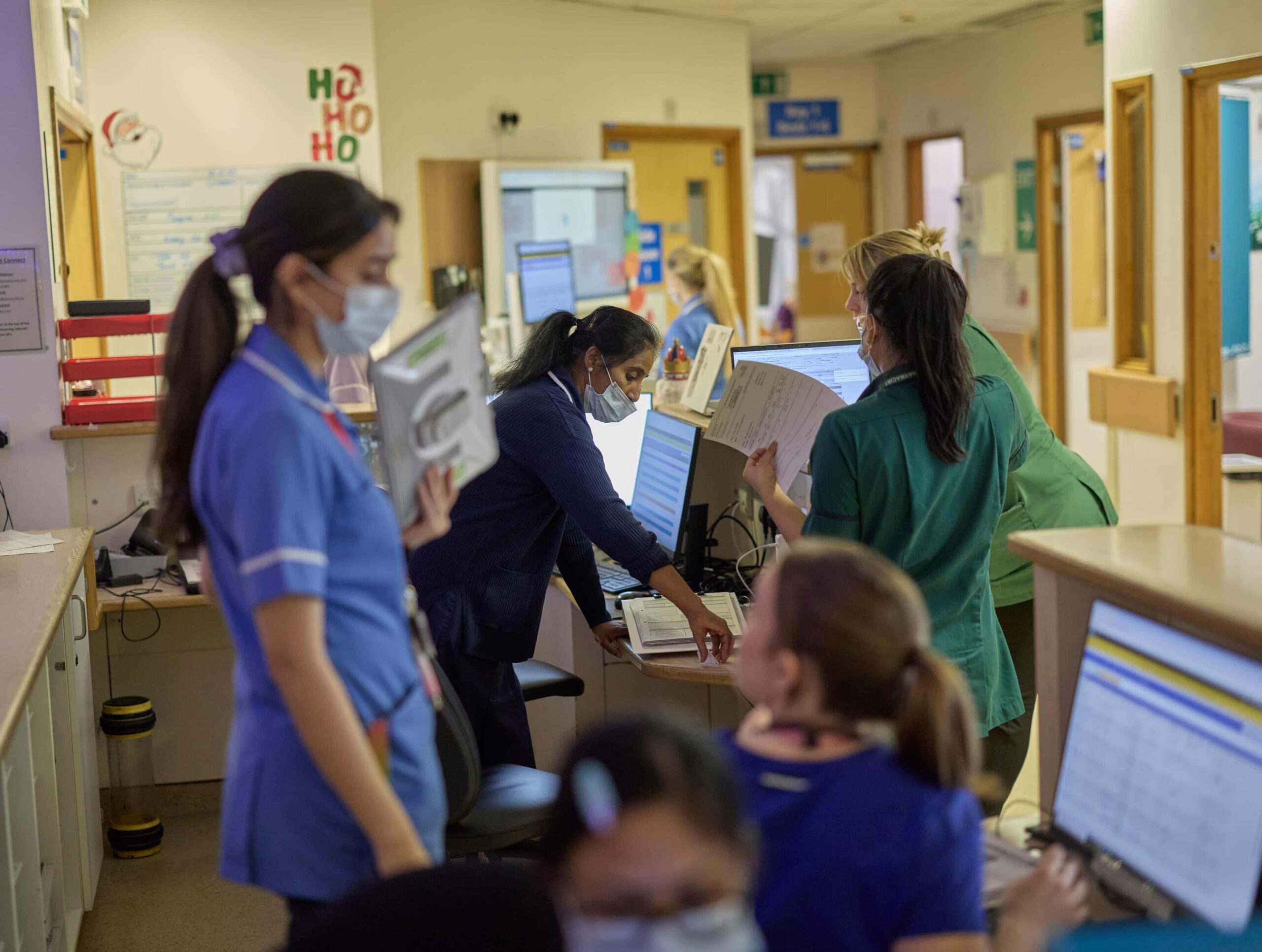
Despite the challenges, dedicated staff at Royal Stoke continue to navigate the complexities of patient care under immense pressure. Dan Hobby, matron for general surgery, expresses a sense of ongoing crisis, stating, “It almost feels like winter is 12 months a year. We are permanently in winter.” The hospital’s situation offers a glimpse into the daily realities faced by NHS staff, who are not only tasked with caring for patients but also with managing the logistics of a congested healthcare system.
Hobby and his colleagues participate in an intricate process of patient management. The hospital has implemented various strategies to alleviate pressure, including “hot clinics” for outpatient care and community response teams that address potential emergency admissions before they occur. However, institutional gridlock remains a significant hurdle.
In the respiratory ward, Dr. Ashwin Rajhan treats patients like 74-year-old Raymond Dutton, who has motor neurone disease. Rajhan highlights the particular risks posed by the flu for vulnerable individuals, noting, “We are seeing quite a number of flu patients, but thankfully, not many are needing critical care admissions.” The hospital declared a critical incident on December 6 due to rising admission numbers, but Rajhan indicates a recent plateau in cases.
Despite this momentary stability, the pressing need for beds continues to create challenges. Rajhan describes a typical day where he must coordinate urgent discharges to make space for incoming patients. With the ward already exceeding its capacity, he initiates discussions with physiotherapists to expedite the discharge process, emphasizing the importance of teamwork in these high-stakes situations.
However, the system’s inefficiencies often complicate these efforts. In a critical care ward, Tracey Wootton has been waiting for three days to be transferred to a general medical ward, far exceeding the national standard of four hours. Similar delays plague the surgical assessment unit, where patients now wait three days for transfers instead of the previous 24-hour timeline.
While the resident doctors’ strike poses additional challenges, senior staff remain optimistic. Rajhan notes that navigating the computer systems may slow discharges, but the collaborative decision-making remains effective. “It is a learning curve, I can’t deny that,” he says, highlighting the adaptability required in these circumstances.
At the heart of the hospital, clinical head of operations Becky Ferneyhough monitors patient flow and capacity, coordinating resources to manage the ongoing influx of patients. “The patient is the most important part of everything that we do,” she states, acknowledging the difficulty of balancing the needs of current and incoming patients.
The Royal Stoke’s experience reflects a broader crisis within the NHS, exacerbated by rising flu cases and workforce challenges. As winter progresses, the hospital staff remain committed to providing care amidst an ever-challenging environment. The situation exemplifies not only the strain on the healthcare system but also the resilience and dedication of those working within it.