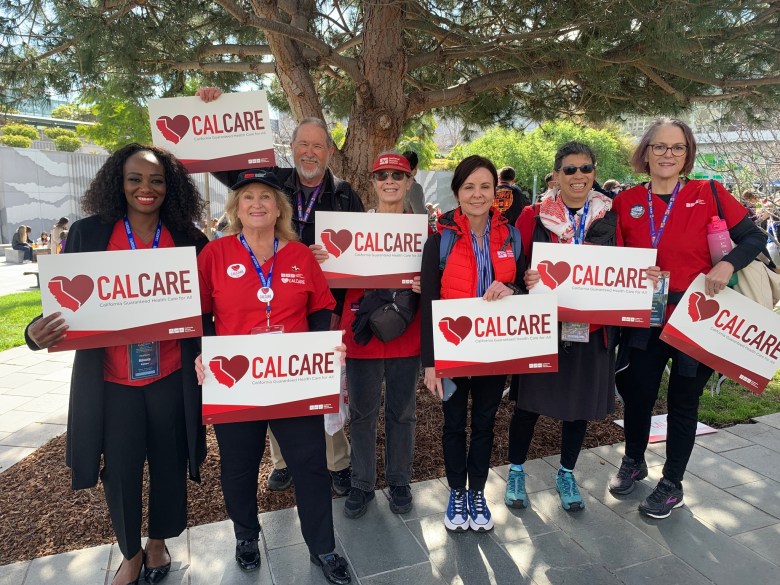
In response to significant federal funding cuts, Assemblymember Ash Kalra is renewing his efforts to establish a single-payer health care system in California. Recent proposals from the Trump administration, including slashing nearly $1 trillion in federal Medicaid funding, have intensified discussions around the urgent need for comprehensive health care reform in the state.
Kalra, who has represented San Jose since 2016, has introduced variations of the single-payer concept multiple times over the past five years. His latest initiative, known as Guaranteed Health Care for All, aims to create CalCare, a universal health care system governed by a state-run board. This system would provide no-cost care to all residents, regardless of income or immigration status. Kalra believes that current federal actions highlight the flaws in the existing health care framework, making a strong case for his proposal.
Federal Cuts Prompt Renewed Advocacy
The recent cuts in federal Medicaid funding, particularly affecting California’s Medi-Cal program—which serves over 15 million residents—are projected to result in a loss of approximately $30 billion annually. This loss, coupled with the refusal of Congress to extend federal tax credits for the Affordable Care Act (ACA), has exacerbated the affordability crisis for many Californians. Insurance premiums have surged, leading to a 32% decrease in new enrollments in Covered California, the state’s ACA marketplace.
Kalra remarked, “Given what we’re seeing from the federal administration, the general public is more aware than ever that we have an unsustainable, dysfunctional health care system.” He underscored the importance of public discourse on the issue, arguing that the status quo is no longer acceptable.
The proposed CalCare program represents only the initial step in a lengthy legislative process. For CalCare to be realized, it must pass both the state legislature and receive approval from Governor Gavin Newsom or his successor. Kalra acknowledges the formidable opposition from the health insurance industry, which remains a powerful lobby in California.
“Every year we delay, lives are lost, families go into bankruptcy,” Kalra stated, emphasizing the urgent need for reform.
The Political Landscape and Future Challenges
Despite his determination, Kalra is realistic about the challenges ahead. He noted the lack of support from Republican lawmakers, who he believes are heavily influenced by corporate interests benefiting from the current health care system. Additionally, he expressed concerns about garnering enough Democratic support for a comprehensive overhaul.
Polling conducted for the California Nurses Association indicates that nearly two-thirds of Californians believe major reforms are necessary, with 86% of Democratic respondents supporting single-payer initiatives. This public sentiment may help propel the conversation forward, but funding such a program remains a complex issue.
To finance a universal health care plan, the state would need to secure waivers to utilize federal funds, a process that cannot commence until a bill establishing a state-run health care system is passed. Other states, including New York and Oregon, have attempted similar legislation without success, highlighting the intricate nature of implementing such a system.
Health policy experts emphasize that the underlying costs of health care continue to rise unchecked, exacerbating the affordability crisis. As Kristof Stremikis, director of market analysis for the California Health Care Foundation, noted, “These proposals do nothing to address that, and simply shift the burden onto the patients least able to bear it.”
As the political landscape evolves, Kalra remains committed to bringing CalCare to the forefront of public discourse. He believes that meaningful change requires not only legislative action but also a shift in public perception about the necessity of a universal health care system.
“The current system is getting worse,” Kalra added. “We actually need to change hearts and minds.”
With the challenges presented by federal policies and a complex political environment, the future of single-payer health care in California remains uncertain. Yet Kalra’s advocacy continues to spotlight the pressing need for a sustainable health care solution that serves all Californians.