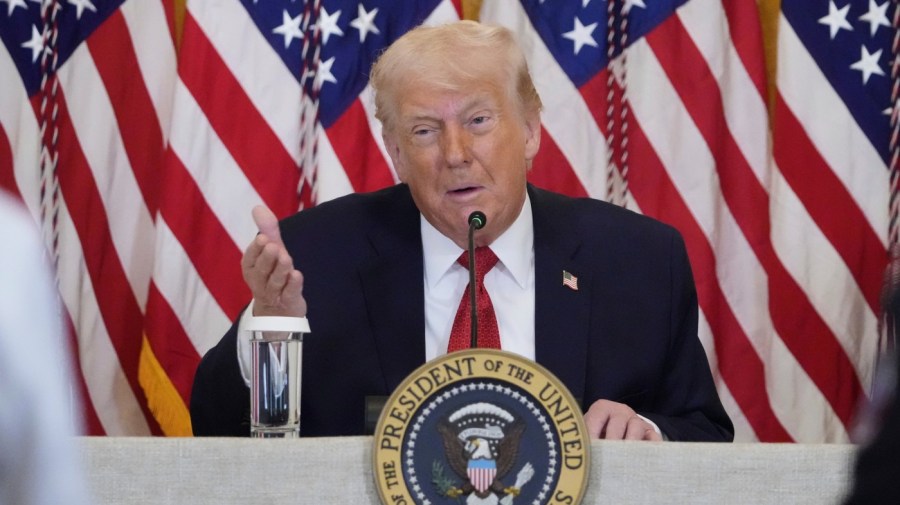
President Donald Trump expressed the possibility of imposing tariffs on countries that oppose the United States acquiring the Danish territory of Greenland. These comments came during a discussion on September 20, 2019, where Trump criticized several European allies, particularly France and Germany, for not contributing enough toward U.S. healthcare costs regarding prescription drugs.
Trump’s remarks highlighted a broader strategy where he indicated a readiness to leverage tariffs as a tool in international negotiations. He suggested that a potential 25 percent tariff could be applied to nations that resist U.S. interests, particularly those who do not align with American views on drug pricing.
During the conversation, Trump stated, “I went through country after country,” underscoring his intention to address perceived injustices in trade relationships. The President’s approach reflects a longstanding theme of prioritizing American economic interests, even at the expense of traditional diplomatic relations.
The acquisition of Greenland has been a topic of interest for Trump, who previously proposed the idea as part of his administration’s efforts to expand U.S. territory. This proposal, which was met with skepticism from both Danish officials and the international community, has not faded from the public discourse, with Trump persistently returning to it as a point of negotiation.
Critics of Trump’s tariff threats argue that such measures could further strain relations with key allies and complicate existing trade agreements. The implications of these tariffs could lead to increased costs for American consumers and potentially invite retaliatory measures from affected countries.
As the situation develops, it remains to be seen how these discussions will impact U.S. foreign policy and trade relationships. The ongoing dialogue around Greenland acquisition and tariff considerations illustrates the complex interplay between economic strategy and international diplomacy.
In a global landscape where trade dynamics are increasingly contentious, Trump’s willingness to utilize tariffs as a negotiating tactic signals a departure from conventional diplomatic practices. As nations respond to these assertions, the potential for a significant shift in U.S. foreign relations is evident.