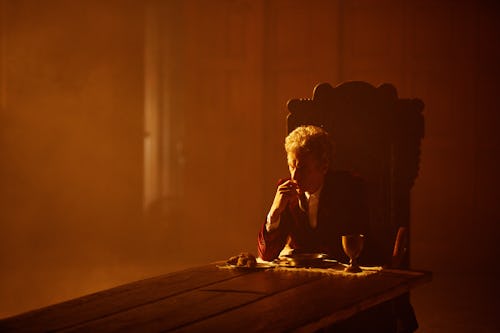
The acclaimed episode “Heaven Sent,” from the long-running British series Doctor Who, premiered in November 2015, marking a significant moment in science fiction television. Despite its brilliance, the episode remains underappreciated outside dedicated fan circles. Written by Steven Moffat and directed by Rachel Talalay, “Heaven Sent” is often cited as one of the best episodes in the show’s history, yet it has not received the recognition it deserves in wider television discussions.
In “Heaven Sent,” the 12th Doctor, portrayed by Peter Capaldi, grapples with profound themes of grief and mortality. The episode opens with a haunting narration that sets the tone for the Doctor’s journey: “As you come into this world, something else is also born.” This philosophical reflection connects to the episode’s central conflict, where the Doctor must confront his own grief after the tragic loss of his companion, Clara Oswald.
As the narrative unfolds, the Doctor finds himself trapped in a labyrinthine castle, pursued by a monstrous figure known as The Veil. This entity symbolizes the relentless nature of grief, highlighting the emotional battle faced by the Doctor. In a behind-the-scenes featurette, Moffat explained, “All of us are locked in a castle of grief sometimes,” emphasizing that the episode’s story revolves around the struggle to overcome loss.
The Doctor’s predicament is further complicated by a significant twist: he is caught in a time loop. This revelation deepens the episode’s emotional impact, illustrating that the Doctor must endure billions of years of grief before he can break free from his torment. The narrative cleverly intertwines the plot twist with the emotional climax, showcasing the Doctor’s refusal to confess to his enemies, even at the cost of his own suffering.
Critically acclaimed upon release, “Heaven Sent” was praised for its avant-garde approach and stunning visuals reminiscent of Ingmar Bergman‘s classic work. Nevertheless, some viewers found it challenging to follow, which may have contributed to its limited recognition outside the Doctor Who fandom. The episode earned a nomination for a Hugo Award, although it ultimately lost to an episode of Jessica Jones.
Despite its complex themes, “Heaven Sent” operates on the assumption that viewers are familiar with the show’s lore, which may alienate new audiences. Moffat’s other widely celebrated episode, “Blink,” remains more accessible to casual viewers due to its standalone nature. In contrast, “Heaven Sent” delves into the depths of the Doctor’s psyche, exploring how a character known for fleeing from danger confronts his grief when forced to remain in one place.
In a BBC featurette, Capaldi articulated the show’s central motif of death, stating, “It has a very, very powerful death motif in it.” This exploration of mortality and loss resonates deeply within the narrative, as the Doctor fights not only against a physical threat but also against the emotional weight of his experiences.
The episode’s ability to translate the abstract concept of grief into a tangible narrative is a hallmark of exceptional genre storytelling. Programs like Lost, Buffy the Vampire Slayer, and The Leftovers have similarly tackled the complexities of loss and the human experience, yet “Heaven Sent” stands out for its unique approach.
As the tenth anniversary of “Heaven Sent” approaches, its absence from mainstream critical discussions remains a curious oversight. While the episode may not have landed on every “Best TV Episodes Of All Time” list, its impact within the Doctor Who universe is undeniable. For fans, the episode serves as a powerful reminder of the show’s ability to confront profound themes through innovative storytelling.
In the end, the enduring legacy of “Heaven Sent” lies in its exploration of grief, an experience that transcends the boundaries of time and space. As the Doctor demonstrates resilience in the face of overwhelming sorrow, audiences are left to reflect on their own journeys through loss. If the Doctor can endure eternity, perhaps the recognition for this remarkable episode will come in time.