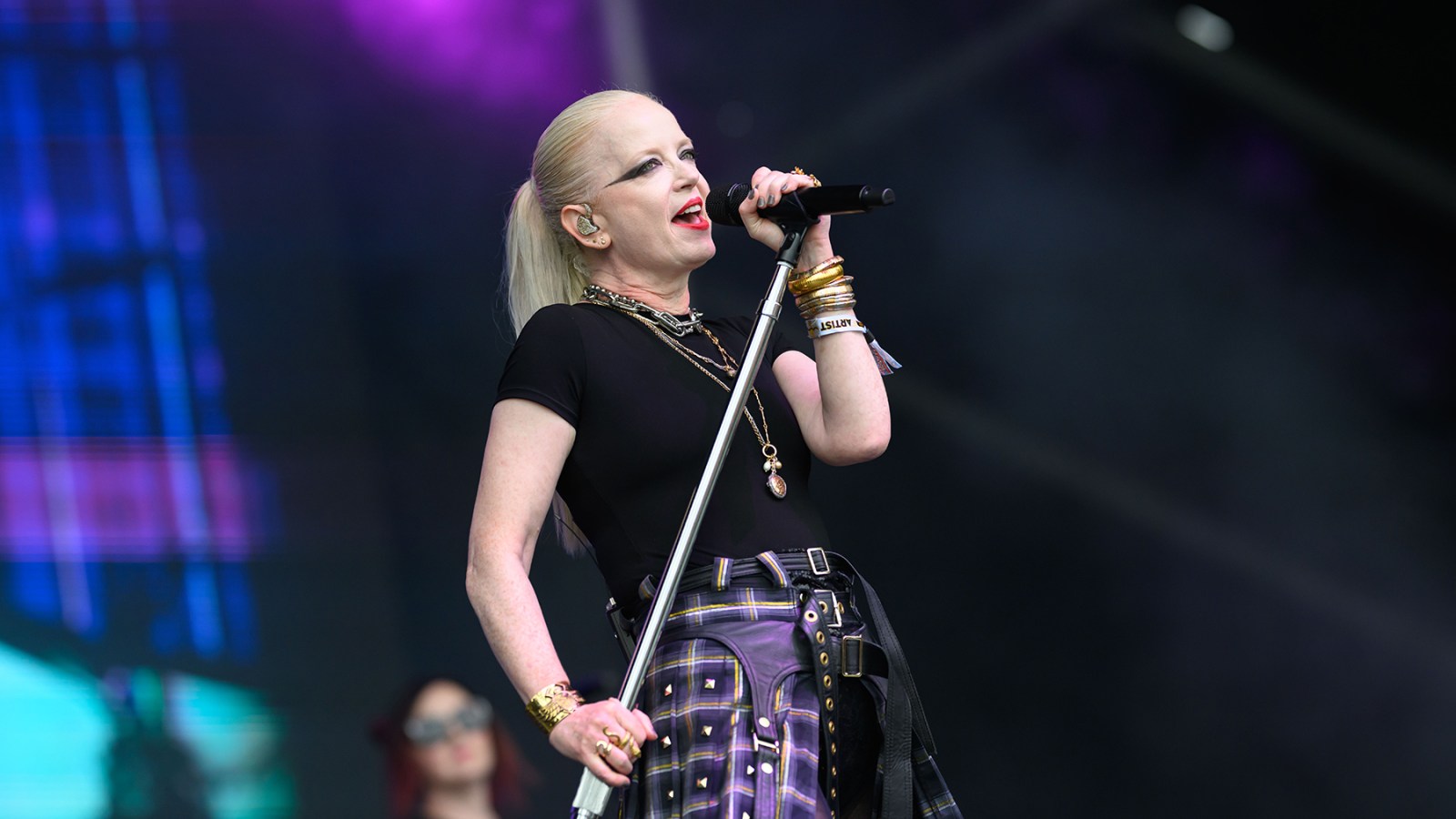
Shirley Manson, the lead singer of the band Garbage, has used a recent controversy involving beach balls at a festival to highlight her ongoing concerns about the humanitarian crisis in Palestine. During a performance at the Good Things Festival in Melbourne, Manson confronted an audience member who persistently threw beach balls towards the stage, resulting in a viral moment that drew attention not only to her frustration but also to broader humanitarian issues.
In a candid moment during a subsequent performance in Brisbane, Manson remarked, “The only thing that kind of shocks me a little is there’s been more fuss made about me offending beach balls than there has about 20,000 Palestinian kids who are now fucking under the dirt.” She emphasized the importance of focusing on significant global issues rather than trivial distractions, urging her audience to reconsider their priorities.
Manson’s comments reflect a deeper commitment to social issues, as she continued to address the ongoing conflict in Palestine. She stated, “If I upset you about your blessed beach balls, I humbly apologize. However, I would really like it if the governments of the day apologized for what the fuck is happening in Palestine.” This statement underscores her intention to redirect attention from the incident to the pressing humanitarian situation affecting countless individuals.
During the initial controversy, Manson expressed her disdain for beach balls, stating, “I joined a band because I HATED THE FUCKING BEACH.” Her remarks on social media further reinforced her perspective, as she criticized the treatment of musicians as mere entertainers rather than artists deserving respect. She articulated her frustration with the way live music experiences are sometimes diminished by audience behaviors.
Manson’s comments resonate within a broader context of international concern regarding the Israeli-Palestinian conflict. Recently, the President of the United Nations General Assembly, Annalena Baerbock, called for “decisive action” to address the ongoing violence. Baerbock emphasized that “the Israeli–Palestinian conflict cannot be resolved through illegal occupation, de jure or de facto annexation, forced displacement, recurrent terror or permanent war.”
The humanitarian crisis in Palestine has reached alarming levels, with reports indicating that at least 67 children have died since the ceasefire began in October 2023. Additionally, Gaza’s Health Ministry reported a staggering 70,000 deaths in the region since the beginning of the year, highlighting the urgent need for international attention and intervention.
Manson’s ability to merge her artistic platform with activism presents a compelling narrative of how public figures can influence discourse on critical issues. As she continues to navigate her career in music, her commitment to raising awareness about humanitarian crises remains a significant aspect of her public persona.
In an age where social media can amplify both trivialities and serious matters, Manson’s choice to focus on the plight of those affected by conflict serves as a reminder of the power of celebrity voices in advocating for change. The discussion sparked by her beach ball incident could potentially encourage more people to engage with the pressing issues facing vulnerable populations around the world.
This intersection of entertainment and social commentary reflects a growing trend among artists who wish to leverage their platforms for advocacy. As Manson continues to perform and speak out, her message may resonate with audiences beyond the concert stage, prompting a broader dialogue on the responsibilities of public figures in addressing global challenges.