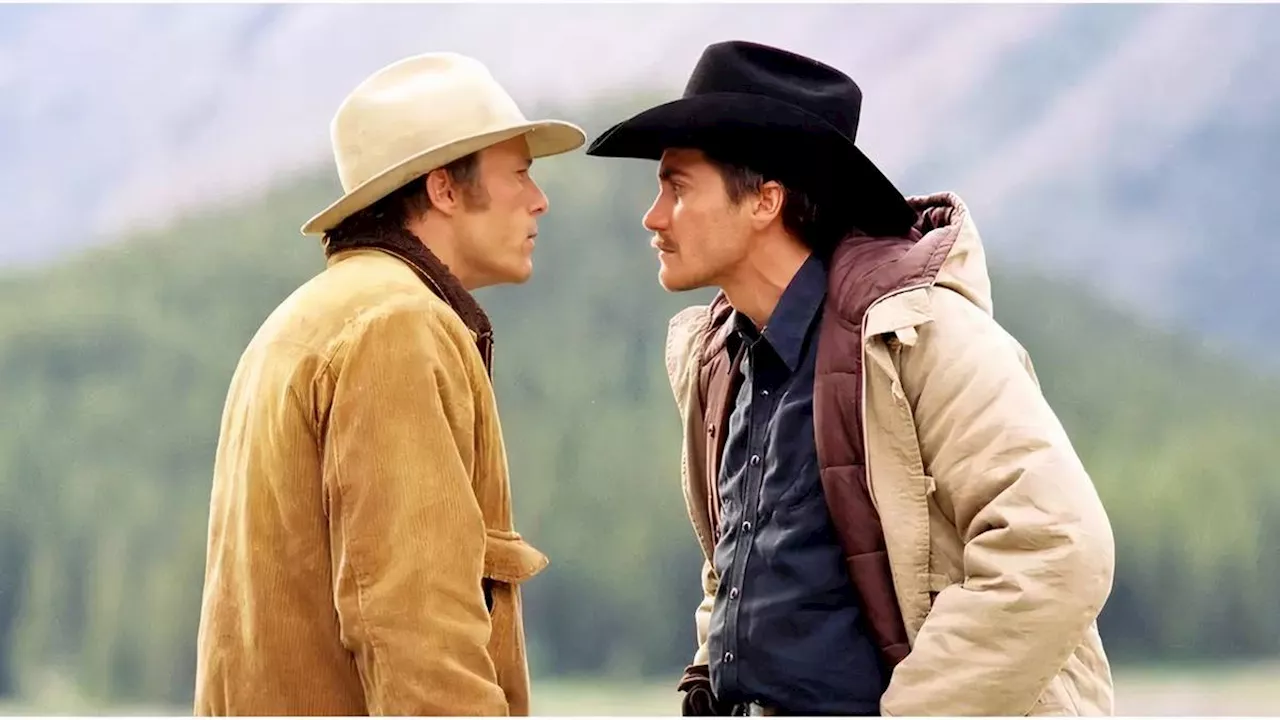
The impact of *Brokeback Mountain*, directed by Ang Lee, continues to resonate with audiences nearly two decades after its release. Premiering on September 2, 2005, at the Venice Film Festival and later in theaters on December 9, 2005, the film tells a poignant story of love and loss between two cowboys, Jack Twist and Ennis Del Mar, portrayed by Jake Gyllenhaal and Heath Ledger, respectively.
Set against the backdrop of the vast Big Sky country in Wyoming during 1963, the film explores the complex emotional landscape of its protagonists. Jack and Ennis’s initial encounter is raw and charged, marked by a passionate yet combative connection as they grapple with their feelings. Despite being enveloped by the expansive wilderness, they find themselves constrained by societal expectations and their own internal conflicts.
The narrative is rooted in a short story by Annie Proulx published in *The New Yorker* in 1997. While the film touches on external homophobia, it delves deeper into the internal struggles faced by Jack and Ennis, who are caught between their desires and the rigid norms of masculinity that dictate their lives. Ledger’s portrayal of Ennis, with his tight-lipped demeanor, encapsulates the profound conflict between his true self and the façade he feels compelled to maintain.
As the film progresses, the passage of time becomes a critical element. Editors Geraldine Peroni and Dylan Tichenor effectively compress time, showcasing Jack and Ennis’s relationship as they navigate the years apart, punctuated by fleeting moments of reunion. Their love, often communicated through glances and unspoken emotions, paints a vivid picture of longing and heartache.
The film also highlights the impact of their relationships with the women in their lives. Ennis marries Alma, played by Michelle Williams, who struggles with her husband’s emotional distance, while Jack’s marriage to Lureen, portrayed by Anne Hathaway, is marked by a different kind of tension. Both women embody the pain of unfulfilled connections, adding depth to the narrative.
While *Brokeback Mountain* faced significant scrutiny upon its release, including a backlash against its themes, it has since emerged as a landmark film in LGBTQ+ cinema. It garnered critical acclaim and commercial success, earning nearly $180 million at the box office against a budget of only $14 million. The film received eight Academy Award nominations, winning three, including Best Adapted Screenplay and Best Director for Lee.
The performances of its leads have been widely praised, particularly Ledger’s haunting depiction of Ennis, which has gained additional poignancy following his tragic death in 2008. The emotional weight of his performance, coupled with a haunting score by Gustavo Santaolalla, enhances the film’s exploration of love’s complexities and the societal barriers that hinder it.
As audiences revisit *Brokeback Mountain*, the film’s legacy is felt not only in its cinematic achievements but also in its cultural significance. It opened dialogues surrounding LGBTQ+ representation and continues to resonate with viewers who see reflections of their own experiences in its narrative.
The film remains a powerful testament to the enduring nature of love, the pain of loss, and the societal constraints that can stifle authentic connections. Two decades later, *Brokeback Mountain* stands as a poignant reminder of the complexities of human emotions and the spaces in which love can flourish, even in the face of overwhelming odds.