The potential revival of Venezuela’s oil industry has sparked cautious optimism among American energy companies following President Donald Trump’s recent actions against the regime of Nicolás Maduro. Although the prospect of tapping into Venezuela’s vast oil reserves, the largest in the world, excites many, analysts warn that significant challenges lie ahead.
Despite the enthusiasm, experts indicate that it could take a decade or more for Venezuela to regain its former oil production levels. Currently, the global oil market is experiencing an oversupply, with an excess of approximately 2 million barrels per day. This oversupply dwarfs Venezuela’s current output of about 900,000 barrels per day. Even if production could be ramped up to its historical peak of 3 million barrels per day, Venezuela would still struggle to become a major player in the oil market.
A short-term agreement to ship 50 million barrels of oil to U.S. refineries along the Gulf Coast could result in a slight decrease in gasoline and diesel prices. About 70% of U.S. refining capacity runs most efficiently on heavy crude, the type produced by Venezuela. However, this short-term inflow would only provide a maximum supply for 12 days, emphasizing the need for a long-term supply agreement to achieve sustainable price reductions.
The implications of increasing Venezuelan oil imports extend beyond U.S. borders. A shift towards Venezuelan heavy crude could reduce the volume imported from Canada, simultaneously raising costs for smaller Chinese refiners that rely on this relatively inexpensive oil.
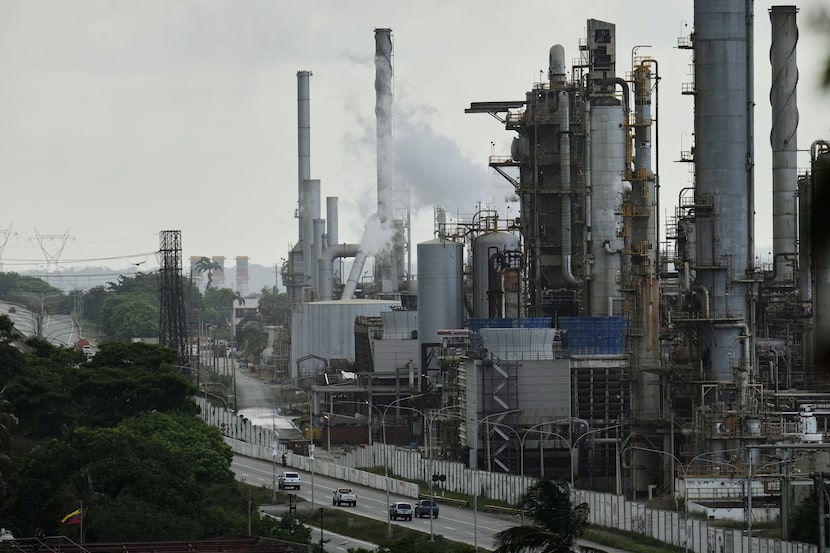
Restoring Venezuela’s oil production will be neither quick nor inexpensive. The state-owned oil company PDVSA has suffered from decades of corruption and neglect, leading to a severely degraded energy infrastructure. Research from Rystad Energy estimates that approximately $183 billion and over a decade will be necessary to restore production to levels seen in the 1990s.
The Orinoco Basin, which holds the majority of Venezuela’s oil reserves, presents additional challenges. The extraction of extra-heavy and sulfur-rich crude from this region requires substantial investment in specialized technology. Rystad notes that the break-even cost for drilling in the Orinoco is around $80 per barrel, significantly higher than current prices of $60 for Brent and $56 for West Texas Intermediate.
Political factors will also play a crucial role in the future of Venezuela’s oil industry. Major U.S. companies like Exxon Mobil and ConocoPhillips exited the Venezuelan market following partial nationalization in the mid-2000s, leaving them with losses exceeding $10 billion. The American Petroleum Institute recently stated that energy companies make investment decisions based on stability, legal frameworks, market conditions, and long-term operational factors.
Even Chevron, the only American company currently authorized to operate in Venezuela with around 3,000 employees, is adopting a cautious approach, opting to “wait and see” how the political landscape evolves.
While President Trump aims to bolster the United States’ position as a leading oil and gas power, the realization of this goal will require navigating the complexities of both Venezuela’s internal politics and the broader realities of the global energy market. The road to revitalizing Venezuela’s oil industry is fraught with challenges, and its success remains uncertain.