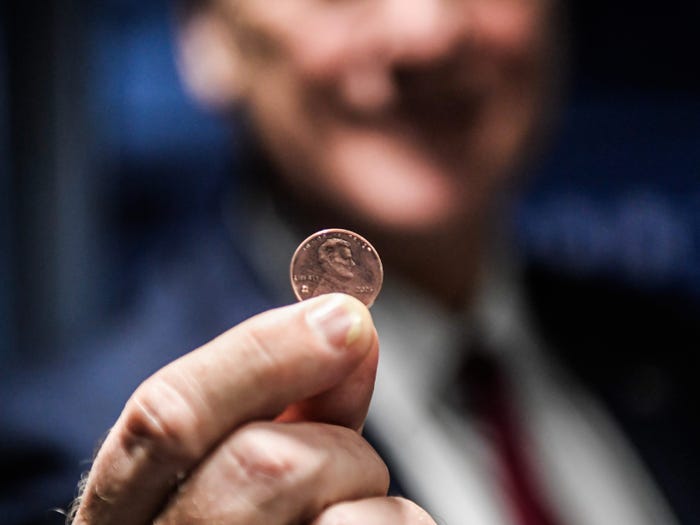
The United States Mint produced its final penny on November 12, 2023, marking the end of a 232-year tradition. The decision to discontinue the production of the one-cent coin was announced by the United States Treasury Department in May, citing rising costs and decreasing practical use. Each penny cost nearly 4 cents to make, according to the Congressional Research Service.
As the oldest and longest-lasting coin in American history, the penny has undergone numerous changes since its first minting in 1793. The final coin minted will be auctioned off, continuing the legacy of rare editions that have captivated collectors. For instance, a unique 1943 Lincoln cent mistakenly minted in bronze sold for $1.7 million in 2010, setting the record for the most expensive penny ever sold, as reported by the Professional Coin Grading Service.
Evolution of the Penny
The penny has a diverse history filled with various designs and materials. The first coin issued by the US Congress, the Fugio Cent, was minted in 1787, believed to be designed by Benjamin Franklin. Following this, the Flowing Hair penny, also known as the Chain Cent, was introduced in 1793, marking the first coin produced by the newly established US Mint.
Over the years, the penny evolved significantly. The Coronet large cent, minted from 1816 to 1857, depicted a young Lady Liberty and was notably larger than today’s coins. The introduction of the Flying Eagle Cent in 1857 marked a shift to smaller coins, using a composition of 88% copper and 12% nickel.
From 1859 to 1909, the Indian Head Cent featured Lady Liberty in a Native American headdress, while the iconic Lincoln Wheat Penny was minted from 1909 to 1958, celebrating the 100th anniversary of Abraham Lincoln’s birth.
During World War II, the US Mint produced pennies from zinc-coated steel to conserve copper, leading to the 1943 Lincoln penny. This wartime measure was a significant moment in the penny’s history, reflecting the national effort during the conflict.
The Lincoln Memorial cent, minted between 1959 and 2008, became one of the most widely recognized designs, produced in billions of units each year. In 2010, the last design, the Union Shield cent, entered circulation with a copper-plated zinc composition, following a special series of designs celebrating Lincoln’s bicentennial in 2009.
The Future Without the Penny
The decision to end penny production has sparked discussions regarding the implications for everyday transactions and the potential for rounding prices in cash transactions. While some consumers have expressed nostalgia for the penny, the Treasury’s decision aligns with trends seen in other countries, where low-denomination coins have been phased out due to similar economic considerations.
As the last penny is auctioned, it symbolizes not just the end of an era but also a shift in how currency is utilized in an increasingly digital economy. The US Mint’s decision may pave the way for future discussions about currency reform and the adaptation of payment systems in a rapidly evolving financial landscape.
The legacy of the penny will endure in the memories of coin collectors and the historical narratives that highlight its rich evolution over more than two centuries. As the US moves forward, it does so without its oldest coin, marking a significant moment in the history of American currency.