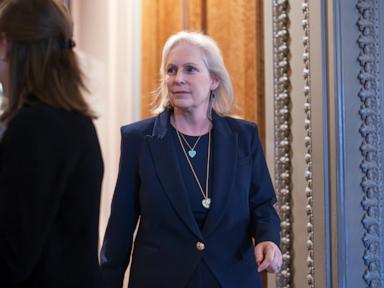
Two senators from opposing parties are spearheading a renewed initiative to prohibit members of Congress from trading stocks. Democratic Senator Kirsten Gillibrand of New York and Republican Senator Ashley Moody of Florida announced plans to introduce legislation that seeks to bar lawmakers and their immediate family members from trading or owning individual stocks. This effort, which aligns with widespread public support, has struggled to gain traction in Congress despite various initiatives aimed at regulating stock trading.
The proposed legislation, first disclosed to The Associated Press, is part of a larger wave of proposals circulating in both the House of Representatives and the Senate. These initiatives are gaining bipartisan momentum, yet their sheer volume complicates the path forward. Republican leaders in the House are also advocating for their own bill concerning stock ownership, but critics have labeled it as inadequate.
“There’s an American consensus around this, not a partisan consensus, that members of Congress and, frankly, senior members of administrations and the White House, shouldn’t be making money off the backs of the American people,” Gillibrand stated in an interview with the AP on January 10, 2024.
The issue of stock trading by Congress members has drawn scrutiny over ethics and has been the focus of criminal investigations in recent years. Lawmakers have faced allegations of leveraging insider information obtained through their positions to buy and sell stocks for significant profits. Both major political parties have included commitments to end stock trading in their campaign advertisements, indicating an unusual alliance on this matter.
In the House, Republican Representative Anna Paulina Luna of Florida is working to circumvent party leadership by advocating for a vote on her stock trading bill. She has garnered support through a discharge petition, collecting 79 of the necessary 218 signatures, with a majority coming from her Democratic colleagues.
The alternative bill proposed by House Republican leaders aims to prevent members of Congress and their spouses from purchasing individual stocks but does not obligate lawmakers to divest from existing stock holdings. This proposal would require public notice seven days before any stock sale by a lawmaker. The bill advanced in committee on January 10, but its future remains uncertain.
Gillibrand and Moody’s legislation mirrors a House bill introduced in 2023 by Representatives Chip Roy, a Republican from Texas, and Seth Magaziner, a Democrat from Rhode Island. That proposal has gained significant traction, boasting 125 cosponsors. In a joint statement, Magaziner and other House Democrats, including Representative Alexandria Ocasio-Cortez, expressed disappointment that the alternative bill from Republican leadership fails to meet the reform necessary for meaningful change.
The new Senate bill would mandate that lawmakers divest their individual stock holdings within 180 days of the bill’s enactment, while newly elected members would have 90 days from their swearing-in date to comply. Additionally, lawmakers would be prohibited from trading or owning a range of financial assets, including securities, commodities, and futures.
“The American people must be able to trust that their elected officials are focused on results for the American people and not focused on profiting from their positions,” Moody remarked in response to questions from the AP.
The proposed legislation would exempt the President and Vice President, a provision likely to attract criticism from some Democrats. Similar concerns were raised last year regarding legislation that restricted certain cryptocurrencies for Congress members but excluded the President.
Gillibrand acknowledged that while she believes the President “should be held to the same standard,” she views the current proposal as a “good place to start.” She added, “I don’t think we have to allow the perfect to be the enemy of the good. There’s a lot more I would love to put in this bill, but this is a consensus from a bipartisan basis and a consensus between two bodies of Congress.”
Moody emphasized the importance of maintaining integrity within Congress, asserting that addressing concerns related to members of Congress is a top priority for constituents. The path forward for the bill remains uncertain, as a similar proposal introduced by Gillibrand and Senator Josh Hawley of Missouri in 2023 did not advance out of committee.
As the issue continues to resonate on the campaign trail, Moody is seeking election to her first full term in Florida following her appointment to the Senate when Marco Rubio became Secretary of State. Gillibrand, who chairs the Senate Democrats’ campaign arm, remarked, “The time has come. We have consensus, and there’s a drumbeat of people who want to get this done.”