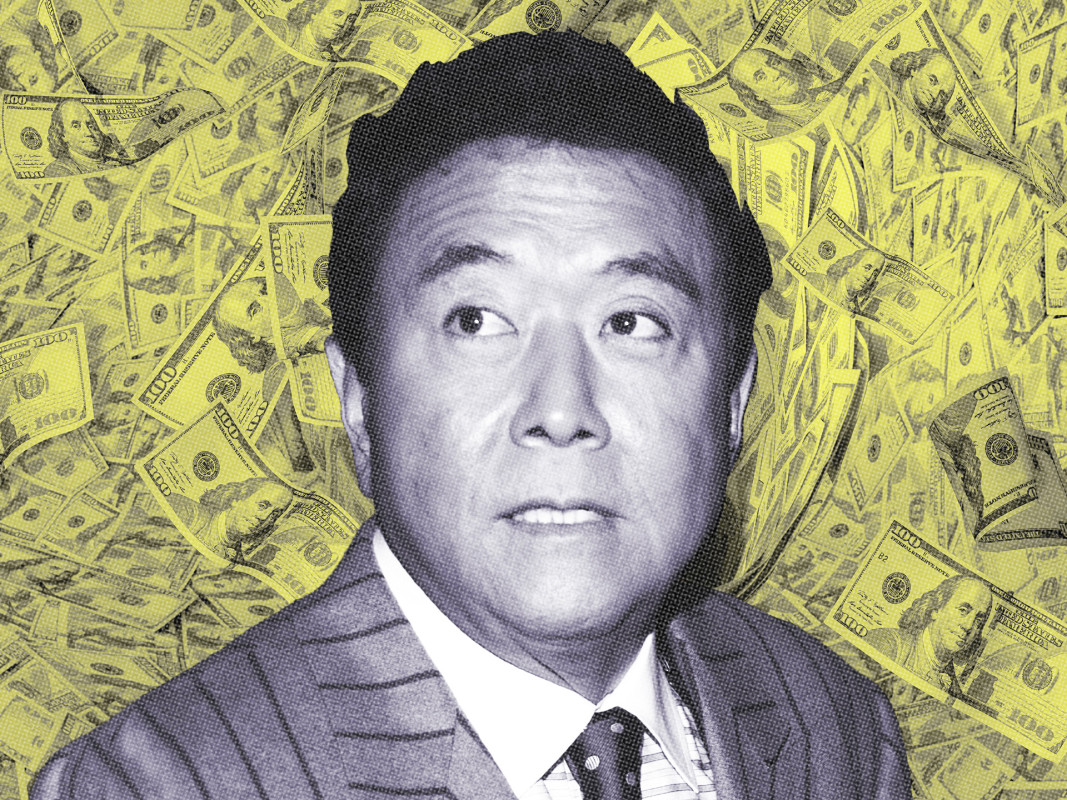
Investor and author Robert Kiyosaki recently stirred significant interest in the financial community by predicting that the price of gold could soar to as high as $27,000 per ounce. His bold statement, made on the social media platform X, came as gold futures traded at approximately $5,013 per ounce, marking a notable increase of about 0.7% from the previous Friday and setting a new all-time high.
Kiyosaki’s prediction follows a period of heightened demand for gold driven by economic uncertainty, rising inflation, and expectations of interest rate cuts. On January 26, 2024, spot prices for gold surged above $5,000, reaching around $5,090 as investors sought safe-haven assets. The substantial jump in prices reflects a growing belief among traders that gold’s role as a protective investment is becoming increasingly vital.
Kiyosaki, widely known for his best-selling book Rich Dad Poor Dad, has been vocal over the past year about what he terms an “everything crash,” asserting that owning hard assets is essential in today’s economic climate. He has positioned himself as a buyer in the current market, suggesting that the setup for hard assets like gold, silver, and Bitcoin is among the best in his lifetime.
Kiyosaki’s Long-Term Forecasts and Financial Strategy
In a widely circulated post, Kiyosaki outlined ambitious targets not only for gold but also for other commodities and cryptocurrencies, including $100 for silver and $250,000 for Bitcoin by 2026. He attributes these forecasts to a broader view that fiat currencies are losing value due to inflationary pressures, leading to a potential revaluation of real assets.
He has consistently reiterated his belief that the rise in gold prices is reflective of a weakening dollar and a growing desire for tangible assets. In his recent statements, he emphasized that the ongoing rally in gold prices is unlikely to be over, supporting his argument that investors are increasingly frustrated with rising costs of living and inflation.
Kiyosaki’s view stands in stark contrast to mainstream financial forecasts. For example, Goldman Sachs recently raised its year-end 2026 price target for gold to $5,400 per ounce, attributing the increase to ongoing demand for hedges against macroeconomic risks. This reflects a more conservative outlook when compared to Kiyosaki’s projections.
The Diverging Perspectives on Gold’s Future
While Kiyosaki’s predictions may seem outlandish, they highlight the growing divide between retail investor sentiment and institutional forecasts. His assertions suggest that a significant shift in economic confidence could lead to a massive reevaluation of gold’s price, a scenario not reflected in traditional banking forecasts.
Goldman Sachs’ analysis points to a sustained demand for gold driven by central bank purchases, geopolitical tensions, and a favorable rate environment, indicating that the current gold market dynamics are underpinned by solid fundamentals rather than speculative trading. The increased interest in gold as a hedge against inflation and economic instability has contributed to its recent price surge, with gold futures gaining over 80% in the past year.
Kiyosaki’s forecast of $27,000 per ounce implies a move of five times the current level, raising questions about the feasibility of such a dramatic increase. His statement underscores a narrative that resonates with many individual investors who are apprehensive about inflation and the stability of fiat currencies.
The timing of Kiyosaki’s prediction could not be more significant, as it coincides with a favorable market environment for gold. His comments suggest that he believes the market is reflective of a larger trend where hard assets like gold and cryptocurrencies become increasingly valuable as a safeguard against potential economic crises.
While Kiyosaki’s claims may provoke skepticism among institutional investors, they serve as a reminder of the growing concerns regarding monetary policy and economic stability. As inflation continues to challenge consumers worldwide, his call for a re-evaluation of investment strategies resonates with a segment of the market that is increasingly wary of traditional financial instruments.
Investors are encouraged to consider their own positions in gold and other hard assets, particularly in light of the current economic landscape. Kiyosaki’s forecast serves as a prompt for individuals to reflect on their investment strategies and the potential implications of a rapidly changing monetary environment.