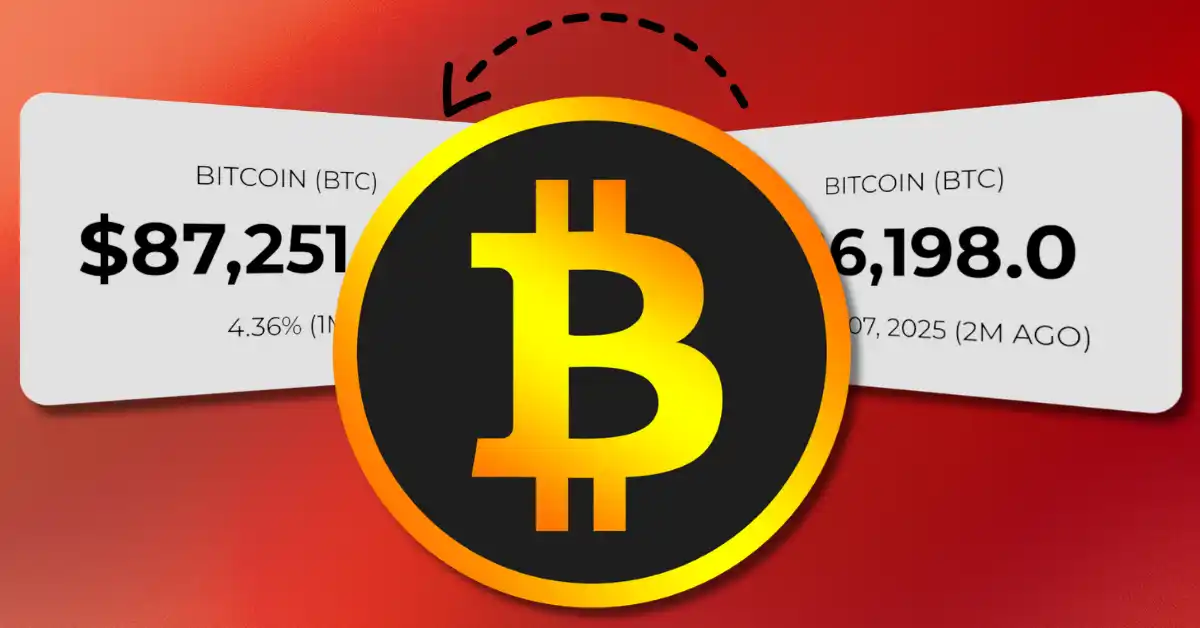
Bitcoin is closing the year down nearly 10%, leaving investors uncertain about its future. Despite expectations for 2025 to bring significant developments such as spot Bitcoin exchange-traded funds (ETFs) and increased institutional interest, the cryptocurrency’s price has not reflected this optimism. Michael Saylor, co-founder of MicroStrategy and a prominent advocate for Bitcoin, believes the current market conditions may be misleading. He asserts that 2025 is not a failure but rather a preparatory phase for future gains.
Market Fundamentals Strengthen
Speaking on Alex Thorn‘s podcast, Saylor highlighted that the past year might have been pivotal for Bitcoin from a fundamentals standpoint. He stated, “The last 12 months have probably been the best 12 months in the history of the industry in terms of fundamentals. It’s profound what’s happened since December.”
Saylor noted that while major institutions like BlackRock receive significant attention, approximately 85% of Bitcoin remains held by early adopters, many of whom are anonymous. Furthermore, the derivatives markets, particularly leveraged perpetual contracts, are contributing to short-term price fluctuations. He explained that these dynamics mean Bitcoin’s price movements are often swayed more by trader sentiment and leverage than by actual demand in the spot market.
Macroeconomic Influences on Bitcoin Prices
The sluggish performance of Bitcoin can be attributed less to cryptocurrency-specific issues and more to prevailing macroeconomic conditions. Historically, Bitcoin tends to thrive when economic activity surpasses the critical 50 mark on the Purchasing Managers’ Index (PMI). Unfortunately, the global economy has remained in contraction for almost three years.
Analyst Nico recently remarked, “Bitcoin is a liquidity thermometer. Easy money, it goes up. Tight money, it goes down.” This observation suggests that current liquidity constraints, rather than deteriorating fundamentals, may be limiting Bitcoin’s price potential.
In a more optimistic outlook, Saylor shared insights regarding increased institutional participation expected in 2026. He indicated that major U.S. banks might begin purchasing and offering custody for Bitcoin, as well as providing credit linked to the cryptocurrency. This anticipated movement follows discussions between MicroStrategy’s leadership and executives from BNY Mellon, Wells Fargo, Bank of America, and other financial institutions exploring Bitcoin management for their clients.
MicroStrategy currently holds 671,268 BTC, valued at billions of dollars, leading a trend of public company ownership in Bitcoin. Collectively, public companies now hold more than 1 million BTC, reflecting growing institutional interest and clearer regulatory frameworks.
Saylor forecasts that this wave of adoption could elevate Bitcoin prices to between $143,000 and $170,000 by 2026.
As the cryptocurrency landscape evolves, it is crucial for investors to stay informed about the factors influencing Bitcoin’s market dynamics. The potential for increased bank involvement may open doors for everyday investors, offering simpler access and greater regulation, which could attract those who have been hesitant to engage with the crypto markets.
In summary, while Bitcoin’s current performance may seem disheartening, the underlying fundamentals and anticipated institutional interest could signal a brighter future for the cryptocurrency.