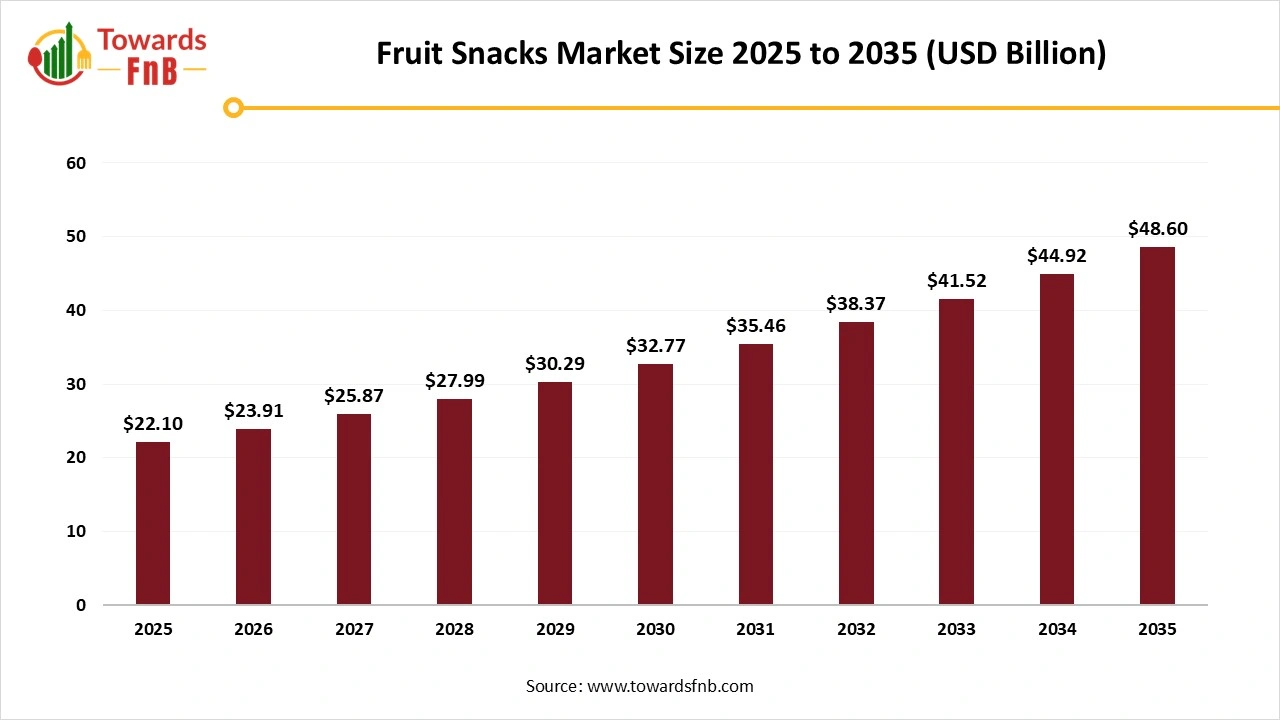
The global fruit snacks market is on track for significant growth, with projections estimating it will expand from USD 22.10 billion in 2025 to approximately USD 48.60 billion by 2035. This growth, as reported by Towards FnB, is driven by a rising demand for healthy snacking options and innovation within the industry.
Several factors contribute to this upward trend. The market is expected to experience a year-on-year increase, reflecting broader availability through modern retail and e-commerce channels. A growing population of health-conscious consumers is seeking snacks that align with clean-label and organic food trends. As awareness of calorie intake and sugar reduction rises, fruit-based alternatives to traditional confectionery are becoming increasingly popular among both adults and children.
Market Dynamics and Consumer Trends
In terms of regional performance, North America held the largest share of the fruit snacks market, accounting for 42.8% in 2025. The Asia Pacific region is anticipated to grow at the fastest compound annual growth rate (CAGR) of 8.0% from 2026 to 2035. By product type, the fruit gummies and chews segment dominated with a share of 34.5% in 2025, while the freeze-dried fruits segment is expected to see significant growth with a CAGR of 7.1% during the same period.
The market’s expansion is particularly evident in the increasing demand for convenience and healthier snacking options. Consumers are gravitating towards various forms of fruit snacks, including fresh, freeze-dried, low-sugar, organic, and low-calorie products. This trend is further supported by technological advancements that enhance food processing and packaging, ensuring better shelf life and nutritional retention.
Technological Innovations and AI Influence
Recent innovations, such as AI-driven processes, are reshaping how fruit snacks are formulated and produced. These advancements allow manufacturers to optimize texture and flavor while minimizing added sugars. AI systems analyze fruit composition, helping to streamline product development and reduce the number of trial cycles needed for formulation adjustments.
AI also plays a role in maintaining quality control during the manufacturing process. Real-time monitoring ensures consistency in snack texture, color, and overall quality, which is crucial for meeting consumer expectations. This technological integration is expected to enhance market growth substantially.
The growing demand for transparency among consumers is driving the popularity of clean-label products. Health-conscious shoppers are increasingly looking for snacks fortified with essential vitamins and minerals, further propelling the fruit snacks sector. Additionally, the rise of plant-based and vegan options is broadening the market’s appeal.
In recent months, notable product launches have reflected these trends. For example, in June 2025, former football star David Beckham introduced BEEUP, a honey-based fruit snack aimed at providing healthier options for children and families. Similarly, a partnership between The Smurfs and Ukrainian confectionery brand Vitamin Candy aims to deliver sugar-free fruit pastilles in playful packaging for children.
The fruit snacks market is poised for robust growth, driven by evolving consumer preferences and technological advancements. As health-conscious eating habits continue to gain traction, the industry is likely to adapt and innovate, ensuring a diverse range of products that cater to modern lifestyles.