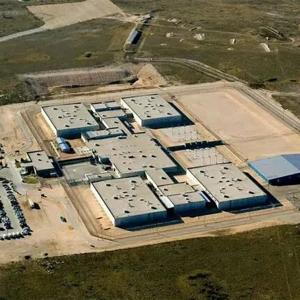
A significant land transfer has positioned the private prison company Geo Group to pursue a federal immigration detention contract for its facility in Hobbs, New Mexico. The transaction, which involved a land swap with the city of Hobbs, was finalized this week, allowing Geo Group to own the land beneath the Lea County Correctional Facility. This move comes just as New Mexico prepares to enact the Immigrant Safety Act, which will prohibit local governments from leasing land to private companies for detention purposes starting on May 20, 2024.
The land transfer was completed on March 18, 2024, with Hobbs Assistant City Manager Todd Randall confirming that the necessary deeds were filed. This ownership allows Geo Group to seek direct contracts with U.S. Immigration and Customs Enforcement (ICE), effectively circumventing the restrictions imposed by the new state law. Randall emphasized that the land swap was initiated well before the current legislative session and was aimed at resolving property ownership issues rather than circumventing legal restrictions.
Concerns have arisen regarding the implications of this land acquisition. Becca Sheff, a senior attorney with the American Civil Liberties Union of New Mexico, expressed alarm at the timing of the land swap, suggesting it could be a precursor to establishing an ICE facility in Hobbs. She noted that the community’s trust and safety could be jeopardized by such actions. Sheff pointed out the troubling nature of ICE’s enforcement tactics, citing reports of individuals being detained without access to legal representation or adequate medical care.
In a public shareholders’ meeting, Geo Group indicated its intention to secure ICE contracts for its six “idle” facilities, which include the Lea County property. The company operates additional facilities in Texas, North Carolina, Colorado, and California. CEO George Zoley stated during a recent earnings call that the company is in active discussions with ICE regarding its available capacity and the potential activation of additional facilities.
The Lea County Correctional Facility, which spans over 400,000 square feet and has a capacity of 1,200 beds, was previously operated as a state prison until its closure last summer. The New Mexico Corrections Department announced in May 2023 that Geo Group would not renew its state contract, resulting in the transfer of approximately 1,000 state inmates to other facilities.
The recent legislation, known as House Bill 9, aims to remove the state from the business of immigrant detention, and while it does not directly target private companies, it will require local governments with existing ICE contracts to terminate those agreements as soon as permissible. Current ICE facilities in New Mexico include those in Cibola, Torrance, and Otero counties, operated by private companies such as CoreCivic and Management & Training Corp. The future of these facilities remains uncertain as they navigate the implications of the new law.
Local officials, including Lea County Manager Corey Needham, have expressed hopes that whatever use Geo Group makes of the property will foster employment. “We don’t have any preference whatsoever,” he stated, emphasizing the importance of productive use for local employment opportunities.
As the situation unfolds, the response of private companies regarding their existing contracts and facilities in New Mexico will be crucial. While Geo Group has indicated its intentions, the broader implications for immigrant detention in the state are still developing. ICE has not provided specific details about new detention centers in New Mexico but has indicated a desire to expand its presence nationwide. An ICE spokesperson reiterated that the agency is committed to conducting law enforcement activities to maintain public safety while ensuring that any detention facilities meet strict standards.
The developments surrounding the Lea County Correctional Facility and the broader changes in immigration enforcement policies will continue to be closely monitored by advocacy groups and local communities as the new law takes effect.