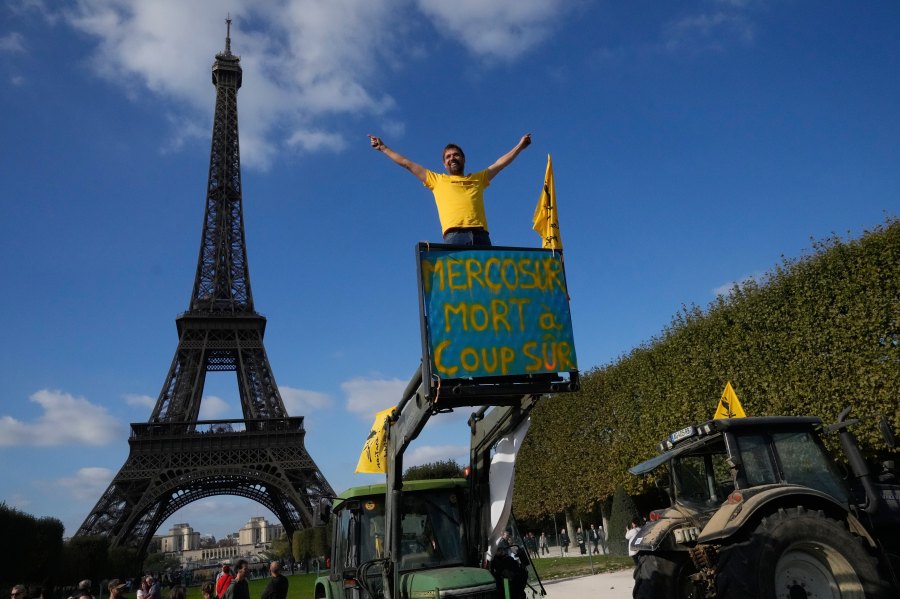
The European Union’s long-negotiated trade agreement with the South American Mercosur bloc is facing significant challenges, primarily due to opposition from French farmers. France has emerged as a critical opponent, raising concerns that the deal could increase competition and threaten local agricultural markets. Farmers have taken to the streets of Brussels, demanding that their voices be heard as negotiations reach a pivotal moment.
The EU-Mercosur agreement, initially aimed at strengthening economic ties between the 27-member bloc and the five South American nations—Argentina, Brazil, Paraguay, and Uruguay—has been in the works for over a quarter-century. It seeks to eliminate tariffs on various goods, enhance trade, and bolster economic cooperation. However, the prospect of increased imports from South America has ignited fears among European farmers, particularly in France, where the agricultural sector is a vital component of the economy.
Farmers argue that the influx of cheaper agricultural products from South America could undermine their livelihoods. In response to these concerns, thousands have marched in Brussels, conveying their discontent and urging EU officials to reconsider the deal. The protests reflect broader anxiety within the agricultural community about the implications of international trade agreements on local markets and food standards.
French Agriculture Minister Marc Fesneau has articulated the government’s stance, emphasizing the need to ensure that the interests of French farmers are protected. “We must strike a balance between trade and protecting our agricultural heritage,” Fesneau stated during a recent press conference. His comments underscore the tension between economic benefits sought by the EU and the apprehensions felt by farmers regarding competition.
The EU’s trade negotiations with Mercosur have already encountered delays, and the recent protests may further complicate the process. European negotiators are now under pressure to address the valid concerns raised by farmers while also maintaining momentum in talks with their South American counterparts. The potential economic benefits of the agreement are substantial, with estimates suggesting an increase of approximately €4 billion in trade annually.
As discussions continue, the EU faces a delicate balancing act. If the concerns of farmers are not adequately addressed, it risks undermining support for the agreement within member states, particularly those with strong agricultural interests. The outcome of this situation will have significant implications for the future of international trade relations between Europe and South America.
The EU-Mercosur deal represents a landmark opportunity for economic collaboration, but it remains to be seen how negotiators will navigate the complex landscape of domestic agricultural policies and international trade commitments. With farmers actively voicing their opposition, the pressure is mounting for EU leaders to find a solution that satisfies both economic ambitions and the concerns of local producers.