Adidas is facing significant challenges as Bank of America (BofA) has issued a rare double downgrade of the company’s stock, assigning it a “sell” rating. This move stands in stark contrast to the generally positive outlook from other Wall Street analysts. BofA’s assessment suggests that the trend of casual wear, which has dominated fashion for the past 20 years, is nearing its end.
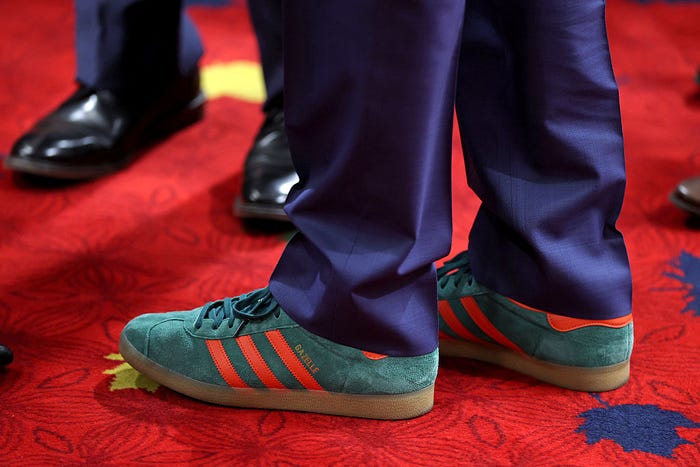
The shift towards more relaxed fashion choices has transformed everyday attire. Today, it is not uncommon to see individuals in full pajamas at airports or television hosts pairing sneakers with suits during live broadcasts. The rise of athleisure brands, such as Vuori and Alo, has made comfortable clothing equally fashionable, with sweatpants priced comparably to dress trousers. According to BofA, this trend has reached its peak, signaling a shift back toward more traditional styles.
BofA’s research indicates that the period of “casualization” has propelled sneakers from 20% to 50% of the footwear market. As this trend wanes, Adidas is expected to experience a slowdown in organic sales growth, which may fall into single digits as consumer interest in the brand diminishes. BofA’s downgrade is a bold move considering Adidas shares have already plummeted by 29% in 2025, and the firm has adopted a notably pessimistic price target.
On Tuesday, Adidas shares fell as much as 7% following the news. While many analysts maintain an optimistic view of Adidas, BofA is particularly concerned about increased competition from other sneaker brands, such as Asics and On. These companies are also benefiting from the same upward trend in athletic footwear as consumers shift from casual attire to sporting goods.
Nike, a key competitor, is undergoing its own transformation under CEO Elliott Hill. The company’s recent earnings report indicated strong growth in North America, suggesting a positive outlook moving forward. Despite a decline of 14% in stock value since the beginning of 2025, this decrease is significantly less than Adidas’s losses. BofA notes that if Nike continues to recover, it could further impact Adidas, as the two companies historically experience inverse revenue growth.
The upcoming FIFA World Cup is anticipated to drive significant sales for Adidas, particularly with its sponsorship of star player Lionel Messi. However, BofA cautions that once the excitement of the tournament subsides, Adidas may still confront persistent challenges.
While the firm foresees a difficult road ahead for Adidas, it hints at a potential positive outcome: the decline of the trend of sneakers paired with suits. As fashion evolves, this shift could mark a return to more classic styles, offering a glimmer of hope for the brand’s future.