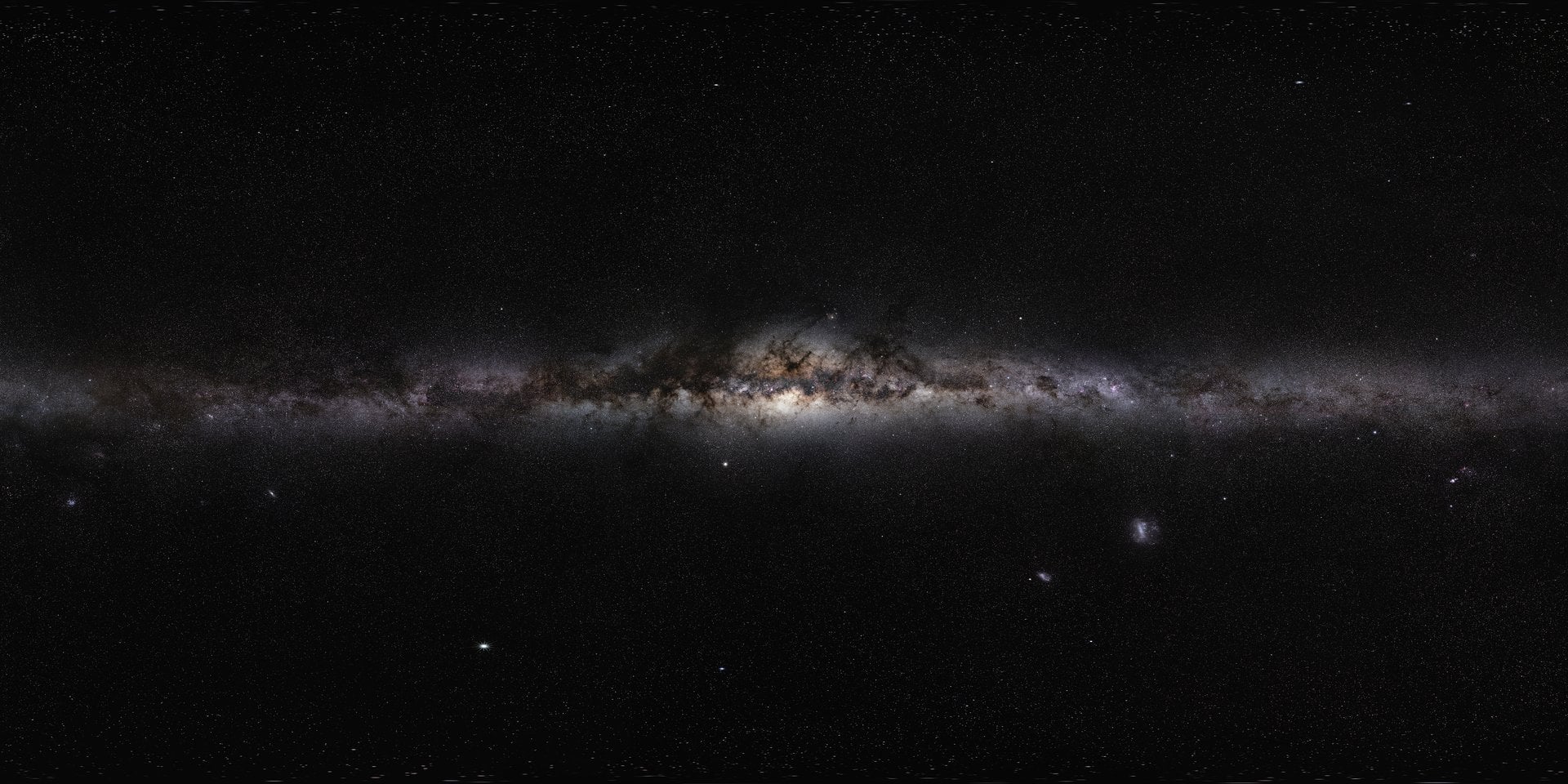
Researchers at the RIKEN Center for Interdisciplinary Theoretical and Mathematical Sciences (iTHEMS) in Japan have achieved a remarkable feat in astrophysics. Collaborating with experts from the University of Tokyo and the Universitat de Barcelona, the team has successfully conducted the world’s first simulation of the Milky Way that accurately represents over 100 billion stars across a span of 10,000 years. This innovative approach marks a significant advancement in simulating galactic dynamics.
The simulation’s capabilities are striking, as it not only represents an unprecedented number of stars—100 times more than previous models—but also operates at a speed that is 100 times faster. By utilizing 7 million CPU cores, advanced machine learning algorithms, and numerical simulations, the researchers have created a tool that could transform our understanding of stellar and galactic evolution. Their findings are presented in the paper titled “The First Star-by-star N-body/Hydrodynamics Simulation of Our Galaxy Coupling with a Surrogate Model,” published in the *Proceedings of the International Conference for High Performance Computing, Networking, Storage and Analysis* (SC ’25).
Advancements in Simulation Technology
Simulating the Milky Way with such detail is crucial for testing theories regarding its formation and structure. Astronomers have long struggled to capture the intricate dynamics of galaxies due to the complexities involved, including gravitational forces, fluid dynamics, and the influence of supermassive black holes (SMBHs). Previous models have been limited, with a mass cap of about one billion solar masses, which accounts for less than 1% of the stars in the Milky Way.
Historically, simulating just 1 million years of galactic evolution would take cutting-edge supercomputing systems approximately 315 hours, or over 13 days. Extending that to 1 billion years would require over 36 years of computational time. The team faced the challenge of increasing detail while managing the restrictions of computing power and energy consumption.
To overcome these obstacles, lead researcher Hirashima and his team implemented an innovative approach by integrating a machine learning surrogate model. This model, trained on high-resolution simulations of supernova explosions, predicts the effects these cosmic events have on their surrounding environment up to 100,000 years post-explosion. This coupling allows for both large-scale dynamics and intricate small-scale phenomena to be modeled simultaneously.
Verification and Future Implications
The team verified their model through extensive testing on the Fugaku and Miyabi Supercomputer Systems at the RIKEN Center for Computational Science and the University of Tokyo. Their results demonstrated that their new method could simulate a galaxy with over 100 billion stars while reducing the time needed to simulate 1 million years of evolution to just 2.78 hours. At this pace, simulating an entire 1 billion years of galactic history could be completed in under 115 days.
These findings provide astronomers with a powerful new tool for exploring and validating theories about galactic evolution and the broader cosmos. Additionally, the successful application of AI in this context suggests a pathway for future simulations across diverse fields, including meteorology, ocean dynamics, and climate science, where complex interactions require balancing large and small-scale factors.
The implications of this research extend beyond astrophysics, showcasing how integrating AI can enhance computational efficiency in multiple disciplines. As the field of simulation technology continues to evolve, the potential for groundbreaking discoveries in understanding our universe is vast.