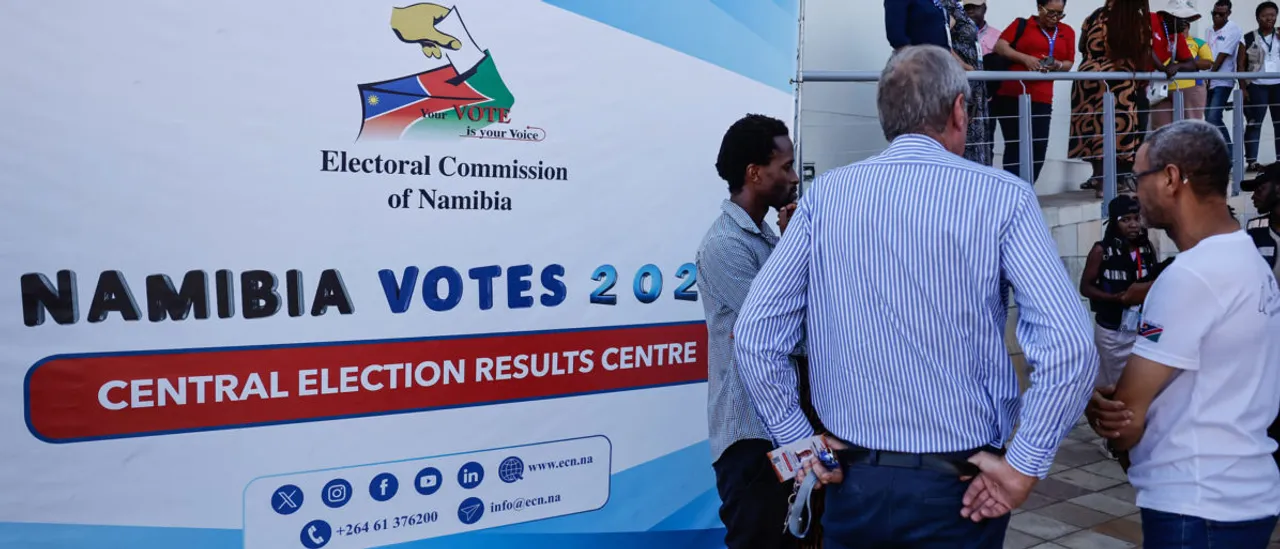
Adolf Hitler Uunona, a politician in Namibia, is positioned to secure his fifth term as councillor for the Ompundja constituency in northern Namibia. Voters will head to the polls on November 26, 2025, with forecasts from Namibia’s electoral commission indicating a likely landslide victory for Uunona, who has served the constituency since 2004. In the previous election held in 2020, he garnered an impressive 85% of the vote.
Uunona is a member of the South West Africa People’s Organization (SWAPO), which has been the ruling party in Namibia since the country gained independence from South Africa in 1990. Despite sharing a name with the infamous German dictator, Uunona has consistently distanced himself from the historical figure. He expressed in a 2020 interview with The Namibian, “My father gave me this name Adolf Hitler, but it does not mean I have Adolf Hitler’s character or resemble that of Adolf Hitler of Germany. Hitler was a controversial person who captured and killed people across the globe. I am not like him.”
A Complicated Legacy
The origins of Uunona’s name are rooted in Namibia’s colonial past. The territory was under German rule from 1884 to 1915, and Germanic names remain prevalent in the country today. This colonial history has left deep social scars, especially given the genocide committed by German forces against the Ovaherero and Nama people from 1904 to 1908, resulting in the deaths of approximately 70,000 individuals. In 2021, Germany officially recognized this atrocity, and Namibian leaders continue to pursue reparations for the affected communities.
Uunona has remarked on the peculiarities of his name, stating that he “didn’t have a choice” in the matter. He explained that while he initially thought his name was “normal,” it has brought attention to his political career. His ruling party has maintained a strong hold on power, reflecting the longstanding influence of SWAPO in shaping Namibia’s political landscape.
Historical Context and Modern Repercussions
The legacy of colonialism in Namibia still resonates today, with remnants of German influence evident in societal interactions. After World War II, some Nazis fled to Namibia, and cultural references to the past have persisted. A 1976 New York Times article noted that German-Namibians would greet each other with “Heil Hitler,” illustrating the complexities surrounding Uunona’s name and the historical context it carries.
As Uunona embarks on another electoral campaign, the implications of his name continue to evoke a mix of curiosity and controversy among voters. His ability to secure a significant majority in past elections speaks to the electorate’s confidence in his leadership, separate from the shadow cast by his namesake. As the date approaches, the outcome remains keenly anticipated both locally and internationally.