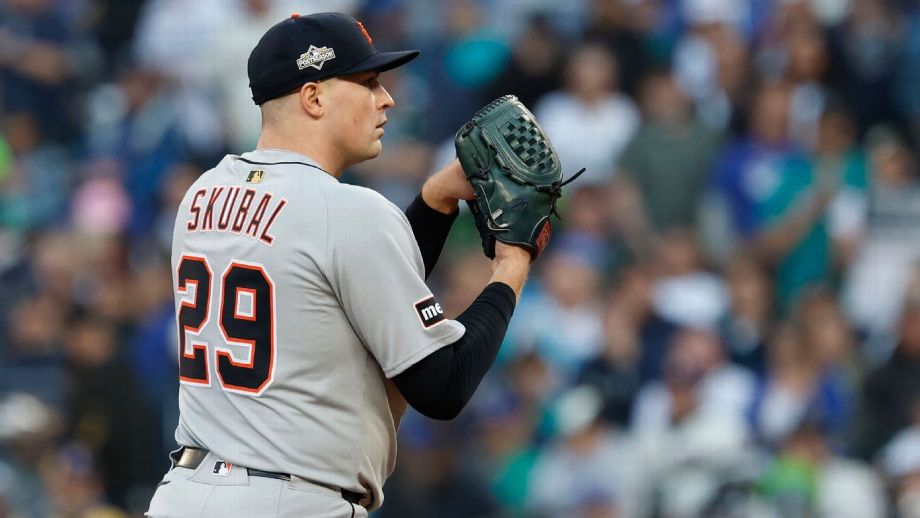
The Detroit Tigers are at a pivotal crossroads regarding their star pitcher, Tarik Skubal. Following his second consecutive American League Cy Young Award and the team’s back-to-back postseason appearances, discussions around Skubal’s future are intensifying. With his contract nearing its end, the Tigers must weigh the possibility of a lucrative extension against the potential benefits of a trade as they prepare for the 2026 season.
Skubal, a 28-year-old left-hander, is entering the final year of his contract in 2026. If he reaches free agency, experts suggest he could surpass Yoshinobu Yamamoto‘s record contract of $325 million, potentially becoming the first pitcher to secure a deal worth $400 million. Given these financial implications, Scott Harris, the Tigers’ president of baseball operations, faces a critical decision that could influence the franchise’s future and shake up Major League Baseball (MLB) as a whole.
Three Options: Trade, Retain, or Extend
Industry insiders have outlined three main strategies for the Tigers regarding Skubal’s future. The first option is to trade him this offseason. Although this is the least favored choice among experts, some believe it could be a prudent move if the return is substantial. One rival executive emphasized, “The whole reason you do all this is to start a season with a potential contender that has an ace.” Trading Skubal now would mean the Tigers could risk becoming a small-market team in mindset, limiting their competitive window.
The second option involves keeping Skubal at least until the 2026 trade deadline. If the season does not unfold as planned, trading him mid-year could yield significant prospects. Panelists unanimously agreed that the Tigers must avoid holding onto Skubal if they miss the playoffs, as that would be viewed as a major setback. A trade at that time could still provide a strong return, particularly if teams are vying for a playoff spot.
The final option is to retain Skubal and attempt to negotiate a contract extension. This strategy would allow the Tigers to leverage their relationship with Skubal, who has expressed a desire to stay in Detroit. However, the challenge remains that Skubal is represented by Scott Boras, known for encouraging his clients to test the free-agent market. With the current collective bargaining agreement set to expire on December 1, 2026, timing could play a crucial role in any negotiations.
The Financial Landscape and Future Contingencies
The financial landscape complicates the Tigers’ decision-making. The team’s payroll reached $155 million last season, significantly below the first competitive balance tax threshold. If Skubal demands an average annual value (AAV) between $30 million and $40 million, it raises questions about the feasibility of allocating such a large portion of the payroll to a single player.
Harris’s strategy appears focused on the 2027 and 2028 seasons as key years for contending. Top prospects like Kevin McGonigle and Max Clark could become integral players by mid-2026, potentially aligning with a competitive window. The Tigers must find a balance between short-term success and long-term sustainability.
As the offseason progresses, the Tigers are also looking to enhance their pitching depth, which may signal preparations for a potential trade. Whether this is done to backfill for Skubal or to create a more competitive roster remains to be seen. The uncertainty surrounding Skubal’s future brings both challenges and opportunities for Detroit, and the coming months will be crucial in determining how the organization navigates this complex situation.
With the stakes this high, the decision regarding Tarik Skubal’s future could not only shape the trajectory of the Tigers but also resonate throughout the league as teams prepare for an uncertain offseason filled with potential.