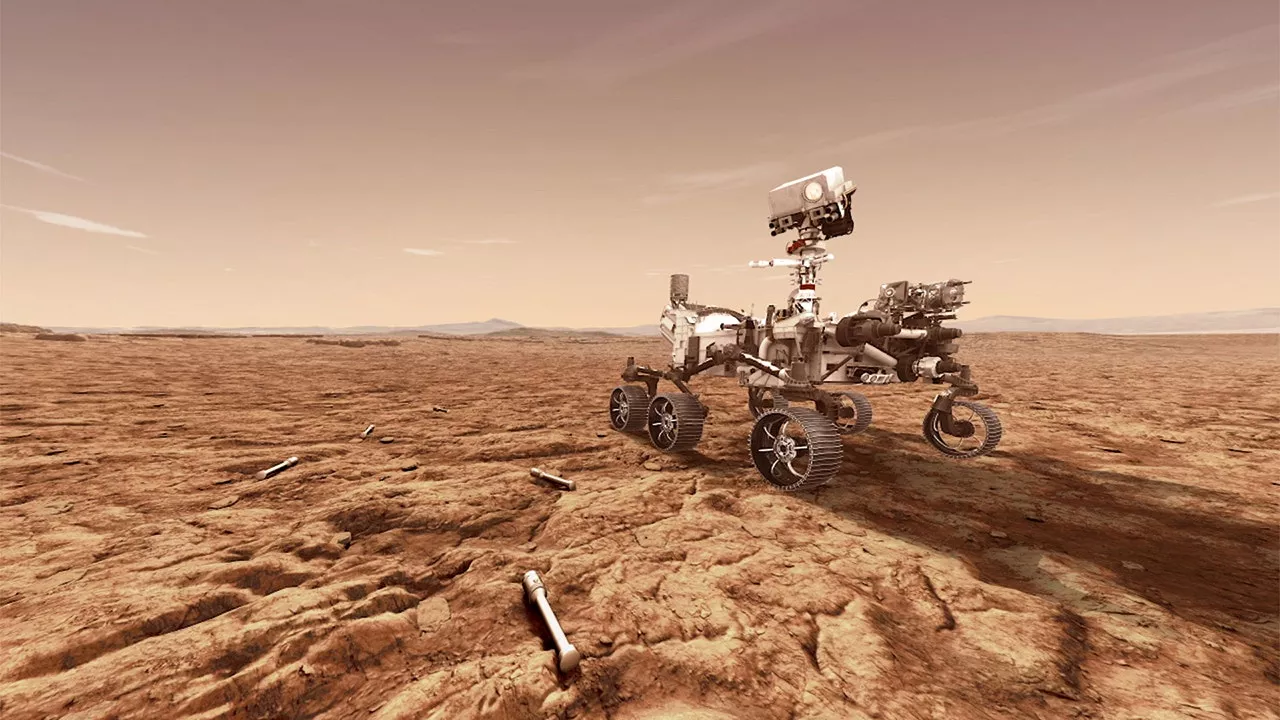
BREAKING: NASA’s Perseverance rover has potentially discovered a meteorite on Mars, identified as a shiny rock nicknamed ‘Phippsaksla’, containing high levels of iron and nickel. This urgent finding could place Perseverance among the elite rovers that have documented cosmic visitors on the Martian surface.
The discovery was made as Perseverance traversed the rugged terrain just beyond the rim of Jezero Crater. The rock stood out distinctly from its surroundings, prompting scientists to investigate further. Tests indicated that the rock’s composition aligns with that of extraterrestrial meteorites, raising thrilling possibilities about its origins.
NASA revealed in a recent blog post that the SuperCam onboard the rover analyzed Phippsaksla, firing a laser to vaporize samples and detect elemental composition from a distance. The results showed significant concentrations of iron and nickel—key indicators of a meteorite, with these elements typically found in objects that formed deep within ancient asteroids.
If confirmed, Phippsaksla would join a lineage of meteorites previously identified by earlier missions, like Curiosity’s notable finds of ‘Lebanon’ and ‘Cacao’, as well as other fragments discovered by Opportunity and Spirit. Each of these discoveries has enhanced our understanding of how meteorites interact with the Martian surface over time.
NASA’s analysis is ongoing, as scientists are eager to determine whether this shiny rock indeed originated from beyond Mars. Should Phippsaksla be validated as a meteorite, it would mark a significant milestone for the Perseverance mission, which has been on the hunt for signs of ancient microbial life since its landing on February 18, 2021.
Perseverance, the most advanced rover yet, traveled 293 million miles to reach Mars, launched from Cape Canaveral Space Station in Florida on July 30, 2020. Equipped with a suite of seven scientific instruments and a rock drill, the rover is designed not only to explore the planet’s surface but also to pave the way for future human missions planned for the 2030s.
This latest finding underscores the potential for ongoing discoveries on Mars, a planet that continues to captivate scientists and space enthusiasts alike. As the mission progresses, the team remains focused on understanding the implications of Phippsaksla’s composition and its historical context within the Martian landscape.
Stay tuned for further updates on this exciting development from NASA, as the agency continues to unlock the mysteries of Mars.