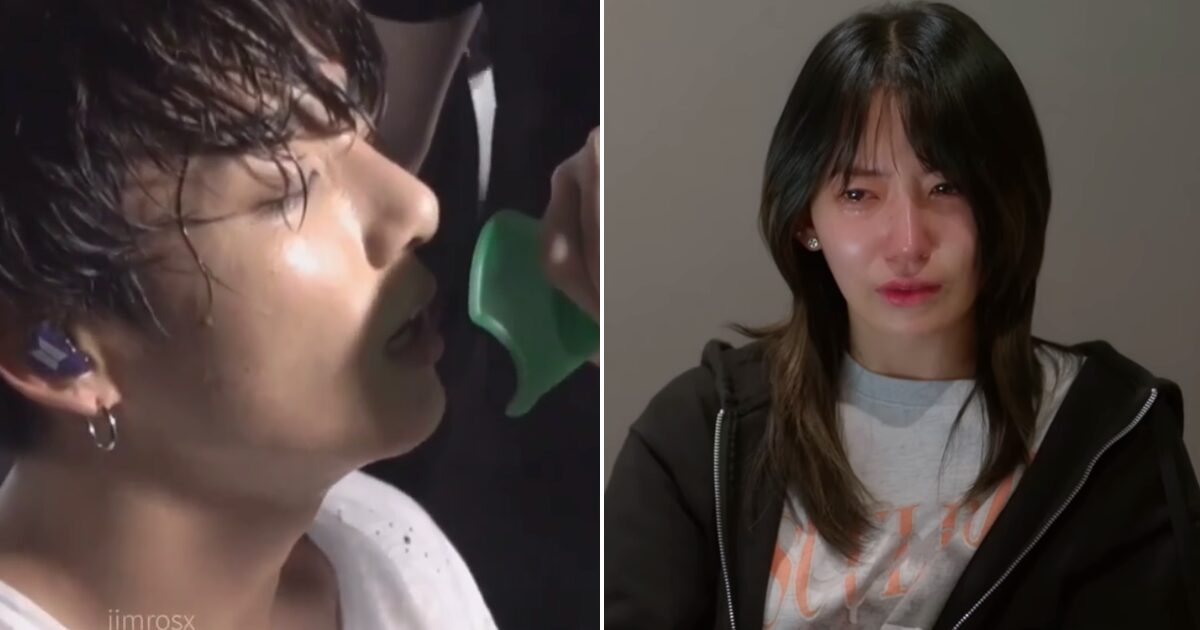
UPDATE: A viral post criticizing HYBE and its idols has triggered a firestorm of debate online, as netizens grapple with the treatment of the company’s stars. The post, which gained over 11,000 likes within hours, features a clip of LE SSERAFIM member Sakura crying during vocal lessons, raising questions about the emotional toll faced by idols under the entertainment giant.
The controversy erupted on November 17, 2025, when a user on Twitter claimed that HYBE profits from the “struggle, tears, and drama” of its idols. The tweet included a compilation of images showcasing idols in vulnerable moments, suggesting a calculated strategy by the company to exploit their emotional displays for commercial gain.
“When I pointed out how cruel HYBE was for putting their idols in embarrassing situations to inspire pity, the idols’ fans sided with HYBE,” the original poster, who goes by the handle @NEWKITTIZ, stated. This sentiment resonated with many, as the post quickly spread across social media platforms, fueling a heated discussion about idol treatment in the K-pop industry.
Critics of the original tweet argue that expressing emotions is a natural part of being human, and that idols should be allowed to show their vulnerabilities without facing backlash. One user responded,
“If seeing idols being human and sad makes you uncomfortable, ask yourself why.”
This call for empathy has sparked a wave of support for the idols, with many fans emphasizing the need to recognize them as real people with genuine feelings.
The debate has even permeated forums like Reddit, where users expressed shock at the sentiment in the viral tweet. One Redditor remarked,
“It’s concerning how K-pop fans don’t see HYBE idols as humans anymore.”
This sentiment reflects a growing frustration among fans who believe that idols are often viewed through a lens of harsh criticism rather than compassion.
As the discussion continues to unfold, it underscores a critical issue within the K-pop industry. The emotional strain on idols and the public’s reaction to their vulnerabilities are now at the forefront of conversations about mental health and the pressures of fame.
What’s next? Fans and industry observers will be closely watching how HYBE responds to this uproar and whether this debate will prompt broader conversations about the treatment of idols in the K-pop landscape. The dialogue surrounding idol welfare is more crucial than ever, as fans advocate for more humane treatment and understanding.
Stay tuned for more developments on this ongoing story as it unfolds.