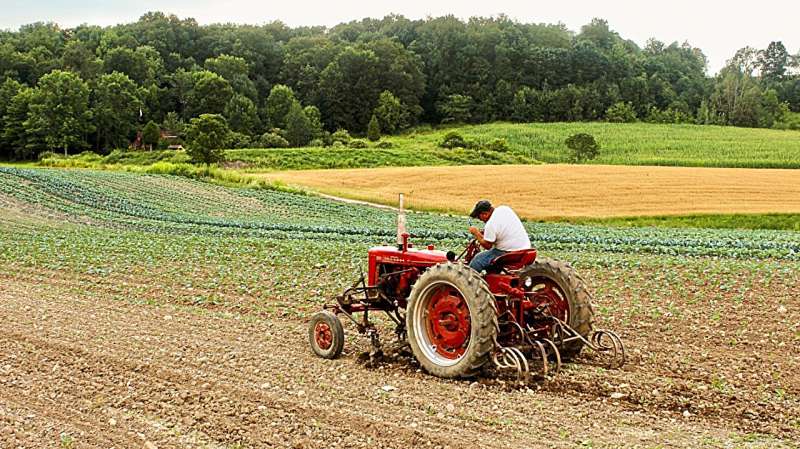
Farmers in the United States often perceive eco-friendly agricultural practices as labor-intensive, leading to a significant underutilization of methods that can enhance resilience to climate change. Researchers from Cornell University conducted a study, published in Agriculture and Human Values, which surveyed over 500 fruit and vegetable farmers nationwide and included in-depth interviews with nearly 50 farmers in New York and California.
The findings indicate that farmers frequently cite three main barriers—cost, time, and complexity—when considering the adoption of agroecological practices, which include crop rotation, composting, and reduced tillage. Notably, those who have not implemented these practices tend to overestimate their labor demands. According to Rachel Bezner Kerr, a professor of global development at Cornell, “This paper really shows that actually it is possible for American farmers to use these practices and that the barriers are lower than they may have thought.”
The research, which involved collaboration with The Nature Conservancy, highlights the necessity of encouraging knowledge sharing among farmers to dispel common misconceptions regarding the labor requirements of sustainable farming practices. “Agroecology is really about context-specific, place-based solutions, and there are a lot of opportunities to help develop local, farmer-led movements,” stated Jeff Liebert, the first author of the study, currently affiliated with the University of British Columbia.
The eight practices analyzed in the study—composting, reduced tillage, intercropping, flower strips, crop rotations, cover cropping, and border plantings—typically involve more complex management. However, researchers assert that these methods can yield financial returns through improved productivity, alongside benefits for biodiversity, water and air quality, and reduced emissions. Bezner Kerr emphasized that there is robust scientific evidence supporting these practices in building resilience against climate impacts.
Adoption rates of these eco-friendly practices are particularly low among larger farms, which dominate U.S. farmland. Farmers managing larger operations reported more intense labor challenges, including worker shortages and increased pressure from state-specific minimum wage regulations. “If we replace humans with machines, it forecloses the potential pathway to farm work that’s really meaningful and dignified,” Liebert remarked, raising concerns about the future of labor in agriculture.
The study’s authors advocate for a deeper understanding of the labor challenges faced by farms of varying sizes to effectively promote an agroecological movement in the United States. The conversation should also extend to the influence of non-agricultural policies that complicate labor investment, particularly for farmers under pressure to provide “cheap” food.
Liebert noted, “Fast-forward 10 years from now, you may have a lot fewer farm workers engaged in agriculture because farmers have shifted to greater mechanization.” Such a shift could alter rural communities and exacerbate existing environmental issues. Interviews with farmers revealed a desire to maintain meaningful work and protect their labor force, despite the structural factors beyond their control influencing their decisions.
This research sheds light on the complex landscape within which farmers operate, providing insights into the barriers to adopting sustainable practices. The study underscores the potential for a shift towards agroecological methods that could benefit not only farmers but society at large by promoting sustainable agricultural practices.
For further details, see the full study by Jeffrey Liebert et al., titled “Not as hard as it seems? Labor challenges and opportunities for agroecological practices in the United States.”