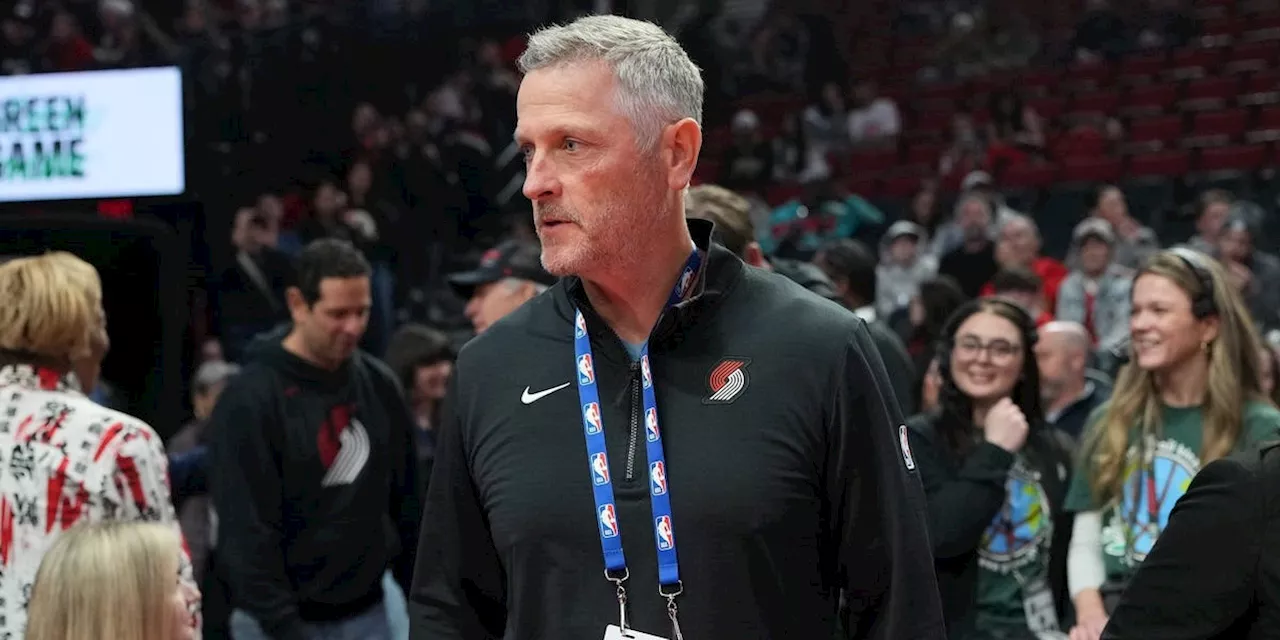
Blazers’ Billionaire Owner Tom Dundon Drives Sharp NBA Cost-Cutting Shift
Tom Dundon, the billionaire owner of the Portland Trail Blazers, is igniting intense debate across the NBA with aggressive cost-cutting measures that are shaking up the norms of professional basketball franchises. The moves are generating viral social media backlash as the team pulls back on player and fan perks once considered staples in the league.
Dundon’s business mindset, shaped by his success in subprime auto loans and a $4.25 billion acquisition of the Blazers this March, is reshaping how the franchise operates. His approach echoes a “grindset” culture common in high-pressure business environments where frugality and maximal efficiency are prioritized—even in sports where luxury and comfort are typically expected.
Controversial Changes Fan and Team Members Feel Immediately
Among the most talked-about decisions, the Blazers no longer allow two-way players—who split time between the NBA and G League—to travel with the team, sparking criticism as these players remain vital to the franchise’s depth and development. Additionally, late hotel checkouts have been banned for all non-players and coaches. This change worried interim head coach Tiago Splitter, who expressed concern about whether the team’s masseuse would have adequate time to prepare facilities before a critical NBA Play-In tournament game.
Frictions have also surfaced as Dundon interviewed an array of potential new head coaches despite Splitter guiding Portland to its first playoff appearance in five years. Even fans have felt the sting of cutbacks: the Trail Blazers chose not to provide free T-shirts to fans before a crucial playoff home game— a contrast sharply highlighted by the San Antonio Spurs handing out color-coordinated shirts ahead of their playoff opener.
The strict cost controls extend to every level of the organization, provoking widespread commentary on platforms ranging from ESPN to The Athletic, making Dundon an icon of the tension between traditional team ownership extravagance and modern corporate austerity.
NBA Leaders React: Commissioner and Rival Owners Chime In
NBA Commissioner Adam Silver addressed the scrutiny directly, underscoring that Dundon’s approach is not about petty savings but a broader business strategy. Silver noted,
“People are starting to say he’s not willing to spend the money… you gotta remember, this is a guy who just won a bidding war, call it $4.5 billion to buy a team, and they’re calling him cheap. It just can’t be.”
He also pointed to Dundon’s success with the NHL’s Carolina Hurricanes, which have made the playoffs every year since he took control in 2017 after nearly a decade of drought.
Mark Cuban, owner of the Dallas Mavericks, acknowledged a tough new financial reality for NBA owners. Cuban said,
“In an era where teams cost billions and billions of dollars and require a list of investors and even private equity, we are far from the world when I bought the Mavs and wrote the check by myself.”
He explained that owners like Dundon must drive their teams to at least break even financially and praised Dundon’s basketball knowledge and love of the game.
Legacy of Former Ownership Highlights Stark Contrast
Dundon’s business-first attitude contrasts sharply with the elite-era generosity under the late Paul Allen, the Microsoft cofounder who owned the Blazers until his death in 2018. Allen famously lavishly spoiled players with perks like washed and detailed cars during practice, a full private jet, and even offers of a yacht if the team won an NBA title.
Under Allen and later his sister Jody Allen, the franchise cultivated a more comfortable, elite environment—a stark departure from Dundon’s lean, efficiency-driven approach. Dundon, conversely, has modeled some of the cost-cutting on his earlier success with the Hurricanes, proving a willingness to shake up NBA conventions.
What’s Next for the Trail Blazers and NBA Ownership?
Dundon’s methods are already influencing discussions about ownership expectations and the economics of professional sports on a national level. As franchises reportedly operate at multibillion-dollar valuations, pressure mounts for owners to justify expenses and deliver competitive success with tighter budgets.
Basketball fans, players, and league officials will be watching how Dundon’s strict business grindset translates into long-term results for the Trail Blazers, especially as the franchise battles the Spurs in the NBA playoffs. The evolving relationship between cost control and competitive ambition now stands front and center in the sports world’s high-stakes business.
For Alaskan and U.S. audiences, the Blazers’ story highlights how even elite sports teams must adapt to shifting financial and managerial realities, where billionaire ownership now balances deep investment with ruthless efficiency.