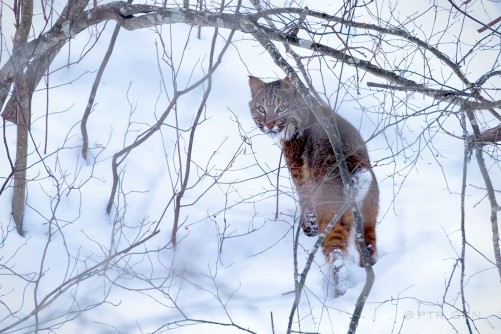
The bobcat population in southern New England is on the rise, marking a significant comeback for the species, which had been eradicated from Rhode Island and surrounding areas for many years. Recent findings from the Rhode Island Bobcat Project, spearheaded by researchers from the University of Rhode Island (URI), reveal that bobcats are now being sighted more frequently across the region. As of this winter, the project has recorded over 1,000 sightings, a notable milestone that underscores both the species’ recovery and heightened public interest.
The project, which collaborates with local organizations such as the Rhode Island Department of Environmental Management and the Wildlife Clinic of Rhode Island, aims to gather critical data on bobcat movements, habitat usage, and population dynamics. According to Kathleen Carroll, an Assistant Professor of Quantitative Ecology at URI, and her Ph.D. student, Christopher Hickling, the increasing presence of bobcats presents a unique opportunity for public engagement and wildlife conservation.
Understanding Bobcat Behavior and Habitat
The information collected from public sightings, along with data from camera traps and GPS radiocollars, is instrumental in determining where bobcats rest, hunt, and travel. Carroll notes that the data will help inform land management practices that balance human activities with wildlife conservation efforts. She points out that bobcats in southern New England exhibit a remarkable tolerance for human presence, often seen crossing driveways at night. This behavior contrasts sharply with bobcats in less populated areas, where they tend to be more cautious.
Carroll expresses enthusiasm about the community’s interest in bobcats, stating that the reports collected will aid in supporting their populations in the future. The project has provided some insights since its inception in September 2023. Most sightings have come from southern Rhode Island, though reports have been received from various parts of the state, excluding the islands.
What Residents Should Know About Bobcats
As spring approaches, residents should be aware that female bobcats typically give birth to litters of two to four kittens during this season. They establish dens in secluded areas, often away from human activity. If residents suspect they have a den on their property, they are encouraged to contact the URI team for guidance.
The project has also adopted a creative naming convention for the bobcats that are collared and released, naming them after native birds such as Osprey and Falcon. This approach not only helps in organizing data but also fosters a connection to local wildlife. Carroll explains that while each bobcat has a formal identification number, the more memorable names enhance public engagement.
Despite their wide-ranging movements, bobcats can often be seen repeatedly within certain areas, particularly if their home or work is situated within their territory. Younger males tend to explore new territories more frequently, adding an element of unpredictability to their sightings.
The allure of bobcats for the public can be attributed to their charismatic nature and resemblance to domestic cats. Many of their behaviors mirror those of household pets, making them relatable and intriguing figures in the wildlife community. Carroll emphasizes that while many people may never encounter more elusive wild animals, the bobcat represents a captivating species that is accessible to the public.
For additional information about the Rhode Island Bobcat Project, visit [connectivityandconservation.com/bobcat-project](https://connectivityandconservation.com/bobcat-project). For inquiries, contact [email protected] or [email protected].