President Donald Trump has suggested a partnership between the United States and China, commonly referred to as the “G2.” However, Chinese officials have publicly rejected this notion, emphasizing the importance of a more inclusive global governance structure. This discussion arose as Trump prepares for a significant diplomatic visit to China scheduled to begin on March 31, 2024.
The term “G2” was first proposed in 2005 by economist C. Fred Bergsten to highlight the growing interdependence between the two largest economies. Initially, the idea garnered support among some policymakers in Washington. Yet, it lost traction amid increasing tensions and trade disputes, particularly during Trump’s presidency. Recently, Trump has revived the term, indicating its relevance in discussions with Chinese President Xi Jinping.
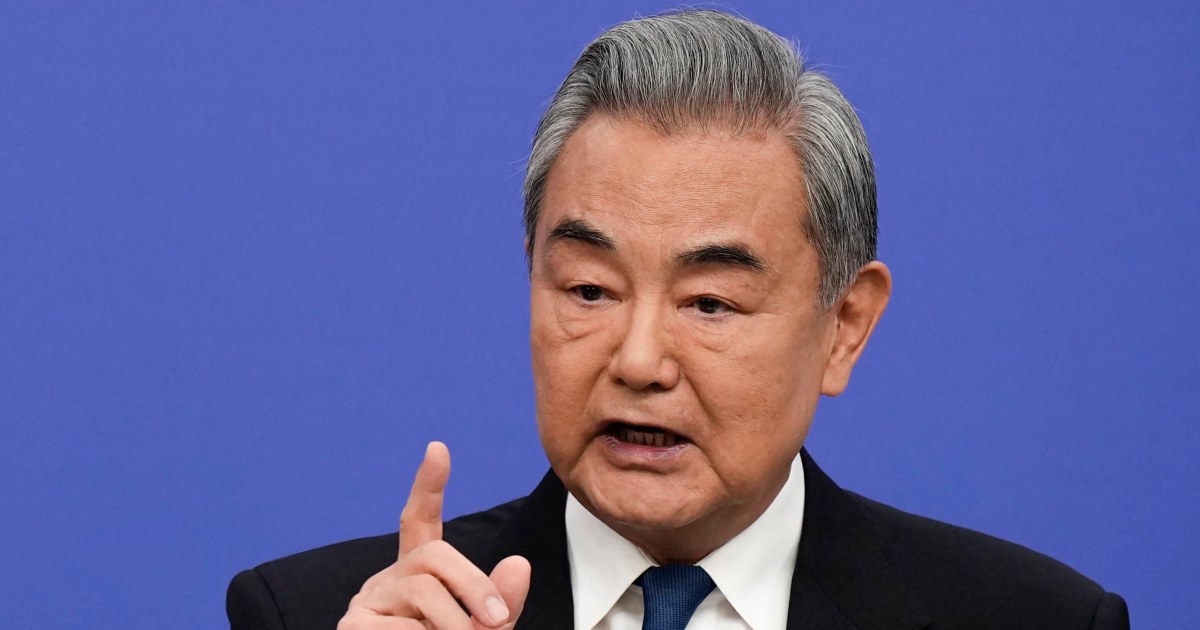
At a news conference on the sidelines of China’s annual legislative session, Chinese Foreign Minister Wang Yi responded to concerns about the “G2” concept. He stated, “There is no doubt that China and the U.S. have a significant impact on the world. But we should not forget there are more than 190 countries on our planet.” This response reflects China’s desire to portray itself as a partner rather than a subordinate in international affairs.
Wang further articulated that the concept of a “G2” contradicts China’s diplomatic approach, which emphasizes cooperation with nations in the Global South. He expressed reluctance to assume greater global governance responsibilities if it risks entangling China in conflicts, particularly in the Middle East. “Great power rivalry and bloc confrontation have invariably inflicted disaster and pain on humanity,” Wang added.
The relationship between the U.S. and China has wide-ranging implications, according to Wang, who cautioned against mutual misperceptions. “Turning our backs on each other would only lead to mutual misperception and miscalculation,” he remarked, warning that such a path could lead to conflict that would affect the entire globe.
Despite ongoing trade tensions marked by Trump’s tariffs, both leaders have maintained communication. Wang noted, “It is heartening to see that the presidents of the two countries have led by example, by maintaining good interactions at the top level.” Trump and Xi are expected to meet multiple times this year, beginning with Trump’s visit to China.
Wang described 2026 as a “big year” for U.S.-China relations, indicating a need for thorough preparation for high-level exchanges. He stated that the two nations must work to manage existing risks and create a favorable environment for dialogue.
Ongoing military actions in the Middle East present potential challenges to this diplomatic momentum. In response to the U.S.-Israeli strikes in Iran, which has close ties with China, Wang reiterated calls for an immediate cessation of hostilities. “Seeing the Middle East engulfed in flames, I want to say that this is a war that should not have happened,” he asserted, emphasizing the need for dialogue over force.
As both nations navigate their complex relationship, the path forward remains uncertain. The upcoming meetings between Trump and Xi will be pivotal in shaping the future dynamics of U.S.-China relations and their role in global governance.