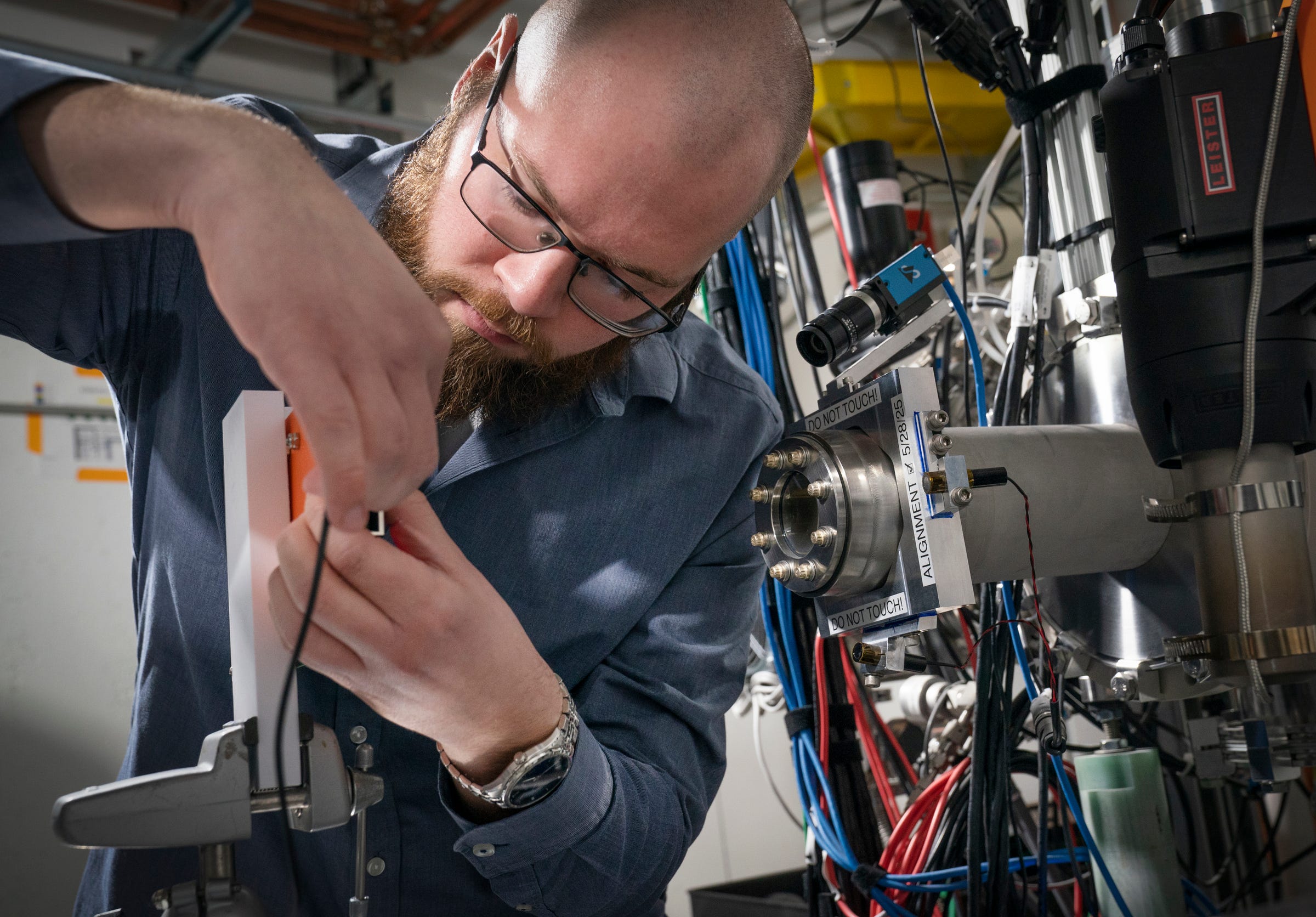
Michigan State University (MSU) has inaugurated a state-of-the-art facility designed to test microelectronics against cosmic rays, a critical advancement for industries reliant on cutting-edge technology. The newly established K500 Chip Testing Facility, which cost approximately $14 million to develop, aims to simulate decades of cosmic ray exposure in just minutes. This facility is one of only three heavy ion cyclotron facilities available for chip testing in the United States, highlighting its significance in the realm of technology development.
The K500 facility is located at the Facility for Rare Isotope Beams (FRIB) on the MSU campus and was funded by the U.S. Department of Defense. It repurposes the K500 superconducting cyclotron, which has been in operation since 1982. Originally designed for high-energy, heavy-ion research, it now enables testing of semiconductors for applications in space, defense, and automotive industries.
Thomas Glasmacher, laboratory director at FRIB, emphasizes the importance of this facility, stating, “The 6G cell phone is all going to be satellite-based; a lot of satellite data centers are going into space. So these chips, these power supplies, need to withstand the cosmic rays that hit them all the time.” As technology continues to evolve, ensuring the reliability of microchips in environments with high radiation exposure is increasingly crucial.
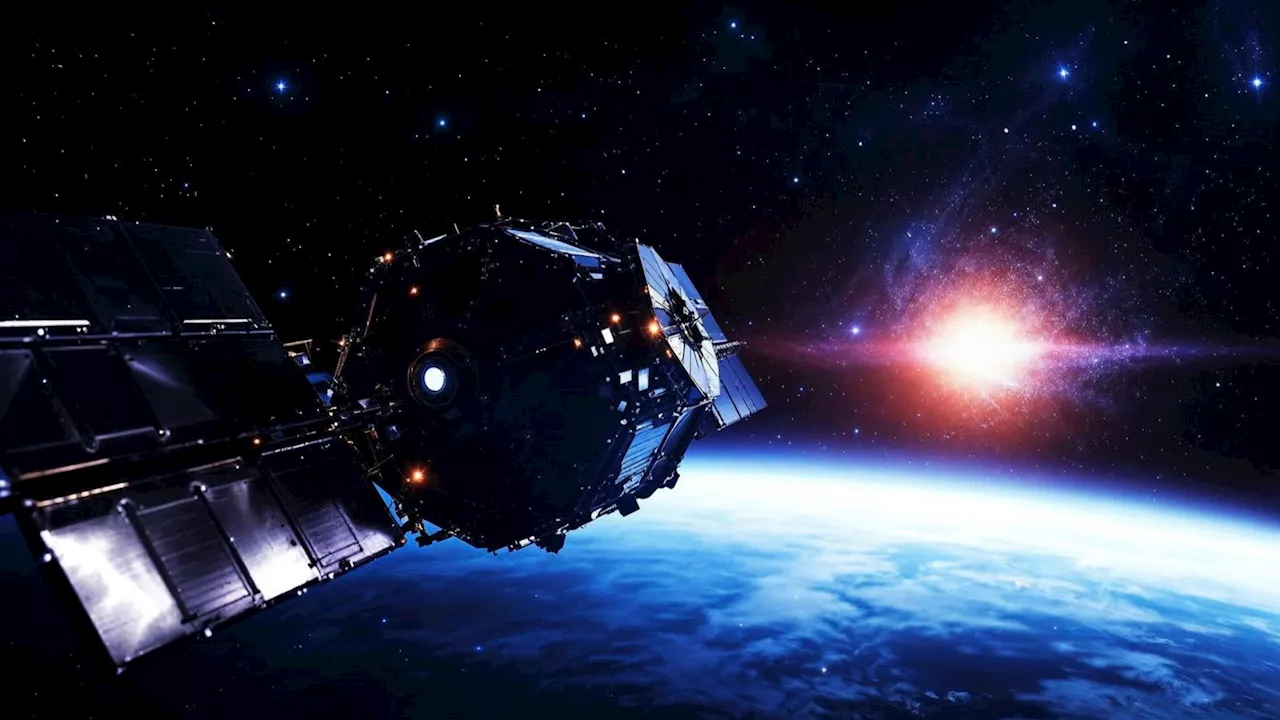
Cosmic rays, primarily composed of protons and atomic nuclei, originate from various sources, including the sun and distant supernovae. These particles travel through space at nearly the speed of light and frequently bombard Earth. Although much of the radiation is deflected by the planet’s magnetic field, it can still affect electronic systems. A notable incident occurred in October 2025 when a JetBlue Airbus A320 experienced a sudden altitude drop due to a malfunction in its flight control systems, attributed to cosmic ray interference. This incident prompted Airbus to ground 6,000 aircraft for software updates, causing significant travel disruptions.
The K500 facility addresses the urgent need for chip manufacturers to understand how their products can withstand cosmic ray exposure. Glasmacher explains, “You need to, in a limited amount of time, provide the kinds of cosmic rays a device or a chip in space sees in 50 years or so.” The facility can replicate this exposure in mere minutes, enabling companies to conduct thorough testing efficiently.
The facility employs a plasma charged with ions that are accelerated using substantial amounts of energy, ranging from 20 million to 40 million electron volts per unit mass. Researchers can filter specific ions to target the exact conditions required for their experiments. “We give customers a menu, and they order off the menu,” says Steve Lidia, manager of the FRIB beam instrumentation and measurement department. This flexibility allows clients, including major companies like Texas Instruments, to customize their testing protocols.
Since opening earlier this year, the K500 facility is operating at approximately 40% capacity and is expected to provide around 2,500 hours of testing time for clients throughout the year. Plans are underway to expand the facility, which will include a new 5,500-square-foot addition to accommodate more simultaneous testing activities.
Beyond its commercial applications, the K500 facility also serves an educational purpose, providing hands-on experience for MSU students. John Papapolymerou, interim dean of MSU’s College of Engineering, highlights the facility’s role in workforce development, stating, “This facility gives us more opportunity because we have more available hours to train more and more students.” The collaboration with industry helps students gain practical skills essential for careers in semiconductors, electronics, and quantum technology.
The K500 Chip Testing Facility’s activities will be integrated into the upcoming Leinweber Center for Engineering and Digital Innovation, scheduled to open in August 2028. This new center will focus on advanced research, education, and entrepreneurship, further solidifying MSU’s position as a leader in technological innovation.
As the demand for reliable microelectronics continues to grow, MSU’s K500 facility is poised to play a pivotal role in ensuring that the next generation of technology can withstand the challenges of space and beyond.