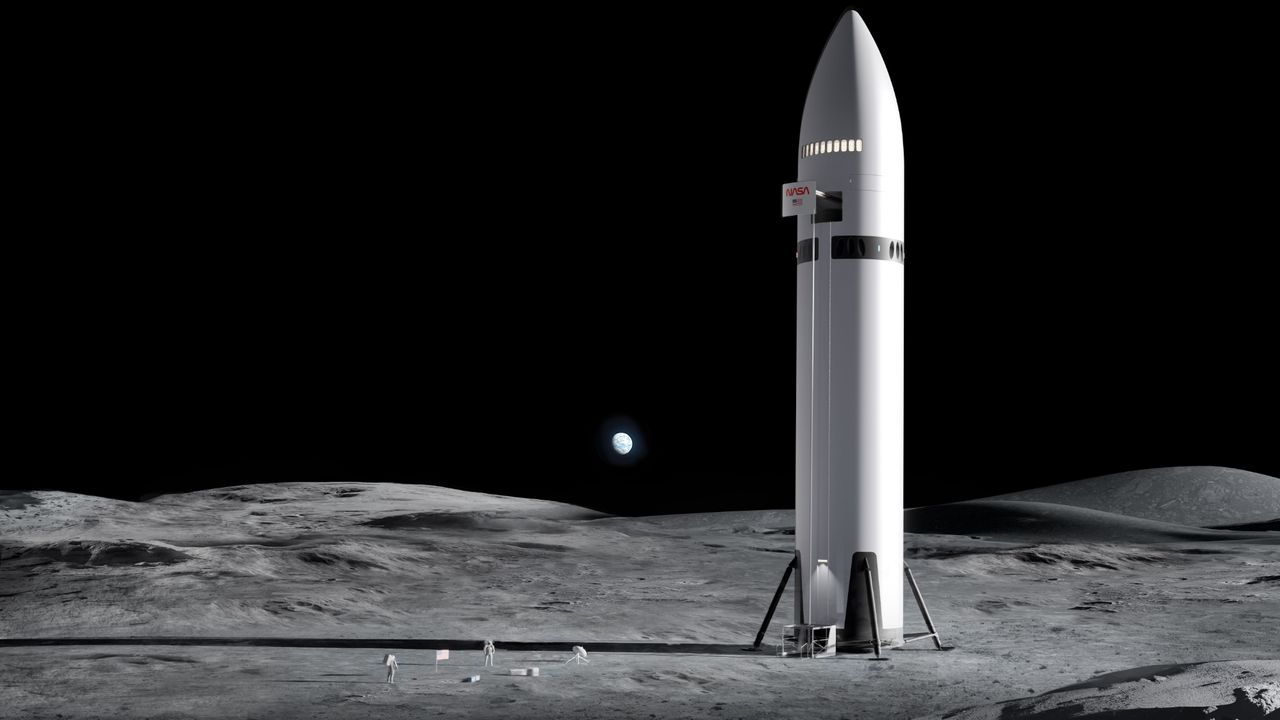
NASA has announced significant changes to its Artemis 3 mission, which will no longer involve a lunar landing and may not include SpaceX’s Starship as originally planned. On February 27, 2024, the agency revealed a revamped architecture for its lunar exploration program. The revised Artemis 3 is now scheduled to launch in 2027, but it will remain in low Earth orbit rather than making a historic trip to the moon.
The primary objective of this mission is to test various technologies and capabilities essential for future lunar exploration. According to NASA officials, Artemis 3 will focus on demonstrating a rendezvous and docking procedure between the Orion crew capsule and “one or both commercial landers from SpaceX and Blue Origin.” Blue Origin, founded by Jeff Bezos, is working on a crewed lander called Blue Moon, which was initially intended for the Artemis 5 mission in 2030. However, there is speculation that NASA may expedite Blue Moon’s development for an earlier lunar landing.
The shift away from using SpaceX’s Starship is a notable one. Last October, then-Acting Administrator Sean Duffy expressed concerns about the pace of Starship’s development, prompting NASA to consider competitive alternatives for the Artemis 3 landing contract. SpaceX has conducted 11 test flights of Starship, with the last two achieving full success. Nevertheless, the vehicle has yet to reach Earth orbit, which may have influenced NASA’s decision.
Experts suggest that NASA’s strategy involves mitigating risks by not relying on a single contractor for lunar missions. Don Platt, head of the Department of Aerospace, Physics and Space Sciences at the Florida Institute of Technology, noted, “NASA does not want to have to rely on only one contractor, either. I think that’s why they’re really kind of pushing this competition between Blue Origin and SpaceX.”
In response to the evolving landscape of lunar exploration, Blue Origin announced in late January 2024 that it would pause its suborbital space tourism flights for at least two years. The company stated this decision is aimed at accelerating the development of its human lunar capabilities, aligning its efforts with NASA’s goals for lunar return and sustained presence.
The revised plans for the Artemis program indicate that the first crewed lunar landing since the Apollo era is now expected to occur with Artemis 4 in 2028. This mission could potentially include a second lunar landing in the same year with Artemis 5. NASA’s updated architecture emphasizes a methodical, phased approach to lunar exploration, with an increased launch cadence as a primary goal.
The agency has expressed urgency, particularly in light of increasing competition from international counterparts. NASA Administrator Jared Isaacman emphasized the need for faster progress, stating, “With credible competition from our greatest geopolitical adversary increasing by the day, we need to move faster, eliminate delays and achieve our objectives.”
This strategic revision also includes plans to maintain the current configuration of the Artemis Space Launch System rocket, sticking closely to the “Block I” version rather than transitioning to the anticipated “Block IB” variant. This consistency aims to streamline operations and expedite future missions.
NASA’s overarching vision remains focused on establishing a permanent, sustainable human presence on and around the moon within the next five to ten years. The agency aims to land the first Artemis astronauts before China achieves its lunar goals, which are set for 2030. The developments surrounding the Artemis program reflect a broader ambition to not only return to the moon but to ensure a long-term human settlement there.