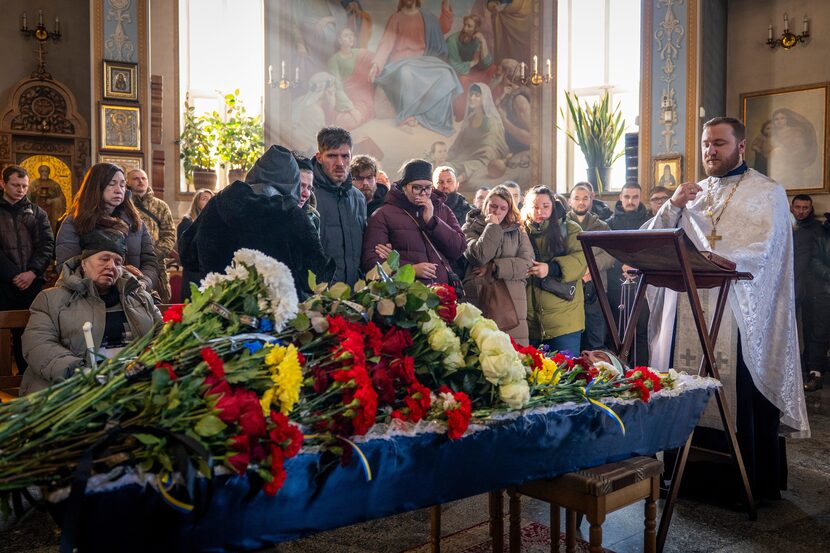
On the fourth floor of the J. Erik Jonsson Library in downtown Dallas, a poignant exhibit showcases the rich folk-art traditions of Ukraine. Displayed behind glass cases, mannequins adorned in intricately embroidered blouses and traditional moccasins stand as silent witnesses to the ongoing conflict between Ukraine and Russia. This year marks four years since Russia initiated its full-scale invasion of Ukraine, a war that has forced Ukrainians to defend their cultural identity and territorial sovereignty.
The exhibit features not only clothing but also distinctive musical instruments and beautifully crafted chess sets. A prominent poster depicts stunning churches with ornate onion domes, symbolizing the deep cultural heritage at risk. This cultural showcase takes on a heavier significance against the backdrop of the war. For Russian President Vladimir Putin, the conflict is not merely about territory; it is about erasing Ukrainian identity and heritage to fulfill his vision of a greater Russian empire.
Since the war’s escalation, thousands of Ukrainian children have been forcibly taken to Russia for “adoption,” highlighting the lengths to which the Russian government is willing to go to undermine Ukrainian culture. Reports from human rights organizations indicate that Russian authorities have implemented an educational system in occupied territories, compelling teachers to teach in Russian and abandon the Ukrainian language and history. Those who resist face severe consequences, including threats, violence, and home searches.
Despite the harsh realities on the ground, the current U.S. administration often approaches the Russia-Ukraine conflict as if it were a mere contractual dispute. President Donald Trump has appointed his son-in-law, Jared Kushner, and real estate investor Steve Witkoff as his chief emissaries for peace talks. In contrast, one of Russia’s leading negotiators, Vladimir Medinsky, a nationalist historian, has a history of downplaying Soviet aggression and advocating for the unification of Ukraine with Russia. This disparity in diplomatic leadership contributes to the stagnation of peace negotiations.
As Trump enters the second year of his presidency, it becomes crucial to understand that a negotiation strategy based on business principles fails when the opposing side seeks annihilation. The administration must abandon any notion of territorial concessions and instead focus on bolstering Ukraine’s defenses against Russian aggression. Increased sanctions on countries that purchase Russian energy products are essential, alongside consistent military support for Ukraine, including weapons and air defense systems.
Efforts to assist Ukraine should also include rebuilding and fortifying vital infrastructure, particularly as Russia has intensively targeted utility services during the harsh winter months. The United States has offered temporary protected status to many Ukrainians residing in the country, shielding them from deportation until they can return safely. This status, currently set to expire in October 2023, should be extended to accommodate those affected by the ongoing conflict.
The folk art displayed at the J. Erik Jonsson Library serves as a reminder of the vibrant culture that is under threat due to Putin’s ambitions. Preserving this heritage is vital not just for Ukrainians but for the broader international community that values diversity and cultural expression. The world must remain vigilant to ensure that Ukrainian culture does not become a relic of a past extinguished by aggression.
As the situation evolves, public engagement remains crucial. Those wishing to share their thoughts on this pressing issue are encouraged to participate by submitting letters to the editor.
In the face of ongoing adversity, the resilience of the Ukrainian people and their culture must be supported and celebrated.