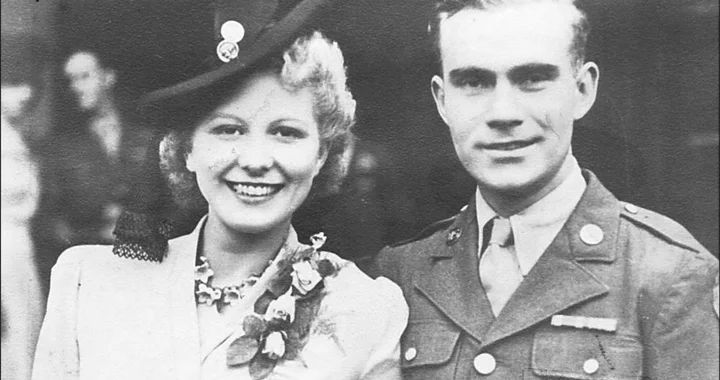
The post-World War II era saw thousands of war brides arriving in the United States, bringing with them tales of resilience and hope. Among these women were Ivy “Johnny” Johnson and Joyce Bryan, who settled in Eureka, California, after marrying American servicemen. Their stories illuminate the profound cultural shifts and personal sacrifices that characterized their journeys to a new life.
In August 1945, as the world celebrated the end of the war, songs like “My Guy’s Come Back” resonated across the airwaves. Alongside returning veterans, many brides from countries like England, France, and Italy made their way to America. Among them was Johnny, who had met Ray Olsen during the war while serving in the Army Postal Service in London. Their initial encounter at a dance hall turned into a courtship that would change their lives forever. By March 1946, Johnny bid farewell to her family and embarked on a transatlantic journey that would lead her to a new home in Eureka.
Johnny’s experience on the ship was marked by tears and a profound sense of uncertainty. Aboard with other war brides, she navigated the emotional complexities of leaving her homeland. Upon arriving in New York Harbor, she and her fellow brides traveled by train to the West Coast, with stops that included a brief layover in Chicago. It was there that Johnny experienced the excitement of American retail for the first time, purchasing high-heeled shoes that would become a symbol of her new life.
Another war bride, Lou McCornack Butler, shared a similar journey. Leaving England at nineteen, Lou faced personal tragedies, including the loss of her first husband, John Edward Campbell, during the war. Her path to America began with a chance meeting at the American Officers Mess, where she worked as a housekeeper. It was there that she met Phillip McCornack, a soldier recovering from illness. Their romance blossomed, and soon they were married, with Lou crossing the Atlantic on a Merchant Marine ship filled with uncertainty and apprehension.
Lou vividly recalls her mother’s warnings about America, portraying it as a land of cowboys and gangsters. Yet, upon arriving, Lou found a warm community in Eureka. She wrote to her mother about her feelings of loneliness but also expressed determination to make her new life comfortable.
Both Johnny and Lou, along with other war brides, faced challenges in adjusting to American life. Joyce Bryan, who married Murl Francis Bryan, experienced her own trials during the journey to America. She boarded the Zebulon B. Vance, a ship notorious for its overcrowded and unsanitary conditions. Joyce’s story, like others, was one of survival and resilience, as she navigated the difficulties of immigration while carrying her infant daughter.
These women did not merely adapt; they thrived. In 1947, Joyce and Lou, recognizing the need for community among the war brides, co-founded the World Friendship Club in Eureka. This organization aimed to create a supportive network for women who shared similar experiences. The club began with a handful of members and grew to include eighty-two women, fostering a sense of belonging in a new and often unfamiliar culture.
The club held monthly meetings, organized social events, and engaged in charitable work, creating a bridge between their past and present. Through activities like rummage sales and international dinners, the war brides contributed to their local community while forging deep friendships that transcended cultural differences.
As Johnnie and Lou reflect on their journeys, they emphasize the importance of the bonds formed within the club. “We became a band of sisters,” Lou recalls, highlighting the shared experiences of homesickness and the joys of motherhood. These friendships were crucial in overcoming the isolation many felt in their new environment.
The legacy of the World Friendship Club extends beyond its initial purpose. The club celebrates its sixtieth anniversary this year, a testament to the enduring connections formed by these remarkable women. Lou Butler expressed it best: “We did not come to America looking for a handout, but with hands ready to become part of a great nation.”
Today, the stories of Johnny, Lou, and their fellow war brides remain a vital part of Eureka’s history. Their experiences reflect not only personal triumphs but also the broader narrative of cultural exchange and resilience that defined post-war America. As they look back, the sense of community and sisterhood formed in the face of adversity continues to resonate, reminding us of the power of love and connection across borders.