Dark matter, an elusive substance believed to constitute approximately 85% of the universe’s mass, remains one of the most compelling mysteries in astrophysics. Despite its name, dark matter does not absorb, emit, or reflect light, making it invisible and undetectable by conventional means. However, astronomers have observed its gravitational effects on various cosmic phenomena, suggesting its presence is crucial for understanding the structure and behavior of the universe itself. This article explores seven fascinating phenomena that highlight the significant role dark matter plays in our cosmic landscape.
The Universe’s Missing Mass
The concept of dark matter originates from the fundamental question of the universe’s composition. Ordinary matter, which includes stars, planets, and galaxies, accounts for only about 15% of the universe’s total mass. The remaining 85% is attributed to dark matter, which exerts a gravitational influence on visible matter. This discrepancy raises critical questions about the underlying mechanics of the cosmos and informs much of contemporary astronomical research.
Insights from Spiral Galaxies
The existence of dark matter has gained widespread acceptance since the 1970s, particularly following the pioneering work of American astronomer Vera Rubin. Her research on the rotational speeds of stars in spiral galaxies, including our own Milky Way, revealed that stars at the galaxy’s edges were orbiting at speeds inconsistent with the amount of visible mass. This finding suggested the presence of unseen mass, later identified as dark matter, which is necessary to explain the stability and structure of these galaxies.
Exploring the Galactic Center
Dark matter’s influence extends to the center of the Milky Way. Research conducted by a team from Johns Hopkins University in 2022 proposed that an excess of gamma rays detected in the Galactic Center could be attributed to collisions between dark matter particles. Similarly, a recent study from the Institute of Astrophysics La Plata in Argentina concluded that a substantial dark matter core could be responsible for regulating the behavior of stars in this region, further supporting the hypothesis of dark matter’s role in galactic dynamics.
Gravitational Lensing Phenomena
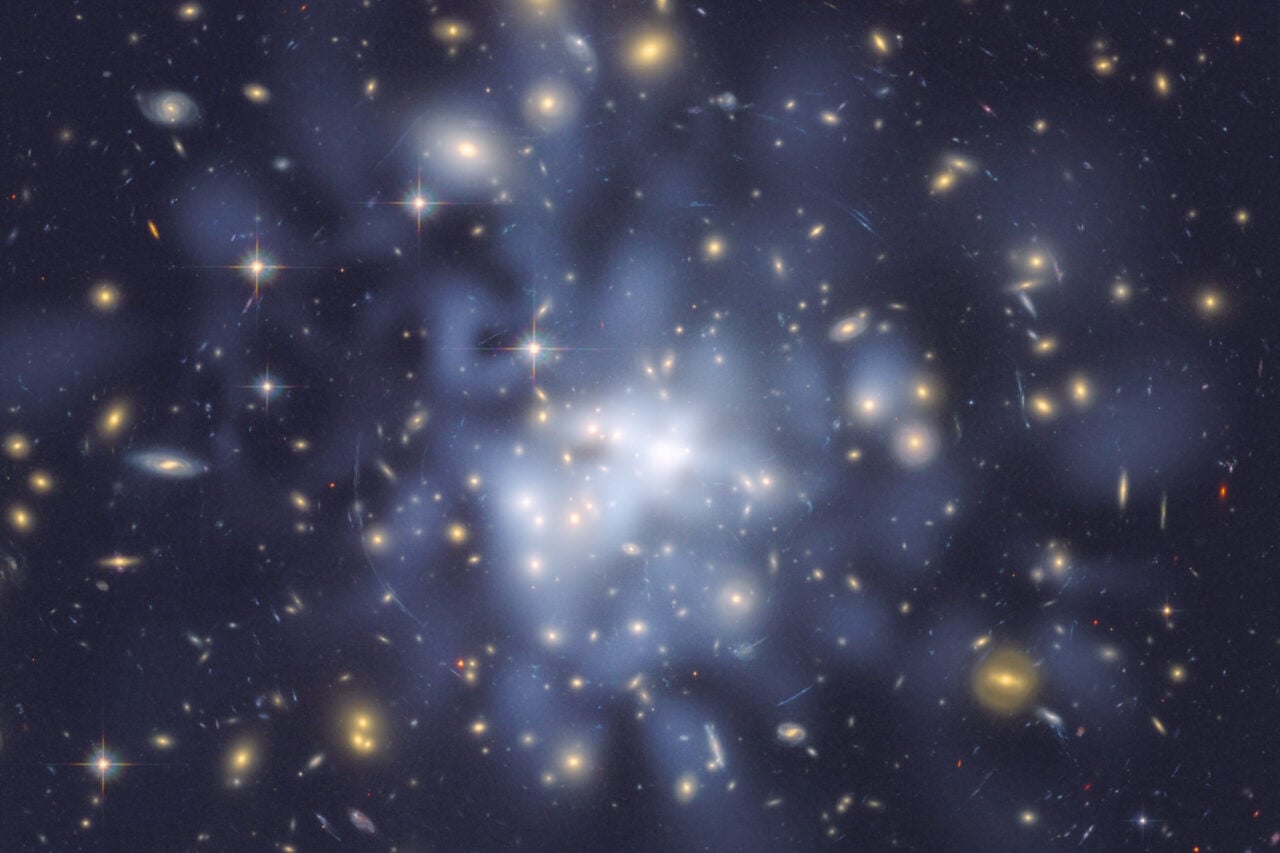
According to Einstein’s theory of general relativity, massive objects, including dark matter, warp the fabric of spacetime, leading to a phenomenon known as gravitational lensing. This effect allows astronomers to observe distant celestial bodies that would otherwise be obscured. Dark matter contributes significantly to these observations, creating gravitational fields that can bend light from objects behind it, resulting in visual anomalies such as the striking five-point structure known as the Einstein Cross.
The Bullet Cluster Revelation
In 2006, NASA’s Chandra X-ray Observatory captured a compelling image of the Bullet Cluster, a galaxy cluster formed by the collision of two massive galaxy groups. Analysis of this image revealed a significant discrepancy between the visible mass, represented by hot gas, and the mass inferred from gravitational lensing. The majority of the mass was found to be located around the galaxies rather than at the center, providing strong evidence for the presence of dark matter and reinforcing Rubin’s foundational findings in this field.
Supersymmetry and Dark Matter
The connection between dark matter and the theoretical framework of supersymmetry has garnered interest among particle physicists. Supersymmetry posits that particles come in pairs, which may shed light on the unresolved anomalies within the Standard Model of particle physics. According to CERN, many supersymmetric theories suggest that these partner particles could possess the characteristics expected of dark matter—namely, stability, neutrality, and weak interaction with visible matter. Although direct evidence for supersymmetry remains elusive, researchers continue to investigate the potential link between these two concepts.
Cosmic Microwave Background Anomalies
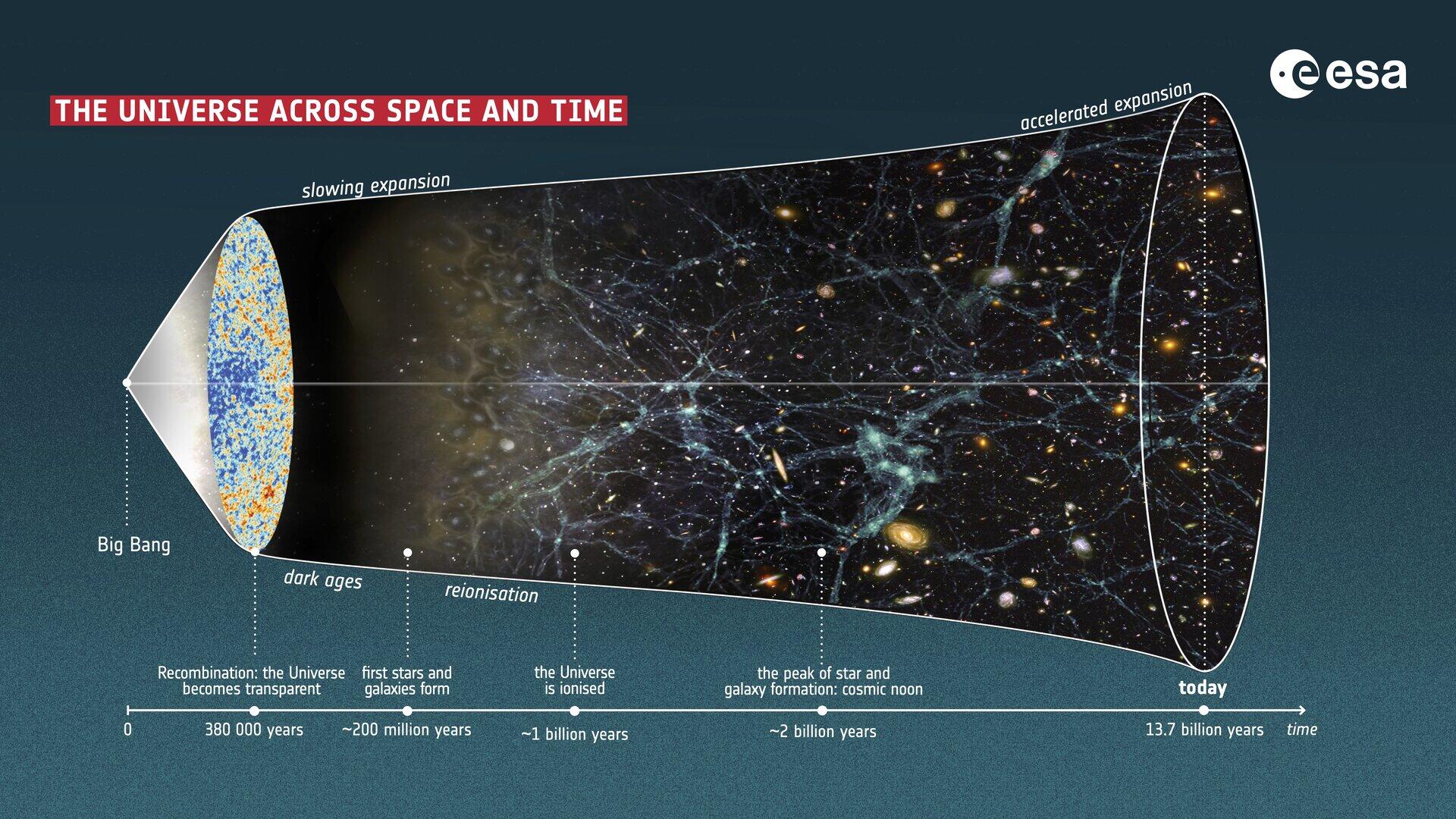
The cosmic microwave background (CMB) serves as a relic of the Big Bang, providing a snapshot of the early universe. Variations in the CMB’s temperature, detected by sensitive instruments, may indicate the influence of dark matter. While dark matter does not directly interact with radiation, its gravitational pull could create imprints in the CMB, resulting in observable anisotropies. These anomalies help scientists decipher key properties of the universe’s shape and evolution, underscoring dark matter’s indirect but significant impact on cosmology.
In summary, dark matter remains a central theme in the quest to understand the universe. While its direct detection remains out of reach, the gravitational effects it exerts on various cosmic phenomena provide invaluable insights into its existence and properties. As research continues, the mysteries surrounding dark matter may eventually lead to a deeper understanding of the cosmos and our place within it.