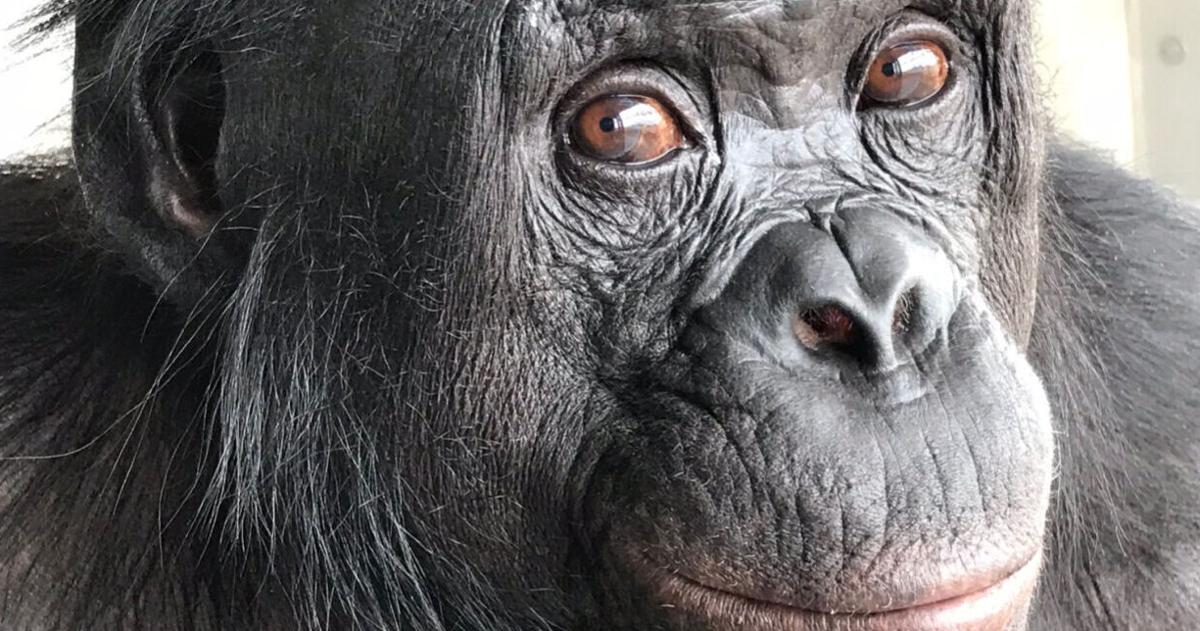
Research conducted by scientists at the University of Cambridge reveals that apes possess the ability to engage in pretend play, a skill typically associated with young children. The study, published in Nature Communications, utilized imaginary juice to test this cognitive ability among various ape species.
Understanding Pretend Play in Apes
By the age of two, children often demonstrate the capacity to play pretend, transforming their surroundings into imaginary worlds filled with creativity. This study aimed to investigate whether non-human primates could display similar imaginative behaviors. Researchers focused on the ability of apes to grasp the concept of play acting, as this skill suggests a level of cognitive complexity previously underestimated in these animals.
Dr. Amanda Seed, the lead researcher, and her team designed an experiment where apes were presented with an empty cup and a bottle labeled “juice.” The researchers observed the apes’ reactions when they were encouraged to act as if they were pouring and sharing imaginary juice with others. This setup aimed to assess whether the apes could understand and replicate the concept of pretend play.
Key Findings and Implications
The results showed that apes readily engaged in the play scenario, utilizing the props to imitate sharing behavior, similar to that observed in young children. This finding suggests that apes not only recognize the concept of imagination but can also actively participate in it. The implications of this study extend beyond mere entertainment; they provide insights into the evolution of cognitive skills and social interactions among primates.
“The ability to engage in pretend play could indicate a more complex understanding of social dynamics and relationships,” said Dr. Seed. “This challenges the notion that such cognitive abilities are unique to humans.”
The study adds to the growing body of evidence suggesting that apes are capable of more sophisticated forms of communication and social interaction than previously thought. It opens up new avenues for research into the cognitive abilities of non-human species, highlighting the importance of play in learning and social development.
As researchers continue to explore the depths of ape cognition, this study marks a significant step in understanding how closely related these animals are to humans in terms of cognitive and social skills. The findings encourage further investigation into the role of play in the lives of both children and primates, offering a richer perspective on the evolution of intelligence across species.