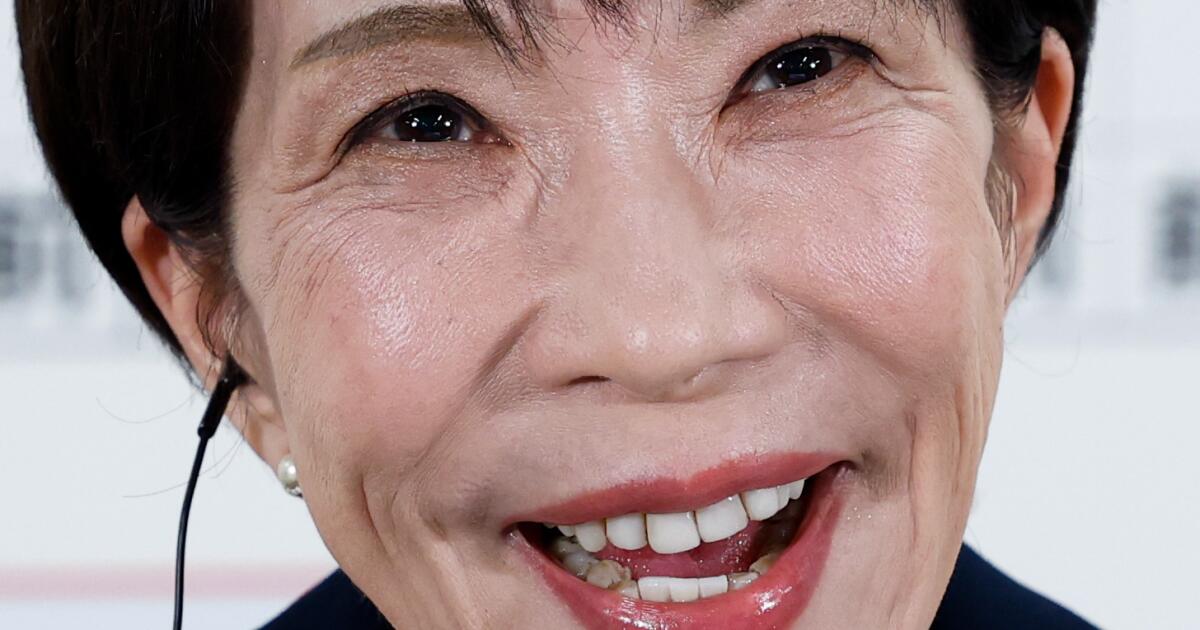
The governing party of Prime Minister Sanae Takaichi achieved a decisive victory in a parliamentary election held on Sunday, according to reports from Japanese media. Preliminary results indicated that the Liberal Democratic Party (LDP) secured 271 seats in the 465-member lower house of Japan’s parliament, surpassing the 261-seat threshold needed for a majority. This outcome positions Takaichi to implement her policy agenda following her ascension to office just four months prior.
In a televised interview with NHK, Takaichi expressed her readiness to advance her initiatives. A celebratory atmosphere marked the evening at the LDP headquarters, where Takaichi placed red ribbons next to the names of successful candidates, receiving applause from party executives. Despite lacking a majority in the upper house, this significant gain in the more influential lower house offers Takaichi an opportunity to pursue a right-leaning platform focused on strengthening Japan’s economy and military amid rising tensions with China.
Takaichi’s approach has garnered considerable popularity, particularly among younger voters who previously engaged little with politics. Her style, described as both playful and assertive, appears to resonate well with this demographic. She acknowledged the challenges faced by the LDP, which has governed Japan for most of the last seventy years, including recent funding issues and scandals.
Takaichi’s Political Landscape
The prime minister called for early elections after only three months in office, hoping to capitalize on her favorable approval ratings. The opposition, despite forming a centrist alliance that includes the LDP’s former coalition partner, the Buddhist-backed Komeito, and the liberal-leaning Constitutional Democratic Party of Japan, struggled to present a unified challenge. Exit polls suggested that the new alliance may see a reduction to half of their prior combined total of 167 seats.
With the LDP expected to partner with the Japan Innovation Party, Takaichi aims to pursue a marked shift in Japan’s security, immigration, and other policies. Hirofumi Yoshimura, leader of the Japan Innovation Party, characterized their collaboration as an “accelerator” for Takaichi’s agenda. The rise of far-right populist sentiments has been evident, with the anti-globalist Sanseito party projected to gain ground in the election.
Takaichi is determined to revise security and defense policies by December 2023, with objectives that include enhancing Japan’s offensive military capabilities, lifting restrictions on weapons exports, and moving away from the country’s postwar pacifist principles. Her proposed policies aim for stricter measures on immigration, including new requirements for foreign property owners and limits on foreign residents.
Public Sentiment and Future Challenges
Though Takaichi has highlighted the importance of broadening support for her policies, she has largely sidestepped discussions on the financial implications of increased military spending and diplomatic relations with China. In her campaign, she emphasized the necessity of proactive government investment in areas such as economic security and technological advancements.
Political analysts, such as Masato Kamikubo, a professor at Ritsumeikan University, have raised concerns about the implications of prioritizing political survival over substantial policy outcomes. He noted that necessary but unpopular reforms often face opposition as subsequent elections approach.
As voters participated in the election amid heavy snowfall across Japan, there was a sense of cautious optimism among constituents. Voter Kazuki Ishihara, 54, expressed her support for the LDP, hoping for a fresh approach under Takaichi’s leadership. “I have some hope that she could do something,” Ishihara remarked, reflecting a desire for change in the political landscape.
The election results present both an opportunity and a challenge for Takaichi as she prepares to navigate the complexities of governance with a renewed mandate. With no further elections scheduled until 2028, she now has the space to pursue her policy goals while addressing the pressing issues facing Japan.