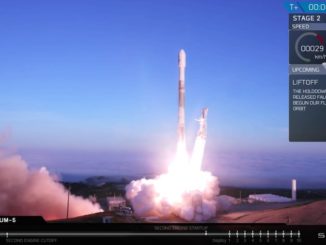
SpaceX is preparing to launch its Falcon 9 rocket on the Starlink 17-33 mission from the Vandenberg Space Force Base in California. This mission, scheduled for Saturday, February 7, 2024, at 9:21 a.m. PST (12:21 p.m. EST / 17:21 UTC), will deploy 25 Starlink satellites into low Earth orbit, contributing to the company’s extensive satellite network.
The Falcon 9 rocket, designated for this mission, is set to take off from pad 4E. Following the launch, the first stage booster, with the tail number 1088, aims to return to Earth and land on the drone ship, “Of Course I Still Love You,” located in the Pacific Ocean. If successful, this would mark the 176th landing on that vessel and the 568th overall booster landing for SpaceX.
Return to Flight Following Recent Anomaly
This launch represents a return to SpaceX’s regular launch schedule after a brief stand down. The company had paused operations following an in-flight anomaly during the Starlink 17-32 mission on February 2. During that mission, SpaceX reported that the second stage experienced an “off-nominal condition” during preparations for a deorbit burn. Though the Falcon 9 vehicle successfully deployed all 25 satellites, the incident prompted a thorough investigation.
According to the Federal Aviation Administration (FAA), the investigation concluded, allowing SpaceX to resume its FAA-licensed flights. The FAA’s final mishap report indicated that the probable cause was a failure of the Falcon 9 stage 2 engine to ignite prior to the deorbit burn. SpaceX has since identified technical and organizational measures to prevent a recurrence of such events.
SpaceX’s commitment to safety and reliability is evident as they prepare for the upcoming launch. The Falcon 9’s performance in previous missions, including the successful deployment of various payloads such as NASA’s SPHEREx and Transporter-12, underscores the technology’s robustness.
Current Satellite Network and Future Plans
With over 9,600 satellites in orbit, as reported by renowned astronomer and orbital tracker, Jonathan McDowell, SpaceX continues to expand its Starlink network, aiming to provide global internet coverage. The addition of the Starlink 17-33 satellites will enhance service availability and capacity for users worldwide.
As SpaceX gears up for Saturday’s launch, the excitement builds for what will be another milestone in the company’s ongoing mission to revolutionize satellite internet. The company’s track record and ability to adapt following challenges reflect a commitment to pushing the boundaries of space technology while prioritizing safety and efficiency.