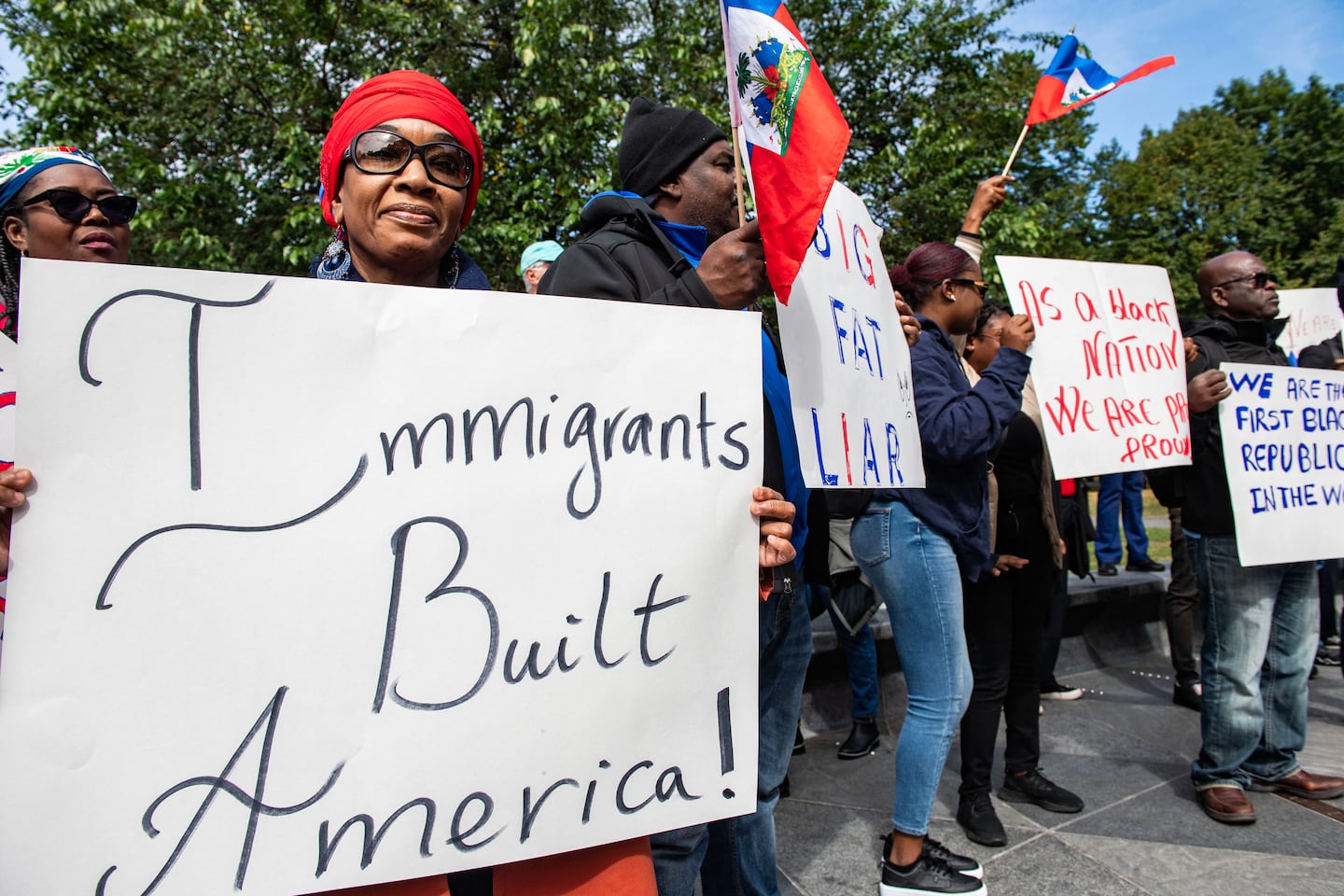
UPDATE: A federal judge has just issued a temporary block against the Trump administration’s attempt to end Temporary Protected Status (TPS) for approximately 45,000 Haitians in Greater Boston. This urgent legal intervention comes as the administration aimed to revoke these protections this Tuesday, citing a lack of national interest.
The Department of Homeland Security has confirmed it will appeal this decision to the U.S. Supreme Court, leaving many in a state of uncertainty. Haitian immigrants have relied on TPS since 2010, allowing them to live and work in the U.S. due to the ongoing crises in Haiti.
As news spread of the judge’s block late Monday, there was immediate relief among the Haitian community in Boston, home to the nation’s third-largest population of Haitians. However, anxiety remains high as many fear what the future holds. “Everyone is in a holding pattern but they’re still employable and legal today,” said John Randall, CEO of Amego, Inc., a nonprofit in Massachusetts.
The impact of this decision is profound. Many workers were already notified of job terminations due to their TPS status, only to learn they can stay employed for now. “People were so ecstatic that they still had a job, people crying on the phone,” said Christopher White, CEO of Road to Responsibility, after reversing termination notices sent to employees with TPS.
The looming threat of losing TPS has driven many to fear leaving their homes, with reports of diminished attendance in community programs. “Classes were getting smaller and smaller,” noted Nicole Albert, who runs the Gilbert Albert Community Center. “People were starting to hide, thinking, ‘I don’t want to get deported and then my kids stay behind.’”
Public officials and advocates have long warned of the humanitarian and economic fallout if TPS is ultimately revoked. Many Haitians contribute significantly to the local workforce, especially in healthcare sectors. In fact, over half of nursing assistants and personal care attendants in Greater Boston are immigrants, primarily from Haiti.
The economic implications are stark. As the labor force shrinks, employers are scrambling to fill gaps left by departing workers. “This is just a write-off of an entire section of our workforce,” Randall emphasized. Many workers have held their jobs for up to a decade, and the loss of these employees could destabilize essential services.
The situation is compounded by the ongoing unrest in Haiti, where returning individuals face severe danger. Those who have fled violence and instability are now caught in a legal tug-of-war that could force them back into perilous conditions. As one TPS holder recounted, “I don’t have anywhere to go,” highlighting the dire circumstances many face.
With the future of TPS hanging in the balance, advocates call for urgent solutions. “These are good, hard-working people,” White stated, emphasizing the contributions of Haitian workers to the community. The next steps are critical, as the appeal process could stretch on indefinitely, leaving families in a constant state of worry.
As the legal battle unfolds, the implications for the Haitian community in Greater Boston remain significant. For now, TPS holders can breathe a sigh of relief, but the uncertainty of their future looms large. Stay tuned for updates as this developing story progresses.