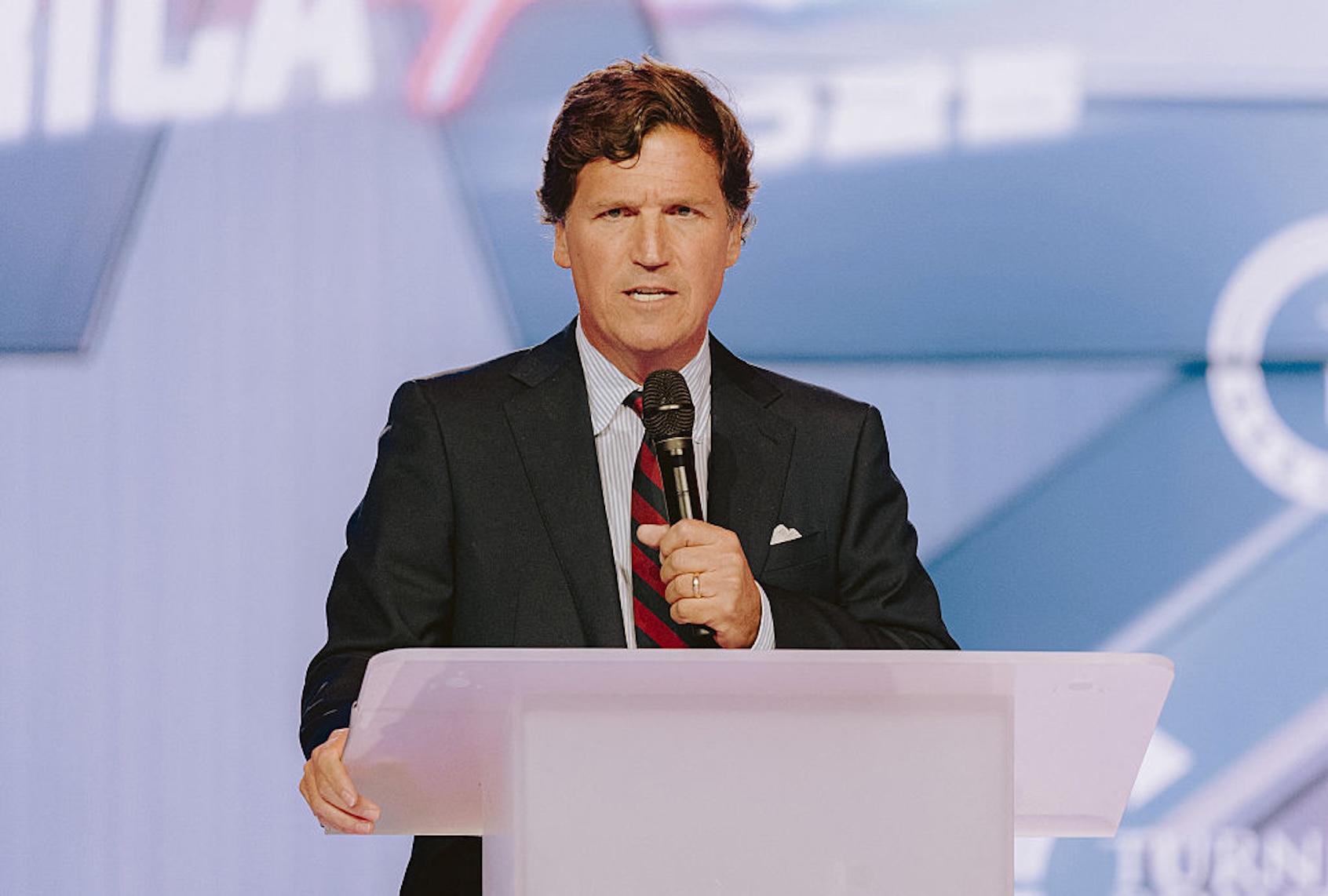
In a pivotal moment for political commentary, Jon Stewart confronted Tucker Carlson during a 2004 episode of CNN’s debate program, Crossfire. Stewart, then the host of the widely popular “The Daily Show” on Comedy Central, challenged Carlson and his co-hosts for treating critical political discussions as mere entertainment. This confrontation, which highlighted the superficiality of televised political debate, became a defining moment in the evolution of modern media.
Stewart’s appearance was not simply a guest spot; it was a rebuke of the show’s format, which he likened to a scripted wrestling match. He accused Carlson and his colleagues of being “hacks” who were “hurting America” by prioritizing sensationalism over substantive dialogue. The backlash from Stewart’s remarks led to Crossfire being canceled shortly after. Despite the immediate impact of this exchange, the long-term effects on Carlson’s career were profound.
Carlson, who had initially seemed to take Stewart’s criticisms to heart, gradually transformed his approach to journalism. He shifted from a traditional role as a journalist—where he once expressed doubts about the Iraq War—to becoming a prominent figure in conservative media. This journey is explored in detail in Jason Zengerle‘s biography, “Hated by All the Right People,” which scrutinizes Carlson’s transition from a respectable journalist to a polarizing conservative commentator.
From Confrontation to Reinvention
The early 2000s saw Carlson grappling with his identity as a journalist. While he worked at various outlets, including MSNBC and founded the Daily Caller, he began to interpret Stewart’s critique as a dismissal by a self-righteous liberal. This shift marked the beginning of his embrace of a more combative style that resonated with the Republican base. Carlson’s subsequent career has been characterized by his ability to tap into the fears and frustrations of right-wing audiences, framing them as victims of a larger conspiracy.
Carlson’s rhetoric evolved to portray progressives not merely as political opponents, but as an all-powerful force of “bottomless evil” intent on undermining American values. His narrative suggests that “they,” a nebulous group representing liberals, have manipulated public perception to achieve their goals. This tactic has allowed Carlson to cultivate a loyal following among those who seek moral justification for their beliefs.
The recent resurgence of interest in Carlson’s career has also coincided with a critical examination of his role in shaping conservative media narratives. His ability to weave compelling conspiracy theories has kept him relevant, even when faced with backlash. Carlson’s narratives often absolve his audience of moral responsibility, creating an illusion that they are the “good guys” in a battle against a corrupt system.
The Legacy of Stewart’s Critique
Looking back over the years, it is evident that Carlson’s survival in the media landscape is not merely due to his rejection of Stewart’s ideals about journalistic integrity. Instead, he has successfully catered to a demand among right-wing audiences for narratives that validate their perspectives, regardless of the factual accuracy. This phenomenon illustrates a broader trend within conservative media, where truth becomes secondary to the reinforcement of existing beliefs.
Stewart’s bold critique of Carlson on Crossfire can be viewed as a catalyst for the latter’s transformation. Rather than serving as a deterrent, it fueled Carlson’s determination to redefine his role in the media. The ensuing years have shown that Carlson is adept at manipulating the fears of his audience, pushing them further toward extreme positions.
As the political landscape continues to evolve, the legacies of both Stewart and Carlson remain intertwined. Their dynamic encapsulates a significant shift in American political discourse, where entertainment and ideology increasingly overlap. Ultimately, Stewart’s challenge to Carlson may have inadvertently paved the way for a new era of media, one where traditional journalistic values are often at odds with the demands of an increasingly polarized audience.