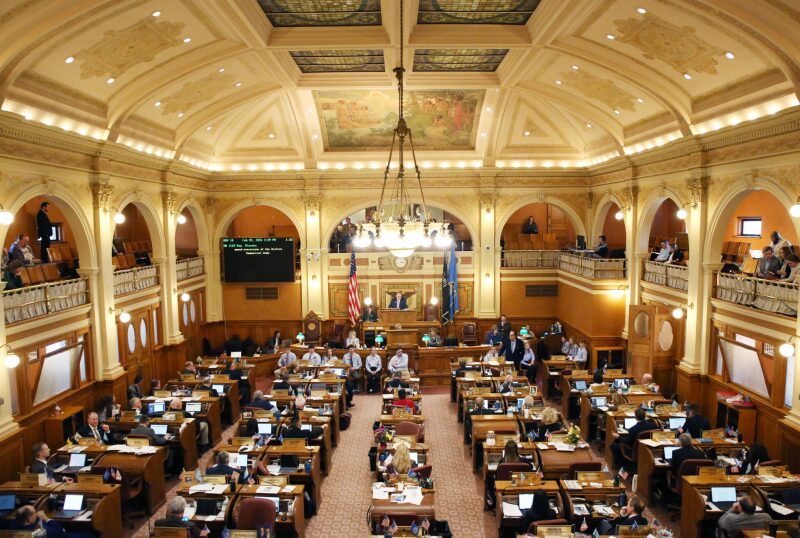
UPDATE: South Dakota lawmakers are in a race against time, with at least 28 bills aimed at property tax relief already introduced this legislative session, which began earlier this month and runs until March 2024. With pressure mounting from constituents, the urgency to address soaring property taxes is palpable.
The Comprehensive Property Tax Task Force previously recommended 19 proposals in October, many of which have yet to be filed. Governor Larry Rhoden is actively advocating for a bill to enable counties to implement a half-percent sales tax dedicated to property tax relief, highlighting a significant shift in funding strategies.
Democratic leaders are also gearing up to unveil their own property tax relief proposals shortly. Senate Assistant Majority Leader Carl Perry likened past efforts to a game of Whack-A-Mole, emphasizing the challenge of reaching a consensus on these critical issues. “It’s going to be tough to get things exactly right, but we’re going to work at it,” Perry stated.
The significance of these proposals cannot be overstated. Property taxes in South Dakota have surged nearly 70% over the last decade, straining budgets for counties and schools, while the state predominantly relies on sales tax revenue. Without immediate action, homeowners face even steeper financial burdens.
One notable proposal from U.S. Rep. Dusty Johnson aims to utilize funds from the projected increase in the state sales tax rate to alleviate property taxes. After a reduction from 4.5% to 4.2% in 2023, the sales tax rate is set to revert in 2027 unless lawmakers take action.
Senate President Pro Tempore Chris Karr has introduced a bill to maintain the current sales tax rate, arguing that raising it would exacerbate the challenges faced by taxpayers already struggling with property taxes. Karr described this approach as reminiscent of feudalism, stating, “No matter how bad we want property tax relief, that’s not right.”
In addition to these new measures, lawmakers are addressing the impacts of previous legislation that capped countywide residential assessment growth for five years and expanded eligibility for relief programs. Sen. Randy Deibert has proposed raising the cap on new construction and growth from 3% to 5%, a vital change that could help communities like Harrisburg and Tea recover lost revenue.
During a recent Senate Taxation Committee hearing, Harrisburg’s deputy city administrator, Heath VonEye, warned that the current cap could result in a nearly $3 million loss in revenue between 2027 and 2031, severely affecting infrastructure funding.
A range of other property tax bills are also making their way through the legislative process, including:
– **Senate Bill 85**: Requires elections for schools to exceed property tax limits.
– **House Bill 1168**: Offers property tax credits for private school and homeschool expenses.
– **Senate Bill 12**: Provides missed property tax refunds for veterans and surviving spouses.
– **Senate Bill 118**: Allocates $100 million annually towards a homeowner tax rebate program.
Furthermore, lawmakers have introduced several resolutions that could change the landscape of property taxation, including caps on assessed valuation increases and the establishment of new tax relief funds.
While some proposals have failed, such as a bill transitioning public education funding from property taxes to sales taxes, the momentum for reform continues. With lawmakers under pressure to find solutions, the coming weeks will be critical in shaping South Dakota’s tax landscape.
As the legislative session progresses, South Dakotans eagerly await decisions that could significantly impact their financial futures. Stay tuned for more updates as this story develops.