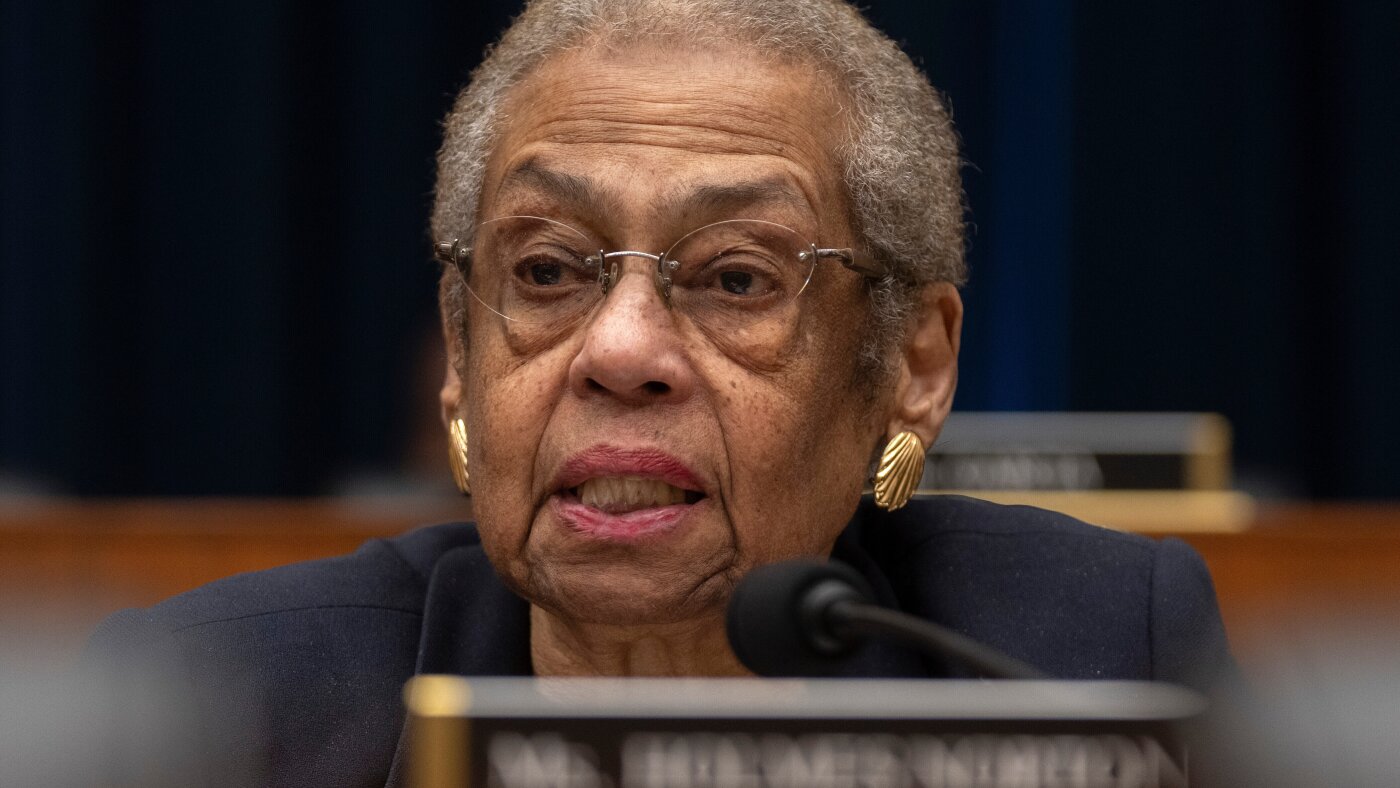
Eleanor Holmes Norton, the long-serving delegate for the District of Columbia, has officially filed paperwork to terminate her campaign for reelection, signaling the end of her extensive career in public service. Norton, who has represented the residents of the nation’s capital in Congress since 1991, is stepping back at the age of 88, after facing increasing scrutiny over her effectiveness, particularly in light of the challenges posed by the previous administration.
The announcement comes after a significant period in which Norton’s advocacy was tested by the Trump administration’s substantial interventions in Washington. Mayor Muriel Bowser praised Norton for her dedication, stating on social media, “For 35 years, Congresswoman Norton has been our Warrior on the Hill. Her work embodies the unwavering resolve of a city that refuses to yield in its fight for equal representation.” Despite this support, questions lingered about her ability to effectively advocate for the city’s interests during tumultuous political times.
Norton’s campaign officially submitted a termination report to the Federal Election Commission on Sunday, though her office has not provided a formal statement regarding her future plans. The filing, which was first reported by NOTUS, opens the door for a competitive primary in a city known for its strong Democratic leanings, with several local lawmakers already expressing their intention to run.
A Legacy of Advocacy and Civil Rights
As the oldest member of the House, Norton is a significant figure in Washington’s political landscape, having built a career intertwined with the Civil Rights Movement. Friends and contemporaries included notable activists such as Medgar Evers and fellow legislators like Jim Clyburn and the late John Lewis. Despite her enduring influence, Norton faced increased calls to step aside as the political climate shifted, with local lawmakers and residents questioning her ability to advocate for D.C. amidst the administration’s controversial actions, which included federalizing the city’s police force and deploying National Guard troops.
Norton’s retirement coincides with a broader trend in Congress, where more than 10% of House members have announced they will not seek reelection this year.
Throughout her tenure, Norton championed various causes vital to the district. While she does not possess a formal vote in Congress, her influence has manifested through numerous successful initiatives. She was a staunch advocate for D.C. statehood and fought for the labor rights of federal workers. Norton also played a crucial role in securing legislation that allows district residents to attend public colleges and universities across the country at in-state tuition rates or receive grants for private institutions.
In the 1990s, she was instrumental in resolving a financial crisis by negotiating a deal that transferred unfunded pension liabilities to the federal government, leading to vital changes in the district’s budget. Norton’s commitment to D.C. statehood saw her lead efforts for its passage in the House on two occasions.
A Personal Journey Through History
Born and raised in Washington, Norton’s life reflects the city’s complex history. Educated in the last segregated class at Dunbar High School, she later attended Antioch College and split her time between Yale Law School and Mississippi during the pivotal Freedom Summer of the Civil Rights Movement. She recounted a poignant moment when Evers, a close friend, picked her up at the airport just hours before his assassination.
Norton was also a key figure at the 1963 March on Washington, an event she described as “the single most extraordinary experience of my lifetime.” Her commitment to civil rights continued as she became the first woman to lead the Equal Employment Opportunity Commission, advocating for workplace anti-discrimination laws.
In the wake of her retirement announcement, Norton’s extensive contributions to the political landscape and her role in advocating for the rights of D.C. residents will be remembered as she closes this chapter of her life. As the district prepares for a new political landscape, her legacy as a champion for civil rights and representation continues to resonate.