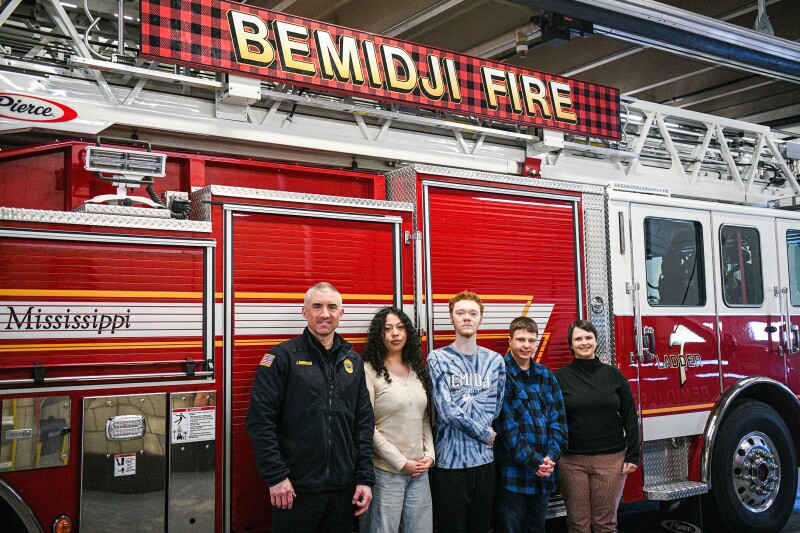
The Bemidji Fire Department in Minnesota is set to launch the “Inclusive Fire Brigade,” aimed at enhancing opportunities for individuals with disabilities within the fire service. This initiative, made possible through a partnership with the youth-led nonprofit organization, Lead for Inclusion, seeks to create a more accessible and inclusive environment in emergency services.
Asher Geller, a passionate advocate for inclusion and aspiring firefighter, has been instrumental in this development. Geller, who has a disability, expressed his enthusiasm for joining the fire department, stating, “I love helping people and being part of a team.” His desire to pursue a career in firefighting has driven him to seek opportunities where he can contribute meaningfully.
Creating Opportunities Through Collaboration
The Inclusive Fire Brigade will focus on three core areas: job and leadership skill development, advocacy and outreach, and inclusive social activities. According to Shannon Murray, facilitator for Lead for Inclusion, the organization began after recognizing that many young individuals, particularly those with disabilities, face unnecessary barriers to leadership and community involvement.
Murray emphasized the potential for Bemidji to lead the way in developing a rural model for inclusion and accessibility. “Our community has what it takes to be a leader in this area,” she said. Geller’s enthusiasm caught the attention of Justin Sherwood, Bemidji’s Fire Chief, who saw great potential in him. After several meetings, they decided to embark on this innovative initiative together.
Geller expressed gratitude for the opportunity to volunteer with the Bemidji Fire Department while serving on the board for Lead for Inclusion. He explained, “I thought it might just be another program or activity, but it turned out to be so much more.” His involvement has fostered confidence and reinforced the idea that leadership can manifest in various forms.
A Vision for Inclusive Education and Training
The mission of the Inclusive Fire Brigade is to demonstrate the importance of inclusion and accessibility within the fire service. Sherwood outlined plans for the program, which will include monthly meetings and training focused on teamwork, communication, and inclusion. Participants will engage in activities such as fire station tours, first aid and CPR training, and discussions about career pathways.
Sherwood stated, “We’ll be educating the broader community—businesses, schools, other departments—about what inclusion looks like in action.” This outreach aims to redefine how individuals perceive disabilities in the context of public service.
Daniel Norton, also from Lead for Inclusion, highlighted the long-term vision for the initiative. He noted that the program is not just about the fire department but aims to create a model for inclusion throughout the city. “Hopefully, this inspires other fire departments, cities, businesses, and organizations to think about what more accessibility and inclusion could look like in their own line of work,” he said.
As the program develops, Sherwood hopes to provide a variety of opportunities within the fire department that can accommodate individuals with disabilities, addressing systemic barriers that often hinder their participation in the job market. He emphasized that contributions to the fire service do not always have to involve traditional firefighting roles. “There’s a place for you in the fire service,” he affirmed.
For those interested in learning more about the Inclusive Fire Brigade and Lead for Inclusion, additional details can be found at leadforinclusion.org and on their official Facebook page. This collaborative effort not only aims to empower individuals like Geller but also seeks to inspire a broader movement towards inclusivity in public service.