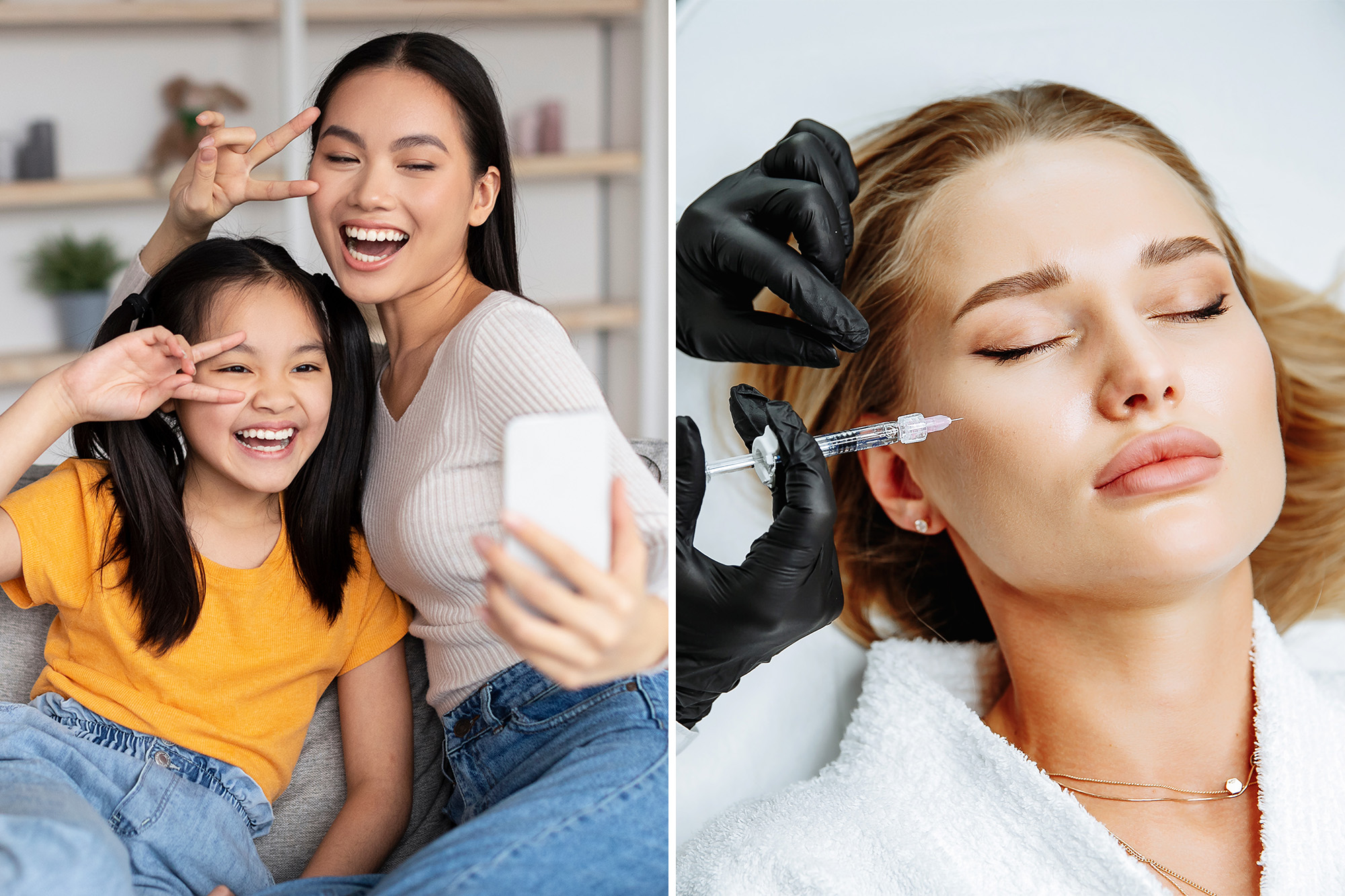
A recent study has revealed a concerning connection between mothers who frequently take selfies and their children’s potential interest in plastic surgery. Conducted by researchers in China, the study analyzed 541 mother-child pairs and found that children of mothers engaged in self-related behaviors are more likely to experience “facial dissatisfaction.”
The findings, published in the Journal of Health Psychology, indicate that both teenage boys and girls, with an average age of 16, who exhibit traits linked to self-absorption and a penchant for taking self-portraits are at a higher risk of contemplating cosmetic procedures. These traits include a tendency towards “body surveillance” and dissatisfaction with their own appearance. While the study did not quantify how many teens actually undergo cosmetic surgery, it emphasized that those who consider such procedures are significantly more likely to pursue them.
Researchers clarified that there is no direct causation established between mothers’ selfie habits and their teenagers’ interest in cosmetic surgery. Instead, they suggested that a mother’s behavior indirectly influences her child’s perception of self-image. This aligns with findings from another study conducted by Brigham Young University, which highlighted the significant role mothers play in shaping their children’s body image and self-perception.
Influence of Social Media on Body Image
The implications of these findings resonate with recent public controversies surrounding parenting and beauty standards. In June 2023, social media influencer Noel LaPalomento faced criticism after taking her seven-year-old daughter, Giada, to a tanning salon, raising questions about the beauty ideals being instilled in young children. Similarly, reality TV star Kim Kardashian received backlash when her twelve-year-old daughter, North West, appeared in a TikTok video adorned with a nose ring, fake tattoos, and grills.
These incidents reflect a broader societal concern regarding how parental behaviors and social media can contribute to unhealthy beauty standards. A separate study from the University of Palermo found that daughters who perceive their mothers as less caring and more overprotective tend to struggle with body dissatisfaction. This highlights the importance of nurturing, supportive relationships in fostering positive self-image among adolescents.
The rise of social media has further complicated these dynamics. The pursuit of likes and validation through platforms that glorify specific beauty standards can exacerbate feelings of inadequacy among young people. As selfie culture becomes more prevalent, it is essential for parents to recognize the potential impact of their behavior on their children’s self-esteem and body image.
Addressing Body Image Concerns
Experts recommend that parents engage in open conversations with their children about body image and self-worth, emphasizing that beauty is subjective and not solely defined by appearance. Encouraging healthy habits, such as physical activity and positive self-talk, can also help mitigate feelings of dissatisfaction.
As society continues to navigate the complexities of beauty standards influenced by social media, understanding the role of parental behavior remains crucial. The findings from the study in China serve as a reminder of the significant influence mothers have on their children’s self-perception and the need for greater awareness of how personal habits can shape future generations’ views on beauty and body image.